
 Wildlife
of India
Andaman Crake
Cranes, Rails & Bustards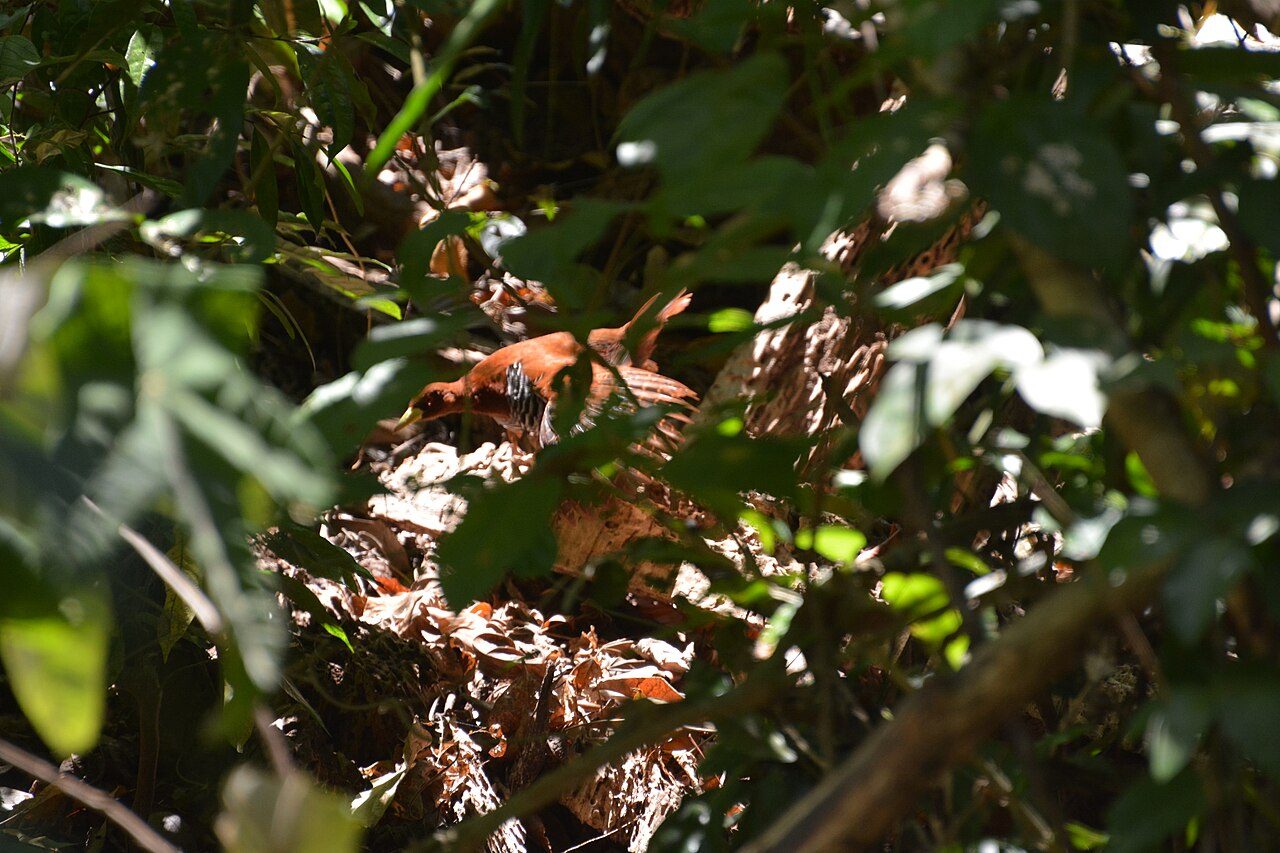
Photo: Ashwin Bhat Kemthuru · CC BY-SA 4.0 (May be cropped or resized)
Rallina canningi
Basic stats
Diet
Small fish, molluscs, worms and insects (beetles, grasshoppers, caterpillars)
Habitat
Forest; nests at the base of buttressed trees or under tangled undergrowth
Range
Endemic to the Andaman Islands: North, Middle and South Andaman
Size
About 34cm
The Andaman crake is the largest Rallina crake, about 34 cm long. It has glossy chestnut plumage with extensive bold barring on the underparts, unbarred undertail coverts, a relatively bright apple-green bill, a relatively long, fluffy tail, and olive-green legs and feet. It is endemic to the Andaman Islands, known from North, Middle and South Andaman and possibly other islands such as Great Coco (Wikipedia, general species account).
It gives a sharp click as an alarm call. It breeds from June to August, nesting at the bottom of large buttressed trees or under tangled undergrowth in forest. The eggs are like those of the banded crake but larger, whiter and glossier, about 40 × 30 mm, and both sexes share incubation. Like other crakes it feeds on small fish, molluscs, worms and insects. SoIB 2023 rates it a Moderate conservation priority, with a Restricted range of about 4,800 km² (Wikipedia, general species account; SoIB 2023).
Quick answers
- What does the Andaman Crake eat?
- Small fish, molluscs, worms and insects (beetles, grasshoppers, caterpillars)
- What habitat does the Andaman Crake live in?
- Forest; nests at the base of buttressed trees or under tangled undergrowth
- Where is the Andaman Crake found?
- Endemic to the Andaman Islands: North, Middle and South Andaman
- How big is the Andaman Crake?
- About 34cm