
 Wildlife
of India
Eurasian Otter
Bears, Dogs, Otters & Red Panda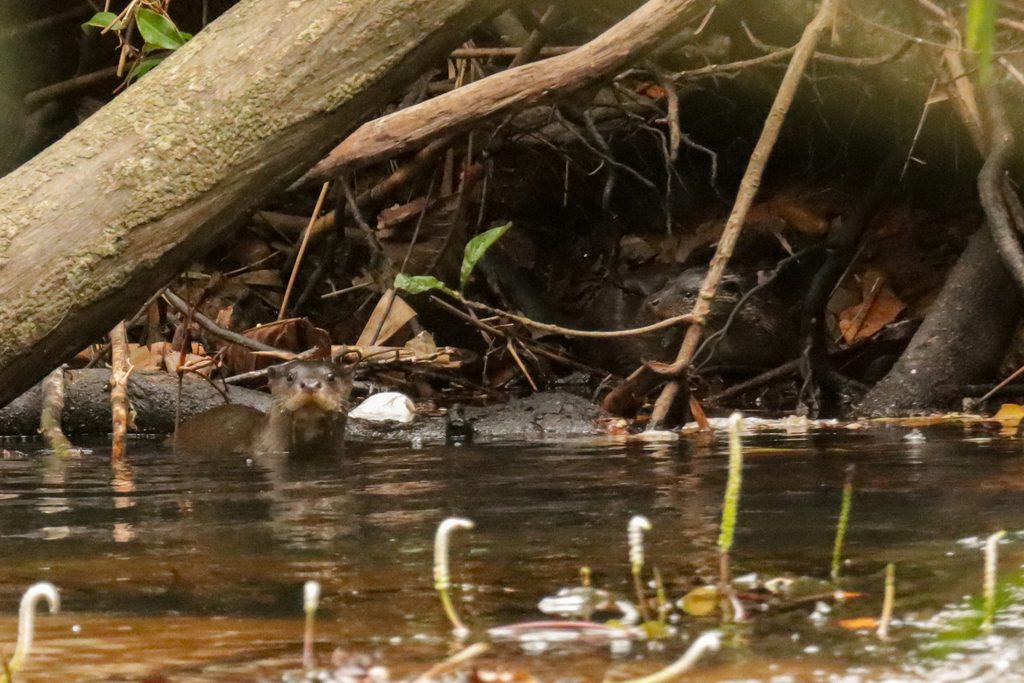
Photo: Vsevolod Rudyi · CC BY 4.0 (May be cropped or resized)
Lutra lutra
Basic stats
Diet
Mainly fish; also crustaceans, amphibians, insects, birds and small mammals
Habitat
Rivers, streams, lakes and coasts
Range
Eurasia and the Maghreb; in India the Himalayan foothills, southern Western Ghats and central India
Litter size
1–4 pups
Gestation period
60–64 days
Size
Head and body 57–95cm; tail 35–45cm
Weight
7–12kg
The Eurasian otter is a long, slender otter with brown fur on the back and cream underparts. It differs from the North American river otter in having a shorter neck, a broader face, more widely spaced ears and a longer tail. Its dense bones reduce buoyancy for diving. Adults measure 57–95 cm in head and body length with a 35–45 cm tail and weigh 7–12 kg; females are shorter than males (Wikipedia, general species account).
In India it is found in the Himalayan foothills, the southern Western Ghats and central India. It lives mostly alone and is strongly territorial, holding a stretch of river or shore, about 18 km long on average, that it marks with spraints; territories are defended only against the same sex. Fish is the main food. Mating takes place in water and can happen at any time of year. After 60–64 days one to four pups are born, and they stay dependent on the mother for about 13 months (Wikipedia, general species account).
Quick answers
- What does the Eurasian Otter eat?
- Mainly fish; also crustaceans, amphibians, insects, birds and small mammals
- What habitat does the Eurasian Otter live in?
- Rivers, streams, lakes and coasts
- Where is the Eurasian Otter found?
- Eurasia and the Maghreb; in India the Himalayan foothills, southern Western Ghats and central India
- What is the litter size of the Eurasian Otter?
- 1–4 pups
- How long is the gestation period of the Eurasian Otter?
- 60–64 days
- How big is the Eurasian Otter?
- Head and body 57–95cm; tail 35–45cm
- How much does the Eurasian Otter weigh?
- 7–12kg