
 Wildlife
of India
Great Knot
Shorebirds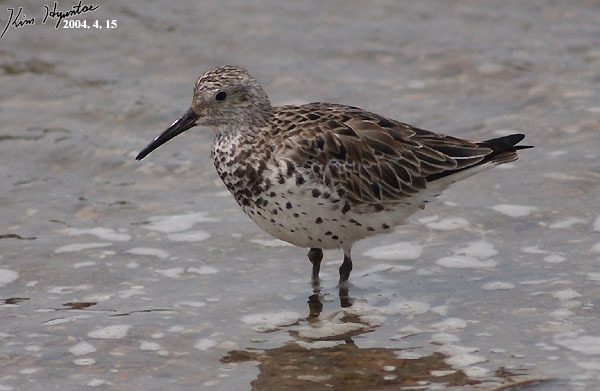
Photo: Kim, Hyun-tae · CC BY 4.0 (May be cropped or resized)
Calidris tenuirostris
Basic stats
Diet
Mainly molluscs and insects
Habitat
Tundra when breeding; mudflats and beaches in winter
Range
Breeds in north-east Siberia; winters on coasts from southern Asia to Australia
Clutch size
About 4 eggs
Size
26–30cm
Wingspan
56–66cm
The great knot is a medium-sized wader and one of the largest members of the genus Calidris, 26–30cm long with a wingspan of 56–66cm. It breeds on the tundra of north-east Siberia, nesting on the ground and laying about four eggs in a scrape. Its closest living relative is the surfbird of North America. The cached species account gives little description of its plumage (Wikipedia, general species account).
It is strongly migratory, wintering on coasts from southern Asia to Australia, where it forms enormous flocks; small numbers winter as far west as Pakistan, Oman and the United Arab Emirates. It forages on mudflats and beaches, probing or picking up food by sight, and eats mainly molluscs and insects. In India it is a winter migrant with a restricted range; SoIB 2023 has too little data for a trend and rates it a High conservation priority (Wikipedia, general species account; SoIB 2023).
Quick answers
- What does the Great Knot eat?
- Mainly molluscs and insects
- What habitat does the Great Knot live in?
- Tundra when breeding; mudflats and beaches in winter
- Where is the Great Knot found?
- Breeds in north-east Siberia; winters on coasts from southern Asia to Australia
- How many eggs does the Great Knot lay?
- About 4 eggs
- How big is the Great Knot?
- 26–30cm
- What is the wingspan of the Great Knot?
- 56–66cm