
 Wildlife
of India
Hispid Hare
Pangolins, Hares, Pikas & Shrews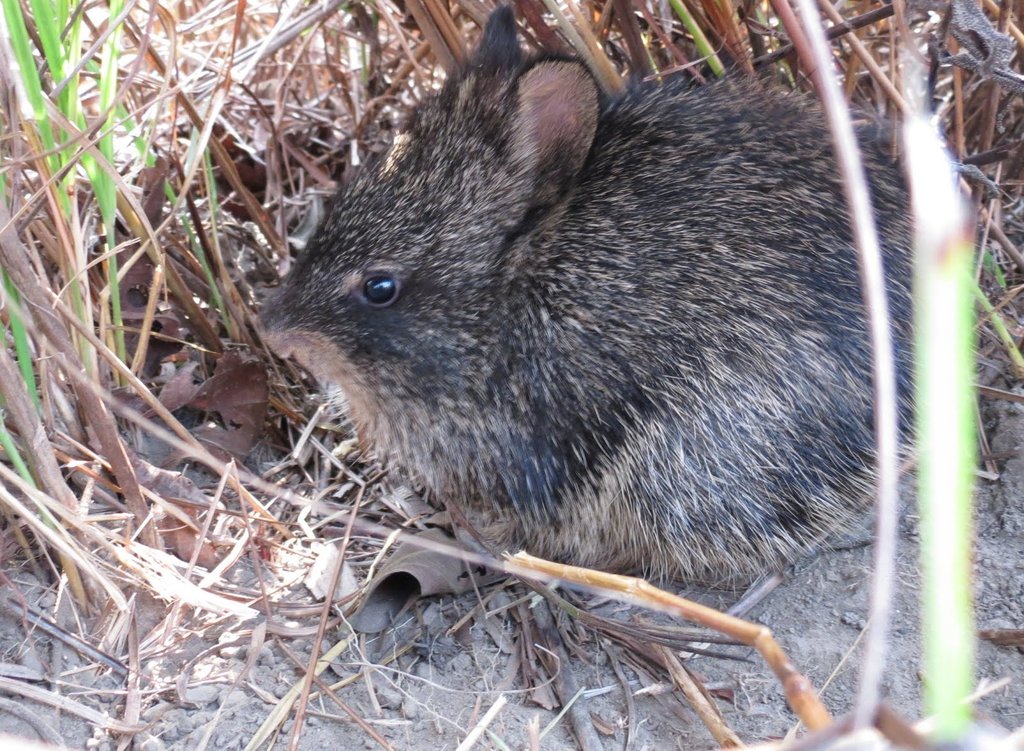
Photo: Bed Bahadur Khadka · CC BY 4.0 (May be cropped or resized)
Caprolagus hispidus
Basic stats
Diet
Grasses and leaves; at least 23 plant species
Habitat
Tall grassland; fragmented
Range
Southern Himalayan foothills of India, Nepal and Bangladesh
Litter size
2–3 young; about 3 litters a year
Gestation period
40 days
Size
Ears 54–61mm; tail 25–38mm
Weight
Males about 1.8–2.6kg; females about 2.5kg
The hispid hare, also called the Assam rabbit or bristly rabbit, is the only species in its genus. It has a harsh, bristly coat, dark brown on the back from a mixture of black and brown hairs, brown on the chest and whitish on the abdomen, with a brown tail 25–38 mm long, small ears compared with the Indian hare and a large nose. Males weigh about 1.8–2.6 kg and females about 2.5 kg (Wikipedia, general species account).
Once thought extinct, it was rediscovered in Assam in 1971 and survives in isolated populations across India, Nepal and Bangladesh, and is known in several national parks. It is crepuscular and herbivorous, eating grasses and leaves, at least 23 plant species, and when it feeds on thatching grasses it strips the outer sheath from the base. Gestation is 40 days, with about three litters a year of two or three young. Birds of prey, cats, civets, jackals, weasels and foxes prey on it (Wikipedia, general species account).
Quick answers
- What does the Hispid Hare eat?
- Grasses and leaves; at least 23 plant species
- What habitat does the Hispid Hare live in?
- Tall grassland; fragmented
- Where is the Hispid Hare found?
- Southern Himalayan foothills of India, Nepal and Bangladesh
- What is the litter size of the Hispid Hare?
- 2–3 young; about 3 litters a year
- How long is the gestation period of the Hispid Hare?
- 40 days
- How big is the Hispid Hare?
- Ears 54–61mm; tail 25–38mm
- How much does the Hispid Hare weigh?
- Males about 1.8–2.6kg; females about 2.5kg