
 Wildlife
of India
Horned Lark
Larks, Pipits & Wagtails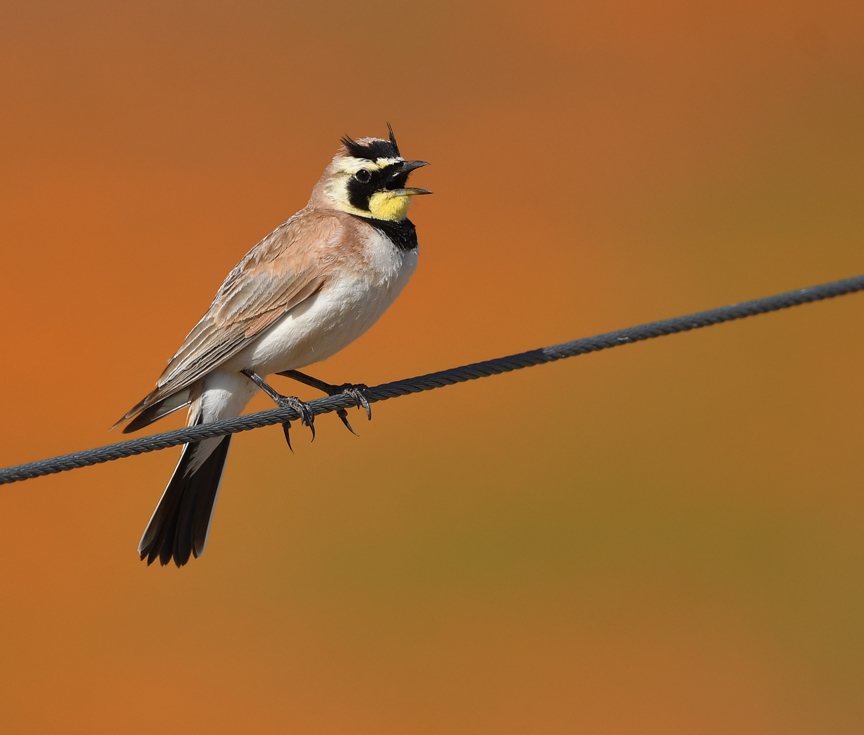
Photo: (c) Pat Farris, some rights reserved (CC BY) · CC BY 4.0 (May be cropped or resized)
Eremophila alpestris
Basic stats
Diet
Omnivore (SoIB guild)
Habitat
Alpine and cold desert (SoIB); in Eurasia above the tree line in mountains and the far north
Range
Across the northern hemisphere; North America, northernmost Europe and Asia, and mountains of south-east Europe
Clutch size
2–5 grey eggs with brown spots
Size
16–20cm; wingspan 30–34cm
Weight
28–48g
The horned, or shore, lark is 16–20 cm long with a wingspan of 30–34 cm, weighing 28–48 g. Unlike most larks it is distinctive on the ground, mainly brown-grey above and pale below, with a striking black and yellow face pattern. Except for the central feathers the tail is mostly black, contrasting with the paler body in flight. It is found across the northern hemisphere, and in Eurasia breeds above the tree line in mountains and the far north (Wikipedia, general species account).
The song, given in flight as is common among larks, is a few chips followed by a warbling, ascending trill. The female spends two to four days preparing the nest site before building, and lays two to five grey eggs with brown spots. The cached account does not describe its Indian range. SoIB 2023 rates it a Low conservation priority, a resident of alpine and cold desert with a Moderate range of about 61,600 km² and insufficient data on trends (Wikipedia, general species account; SoIB 2023).
Quick answers
- What does the Horned Lark eat?
- Omnivore (SoIB guild)
- What habitat does the Horned Lark live in?
- Alpine and cold desert (SoIB); in Eurasia above the tree line in mountains and the far north
- Where is the Horned Lark found?
- Across the northern hemisphere; North America, northernmost Europe and Asia, and mountains of south-east Europe
- How many eggs does the Horned Lark lay?
- 2–5 grey eggs with brown spots
- How big is the Horned Lark?
- 16–20cm; wingspan 30–34cm
- How much does the Horned Lark weigh?
- 28–48g