
 Wildlife
of India
Indus River Dolphin
Whales, Dolphins & Dugong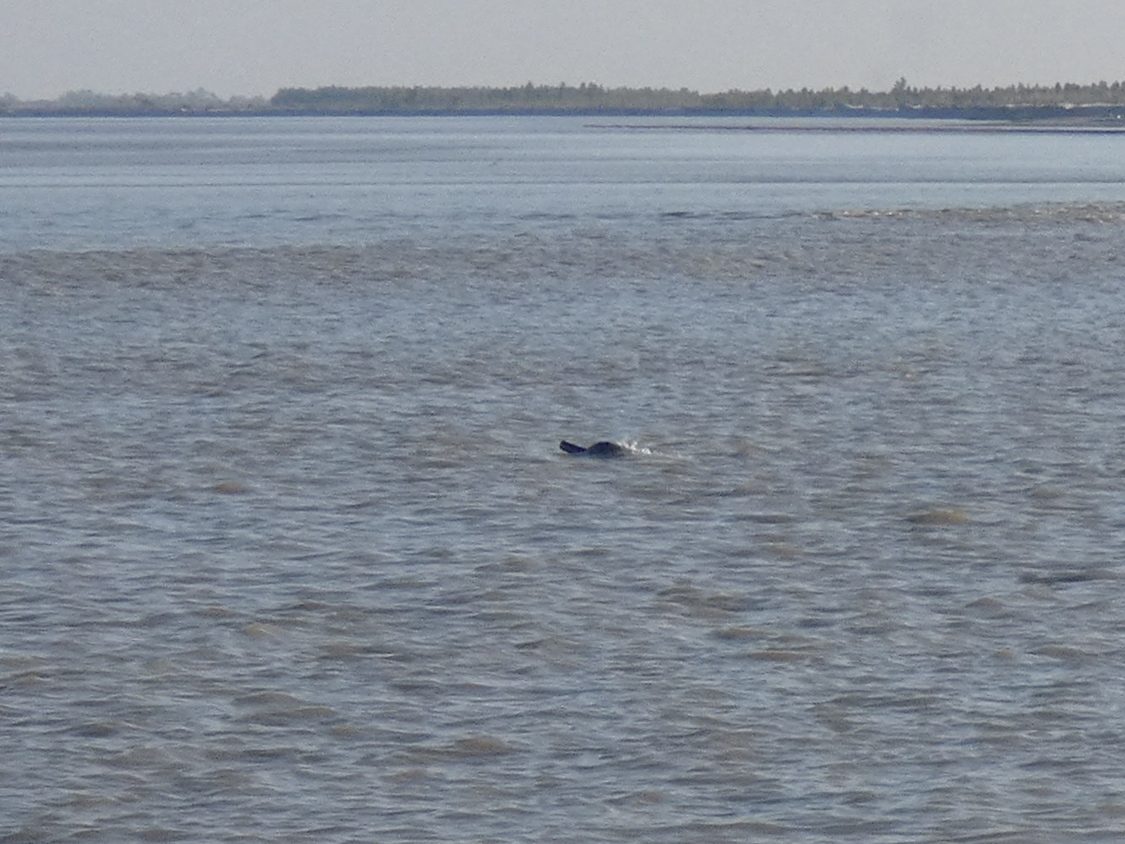
Photo: (c) Tony King, some rights reserved (CC BY) · CC-BY (May be cropped or resized)
Platanista minor
Basic stats
Habitat
Freshwater rivers
Range
Indus basin in Pakistan; a small isolated population in the Beas River and Harike Wetland, Punjab, India
Size
Males 2–2.2m; females 2.4–2.6m
The Indus river dolphin is a freshwater dolphin, the first side-swimming cetacean to be discovered. Its body is brownish and stocky in the middle, the snout thickens toward the tip, and the flippers and tail are thin and large for its size. Males are about 2–2.2 m long and females 2.4–2.6 m. The teeth of young animals are long, thin and curved, but in mature adults they become square, flat, bony discs. It navigates and hunts by echolocation (Wikipedia, general species account).
It is endemic to the rivers of the Indus basin in Pakistan and north-western India. In India a very small, isolated population lives in the Beas River and the Harike Wetland in Punjab, at very high risk of extinction. It is the state aquatic animal of Punjab. In Pakistan five small subpopulations are separated by irrigation barrages. One suggestion is that several north Indian rivers changed course in ancient times while keeping their dolphins (Wikipedia, general species account).
Quick answers
- What habitat does the Indus River Dolphin live in?
- Freshwater rivers
- Where is the Indus River Dolphin found?
- Indus basin in Pakistan; a small isolated population in the Beas River and Harike Wetland, Punjab, India
- How big is the Indus River Dolphin?
- Males 2–2.2m; females 2.4–2.6m