
 Wildlife
of India
Kashmir Field Mouse
Rats, Mice, Voles & Porcupines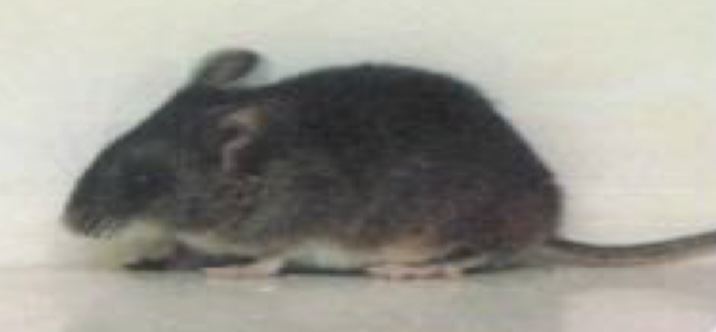
Photo: Unknown authorUnknown author · CC BY 4.0 (May be cropped or resized)
Apodemus rusiges
Basic stats
Diet
Seeds and berries; stores food for winter
Range
India, Nepal and Pakistan
Litter size
About 5–6 young; 4–5 litters a year
Gestation period
25–26 days
The Kashmir field mouse is very like the Himalayan field mouse but larger, with a larger skull and a longer, two-coloured tail. The back is dark brownish grey, sometimes with a central dorsal stripe, and the underside is greyish white; some animals have a yellow line on the chest and throat. It is found in India, Nepal and Pakistan (Wikipedia, general species account).
It is nocturnal, terrestrial and an excellent climber. It makes grass-lined nests in burrows dug beneath tree roots, where it rests by day and cares for young, and although many mice share a burrow the female does not let males in. It feeds mainly on seeds and berries and stores food for winter. Breeding is in spring and summer, with four or five litters a year of about five or six young after 25–26 days (Wikipedia, general species account).
Quick answers
- What does the Kashmir Field Mouse eat?
- Seeds and berries; stores food for winter
- Where is the Kashmir Field Mouse found?
- India, Nepal and Pakistan
- What is the litter size of the Kashmir Field Mouse?
- About 5–6 young; 4–5 litters a year
- How long is the gestation period of the Kashmir Field Mouse?
- 25–26 days