
 Wildlife
of India
Long-eared Owl
Owls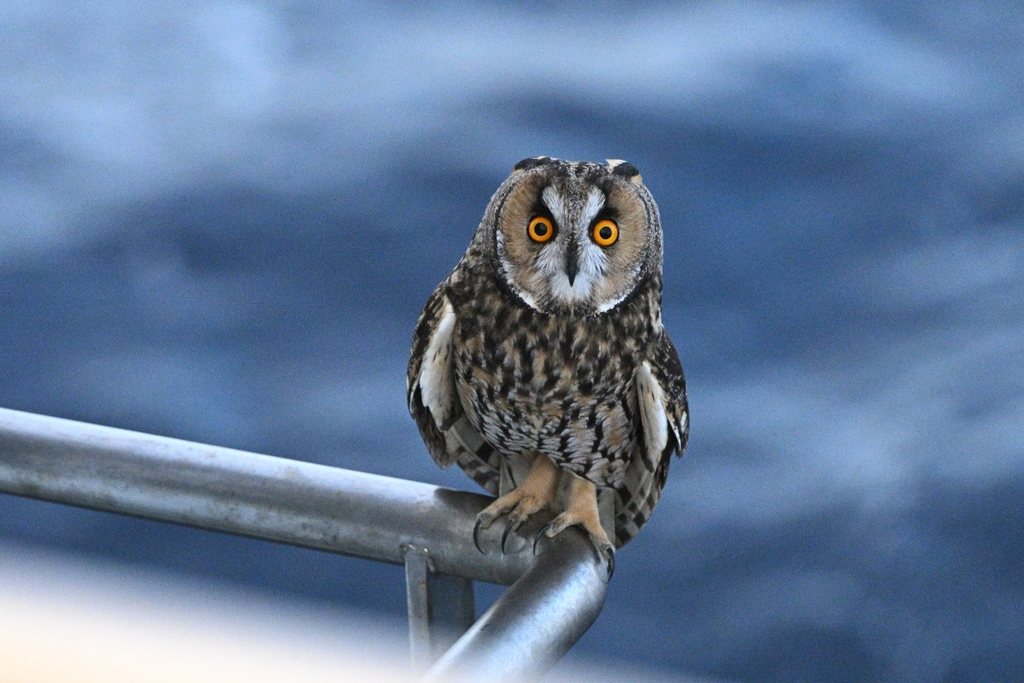
Photo: (c) Charlotte Kirchner, some rights reserved (CC BY) · CC BY 4.0 (May be cropped or resized)
Asio otus
Basic stats
Diet
Small rodents, especially voles; birds and insects in other conditions
Habitat
Semi-open habitats, roosting and nesting in dense woodland but hunting over open ground
Range
Breeds in Europe, the Palearctic and North America; in winter in parts of Pakistan and northern India (Kutch, Punjab, Kashmir)
Size
31–40cm; wingspan 86–102cm
Weight
Males 160–330g; females 180–435g
The long-eared owl is a medium-sized typical owl with an extensive range, 31–40 cm long with a relatively large wingspan of 86–102 cm; males weigh 160–330 g and females 180–435 g. The genus name Asio is Latin for horned owl. It primarily hunts small rodents, especially voles, but during population cycles of its regular prey, or in arid, insular or urban habitats, it takes diverse prey including birds and insects (Wikipedia, general species account).
It breeds in Europe, the Palearctic and North America, and it prefers semi-open habitats, particularly woodland edge, roosting and nesting in dense stands of trees but hunting over open ground. It uses nests built by other animals, especially crows. In India it occurs apparently only in winter, in parts of northern India such as Kutch, Punjab and Kashmir, and it has nested at 2,700 m in Kashmir. SoIB 2023 lists it as a passage migrant and localised summer migrant of non-specialised habitat that eats vertebrates and carrion, without a priority category (Wikipedia, general species account; SoIB 2023).
Quick answers
- What does the Long-eared Owl eat?
- Small rodents, especially voles; birds and insects in other conditions
- What habitat does the Long-eared Owl live in?
- Semi-open habitats, roosting and nesting in dense woodland but hunting over open ground
- Where is the Long-eared Owl found?
- Breeds in Europe, the Palearctic and North America; in winter in parts of Pakistan and northern India (Kutch, Punjab, Kashmir)
- How big is the Long-eared Owl?
- 31–40cm; wingspan 86–102cm
- How much does the Long-eared Owl weigh?
- Males 160–330g; females 180–435g