
 Wildlife
of India
Malabar Gliding Frog
Shrub Frogs & Tree Frogs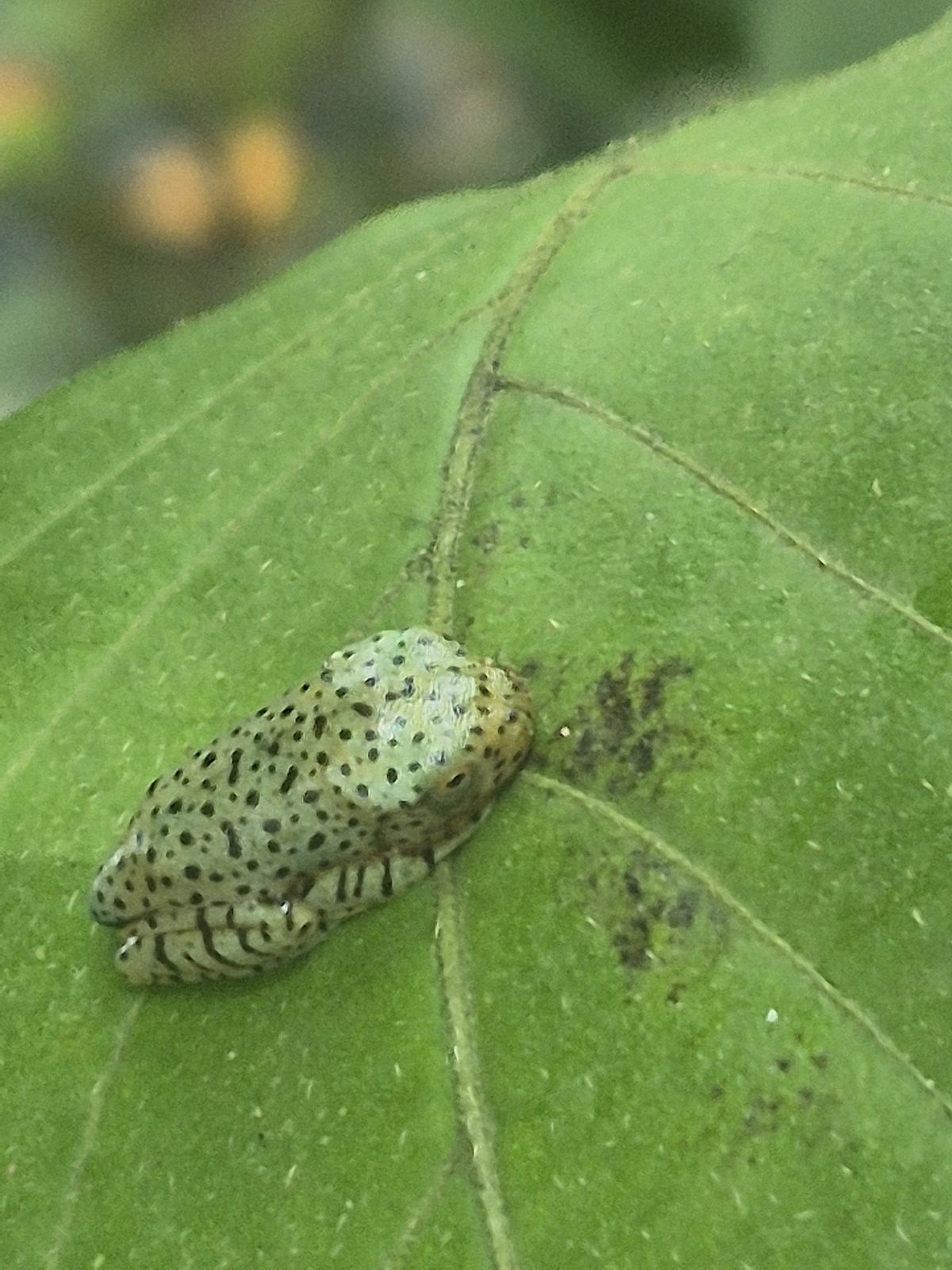
Photo: (c) Sindhu Haridas, some rights reserved (CC BY) · CC-BY (May be cropped or resized)
Rhacophorus malabaricus
Basic stats
Habitat
Moist forest near streams, from primary forest to plantations and urban areas; 43–1,894m
Range
Endemic to the Western Ghats: Kerala, Tamil Nadu, Karnataka, Goa and Maharashtra
Size
About 10cm
The Malabar gliding frog is a large, bright green tree frog about 10 cm long, with a pale yellow belly and large discs on its fingers and toes. Its feet are extensively webbed, and when it leaps from a tall tree it spreads the webbing to slow its fall, gliding 9–12 m, up to about 115 times its own body length. Its plain green back separates it from the similar Rhacophorus pseudomalabaricus, which has black marbling and was long treated as the same species. Females are larger than males (Wikipedia, general species account).
It lives on the leaves of trees near streams and rivers. Breeding takes place in the monsoon, from June to September, when males call from stream banks. The male whips up a foam nest on leaves overhanging water, and other males are sometimes seen helping; after spawning the female covers the clutch. When the tadpoles hatch they drop from the foam into the water below (Wikipedia, general species account).
The Malabar gliding frog is found only in the Western Ghats, where it has been recorded in Kerala, Tamil Nadu, Karnataka, Goa and Maharashtra, from 43 m to nearly 1,900 m (Wikipedia, species account). It builds its foam nests above small pools of water, and because its skin is so soft it can live only in moist forest with streams. Deforestation, climate change, development and toxic chemicals are the main threats to it (Drishti IAS). The monsoon, when males call and foam nests appear above rain-filled pools, is the time to look for it.
Quick answers
- What habitat does the Malabar Gliding Frog live in?
- Moist forest near streams, from primary forest to plantations and urban areas; 43–1,894m
- Where is the Malabar Gliding Frog found?
- Endemic to the Western Ghats: Kerala, Tamil Nadu, Karnataka, Goa and Maharashtra
- How big is the Malabar Gliding Frog?
- About 10cm