
 Wildlife
of India
Mistle Thrush
Thrushes, Chats & Flycatchers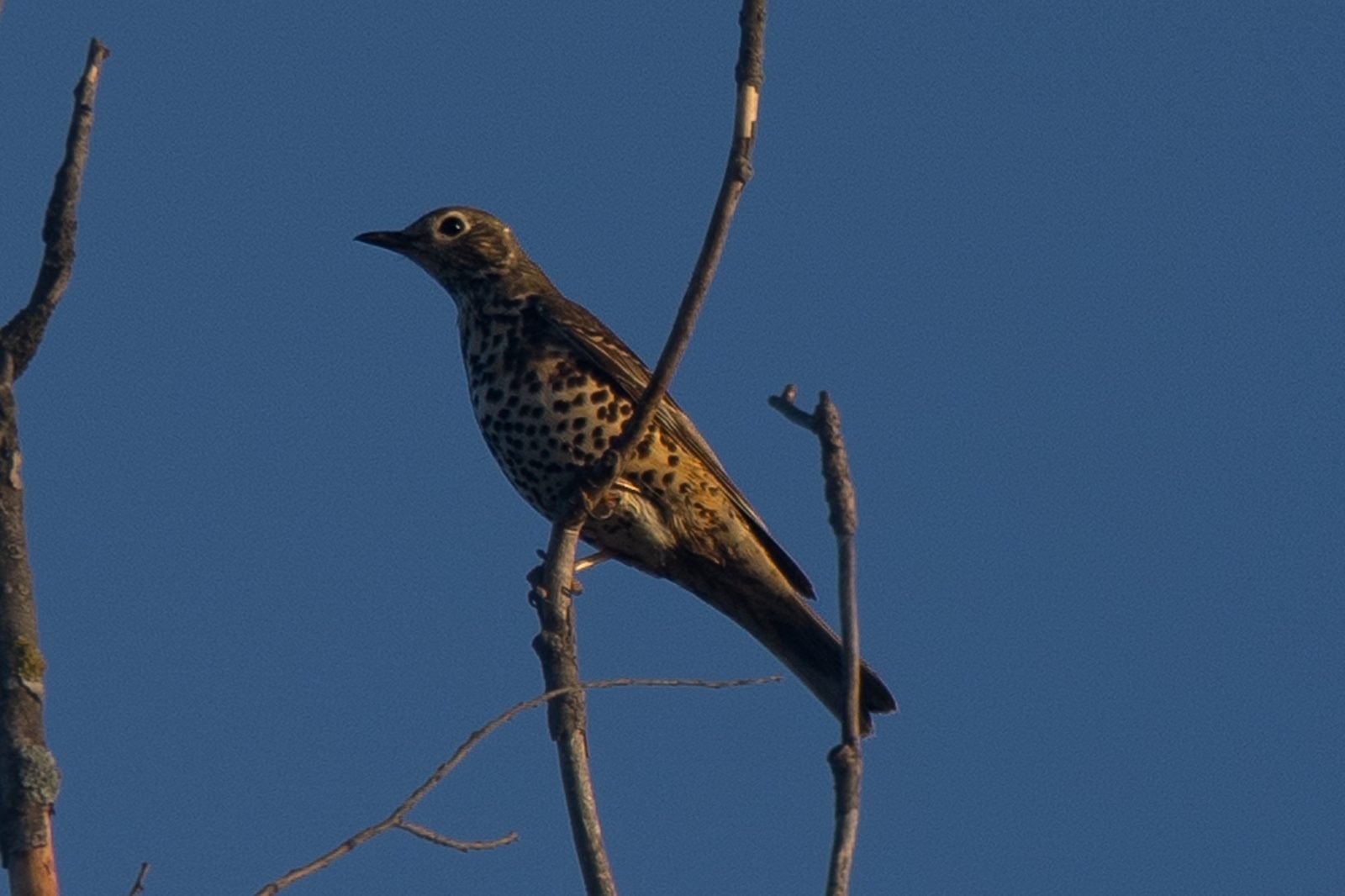
Photo: (c) Katrin Ellmaier, some rights reserved (CC BY) · CC-BY (May be cropped or resized)
Turdus viscivorus
Basic stats
Diet
A wide variety of invertebrates, seeds and berries
Habitat
Open woods, parks, hedges and cultivated land
Range
Much of Europe, temperate Asia and North Africa; in the Himalaya the breeding population moves to lower altitudes in winter; a vagrant in Sikkim
Clutch size
Typically 3–5 eggs
Incubation period
12–15 days, mainly by the female; chicks fledge about 14–16 days after hatching
Size
27–28cm; wingspan 45cm
Weight
93–167g, averaging about 130g
The mistle thrush is a large thrush of much of Europe, temperate Asia and North Africa, with pale grey-brown upperparts, a greyish-white chin and throat, and black spots on pale yellow and off-white underparts, the spotting denser on the lower chest. The nominate subspecies is 27–28 cm long with a 45 cm wingspan, weighing 93–167 g. The sexes are similar and the three subspecies differ minimally. The male's loud, far-carrying song, delivered even in wet and windy weather, earned the old name stormcock; in the western Himalaya it could be confused with the plain-backed and long-tailed thrushes (Wikipedia, general species account).
It is a year-round resident in a large part of its range, but northern and eastern populations migrate south in winter, often in small flocks, and in the Himalaya the breeding population moves to nearby lower-altitude sites. It feeds on a wide variety of invertebrates, seeds and berries. Three to five eggs are incubated for 12–15 days mainly by the female. Adults have a full moult after breeding, beginning between late May and the end of June and completed by early October. Vagrants have occurred in Sikkim, among many other places. SoIB 2023 rates it a Low conservation priority, a resident and altitudinal migrant omnivore with a Moderate range of about 72,300 km² (Wikipedia, general species account; SoIB 2023).
Quick answers
- What does the Mistle Thrush eat?
- A wide variety of invertebrates, seeds and berries
- What habitat does the Mistle Thrush live in?
- Open woods, parks, hedges and cultivated land
- Where is the Mistle Thrush found?
- Much of Europe, temperate Asia and North Africa; in the Himalaya the breeding population moves to lower altitudes in winter; a vagrant in Sikkim
- How many eggs does the Mistle Thrush lay?
- Typically 3–5 eggs
- How long are the eggs of the Mistle Thrush incubated?
- 12–15 days, mainly by the female; chicks fledge about 14–16 days after hatching
- How big is the Mistle Thrush?
- 27–28cm; wingspan 45cm
- How much does the Mistle Thrush weigh?
- 93–167g, averaging about 130g