
 Wildlife
of India
Nepal Cupwing
Babblers, Laughingthrushes & White-eyes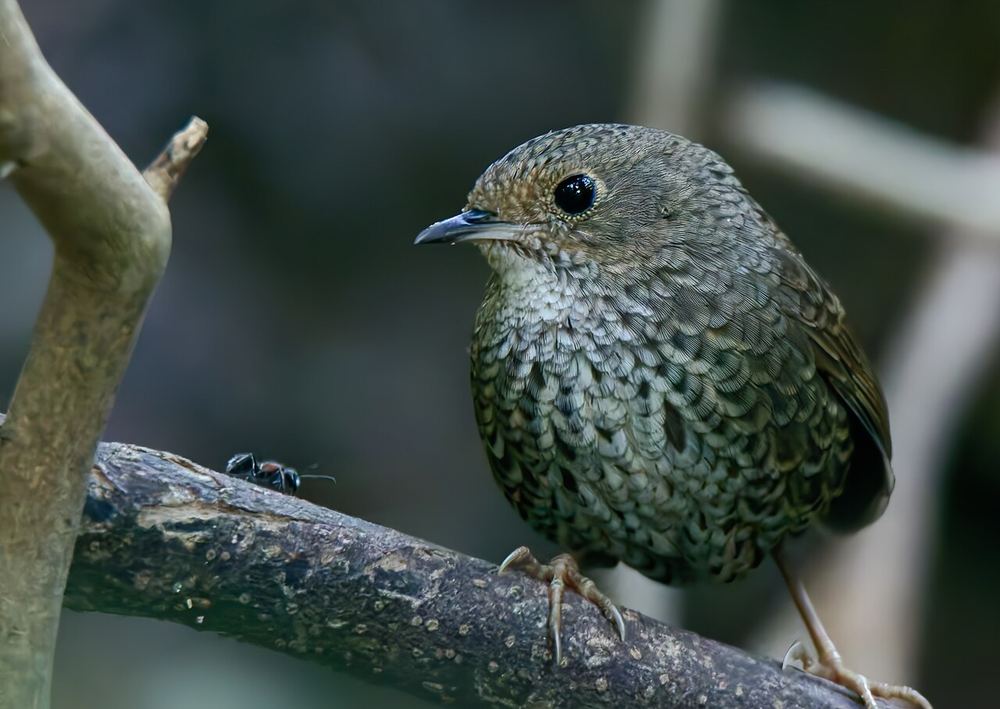
Photo: Pkspks · CC BY-SA 4.0 (May be cropped or resized)
Pnoepyga immaculata
Basic stats
Diet
Invertebrates (SoIB guild)
Habitat
Dense montane forest in the Himalaya; regular between 1,800 and 2,200m, possibly breeding as high as 3,100m; winters down to 250m
Range
Uttarakhand, Himachal Pradesh, Nepal and Tibet
Size
8.5–10cm
The Nepal cupwing, also known as the Nepal wren-babbler or immaculate cupwing, is a small passerine of the family Pnoepygidae, 8.5–10 cm long and brownish-olive. It has dark scaling on the upperparts and paler scaling on the underparts, a scaly breast with brown central feathers, pale edging on the flight feathers and a very short tail. It is native to the Himalayan foothills: a regular resident in Uttarakhand, Himachal Pradesh and Nepal and an uncommon resident around Zhangmu in Tibet, in dense montane forest (Wikipedia, general species account).
The song is distinctive and higher pitched than the other species in the genus, a steady series of thin, short, rapid, modulated whistles that descend in pitch. It is not migratory, but altitudinal movements occur, with winter records down to 250 m; it occurs regularly between 1,800 and 2,200 m and possibly breeds as high as 3,100 m. SoIB 2023 treats it as a Himalayan endemic and rates it a Moderate conservation priority, with a Restricted range of about 30,000 km² and insufficient data on trends (Wikipedia, general species account; SoIB 2023).
Quick answers
- What does the Nepal Cupwing eat?
- Invertebrates (SoIB guild)
- What habitat does the Nepal Cupwing live in?
- Dense montane forest in the Himalaya; regular between 1,800 and 2,200m, possibly breeding as high as 3,100m; winters down to 250m
- Where is the Nepal Cupwing found?
- Uttarakhand, Himachal Pradesh, Nepal and Tibet
- How big is the Nepal Cupwing?
- 8.5–10cm