
 Wildlife
of India
Northern Shoveler
Ducks, Geese & Grebes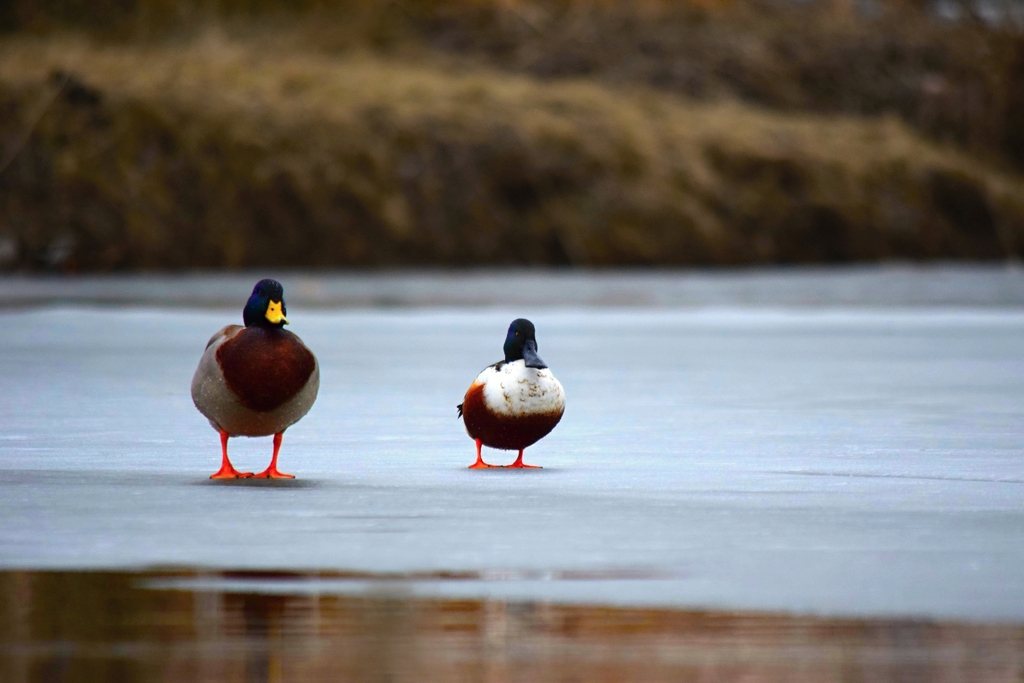
Photo: (c) Daniel Benák, some rights reserved (CC BY) · CC-BY (May be cropped or resized)
Spatula clypeata
Basic stats
Diet
Small crustaceans, plankton and other aquatic invertebrates; some plant food
Habitat
Mud-bottomed marshes rich in invertebrates
Range
Breeds in northern Europe, the Palearctic and North America; winters south to the Indian subcontinent and Southeast Asia
Clutch size
About 9 eggs
Size
44–52cm
Wingspan
70–84cm
Weight
500–800g
The northern shoveler is unmistakable for its large, spatula-shaped bill. The breeding drake has a dark green head that looks black at a distance, a white breast and chestnut belly and flanks, and in flight shows pale blue forewings separated from the green speculum by a white border. The female is mottled brown like other dabbling ducks but is easily told by her long, broad bill edged with orange. It is 44–52cm long, with a wingspan of 70–84cm and a weight usually of 500–800g (Wikipedia, general species account).
It feeds by swinging its bill from side to side through the water, straining crustaceans, plankton and other small invertebrates through comb-like plates along the bill edges, so it seldom competes with other dabbling ducks for food. It breeds across northern Europe, the Palearctic and North America, nesting in grass away from open water and laying about nine eggs. In India it is a winter migrant. SoIB 2023 estimates a long-term decline of about 65% and a continuing fall of about 7% a year, and rates it a High conservation priority (Wikipedia, general species account; SoIB 2023).
Quick answers
- What does the Northern Shoveler eat?
- Small crustaceans, plankton and other aquatic invertebrates; some plant food
- What habitat does the Northern Shoveler live in?
- Mud-bottomed marshes rich in invertebrates
- Where is the Northern Shoveler found?
- Breeds in northern Europe, the Palearctic and North America; winters south to the Indian subcontinent and Southeast Asia
- How many eggs does the Northern Shoveler lay?
- About 9 eggs
- How big is the Northern Shoveler?
- 44–52cm
- What is the wingspan of the Northern Shoveler?
- 70–84cm
- How much does the Northern Shoveler weigh?
- 500–800g