
 Wildlife
of India
Purple Frog
Horned Frogs & Purple Frogs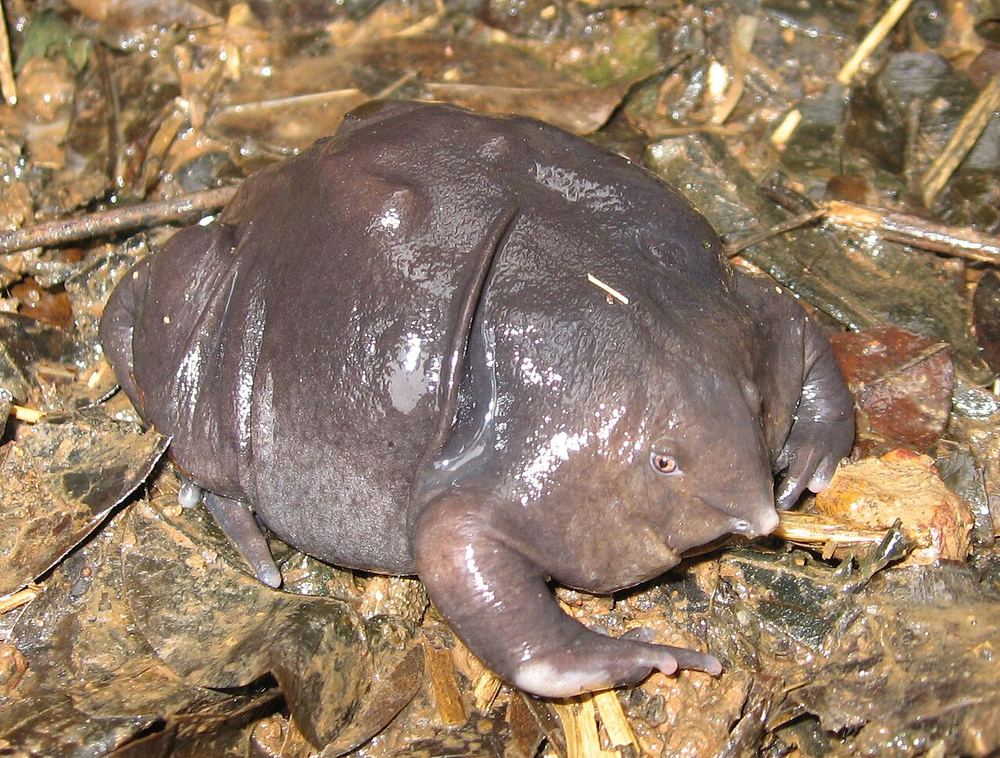
Photo: Original uploader was Karthickbala at ta.wikipedia · CC BY-SA 3.0 (May be cropped or resized)
Nasikabatrachus sahyadrensis
Basic stats
Habitat
Subterranean; calling from under a thin layer of soil; eggs in crevices along fast-flowing streams
Range
Endemic to the Western Ghats
Size
Original specimen 7.0cm
The purple frog (Nasikabatrachus sahyadrensis), also called the Indian purple frog, Mahabali frog or pignose frog, is endemic to the Western Ghats and well adapted to a subterranean life. The specimen from which it was originally described was 7.0 cm long from snout tip to vent. The adult was formally described in October 2003, though the juvenile form had been described earlier, in 1917 (Wikipedia, general species account).
Compared with other frogs it has a small head and an unusual pointed snout, and adults are typically dark purplish grey. Its call is a drawn-out, harsh sound similar to a chicken clucking, and males call from under a thin layer of soil. Females carry the males on their backs to the egg-laying sites, usually crevices along fast-flowing streams, and the frog may burrow headfirst because of its wedge-shaped skull and unusually shaped limbs (Wikipedia, general species account).
Quick answers
- What habitat does the Purple Frog live in?
- Subterranean; calling from under a thin layer of soil; eggs in crevices along fast-flowing streams
- Where is the Purple Frog found?
- Endemic to the Western Ghats
- How big is the Purple Frog?
- Original specimen 7.0cm