
 Wildlife
of India
Red Phalarope
Shorebirds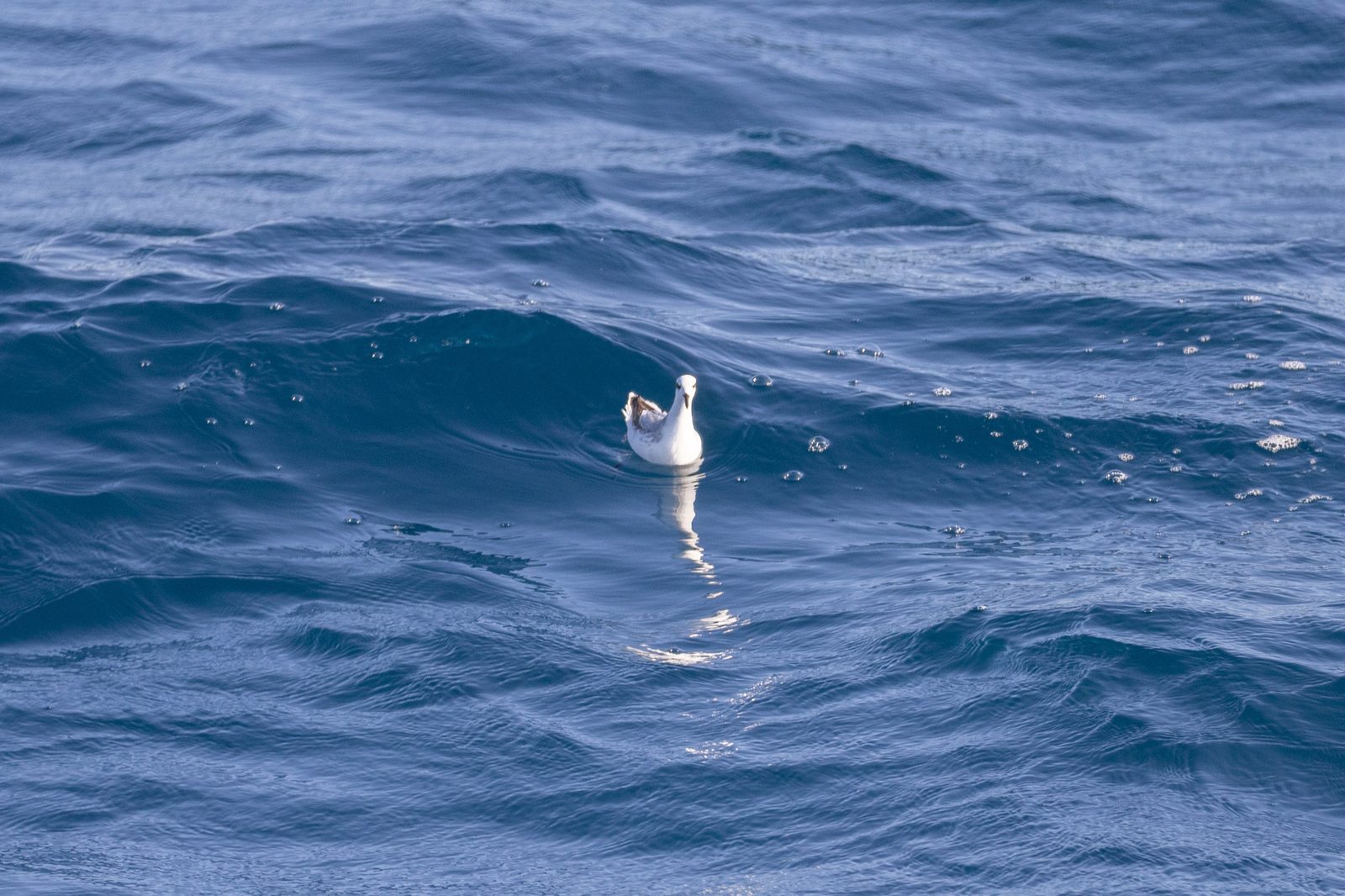
Photo: (c) Gavin Skeen, some rights reserved (CC BY) · CC-BY (May be cropped or resized)
Phalaropus fulicarius
Basic stats
Diet
Invertebrates
Habitat
Arctic tundra when breeding; winters at sea on tropical oceans
Range
Breeds in the Arctic of North America and Eurasia
Clutch size
3–6 olive-brown eggs
Size
About 21cm
The red phalarope, or grey phalarope, is a small wader about 21 cm long, with lobed toes and a straight bill, somewhat thicker than the red-necked phalarope's. The breeding female is predominantly dark brown and black above with red underparts and white cheek patches, and a yellow bill tipped black; the breeding male is a duller version. In winter the plumage is essentially grey above and white below, but the black eyepatch is always present. Young birds are light grey and brown above with buff underparts (Wikipedia, general species account).
It breeds in the Arctic of North America and Eurasia and is migratory, unusually for a wader migrating mainly on oceanic routes and wintering at sea on tropical oceans. Females pursue males, compete for nesting territory and defend nests and mates aggressively; after laying three to six olive-brown eggs in a ground nest near water they leave, and the male incubates and cares for the young, which feed themselves and fly within 18 days. SoIB 2023 lists it as a passage migrant of wetland that eats invertebrates, without a priority category (Wikipedia, general species account; SoIB 2023).
Quick answers
- What does the Red Phalarope eat?
- Invertebrates
- What habitat does the Red Phalarope live in?
- Arctic tundra when breeding; winters at sea on tropical oceans
- Where is the Red Phalarope found?
- Breeds in the Arctic of North America and Eurasia
- How many eggs does the Red Phalarope lay?
- 3–6 olive-brown eggs
- How big is the Red Phalarope?
- About 21cm