
 Wildlife
of India
Wayanad Laughingthrush
Babblers, Laughingthrushes & White-eyes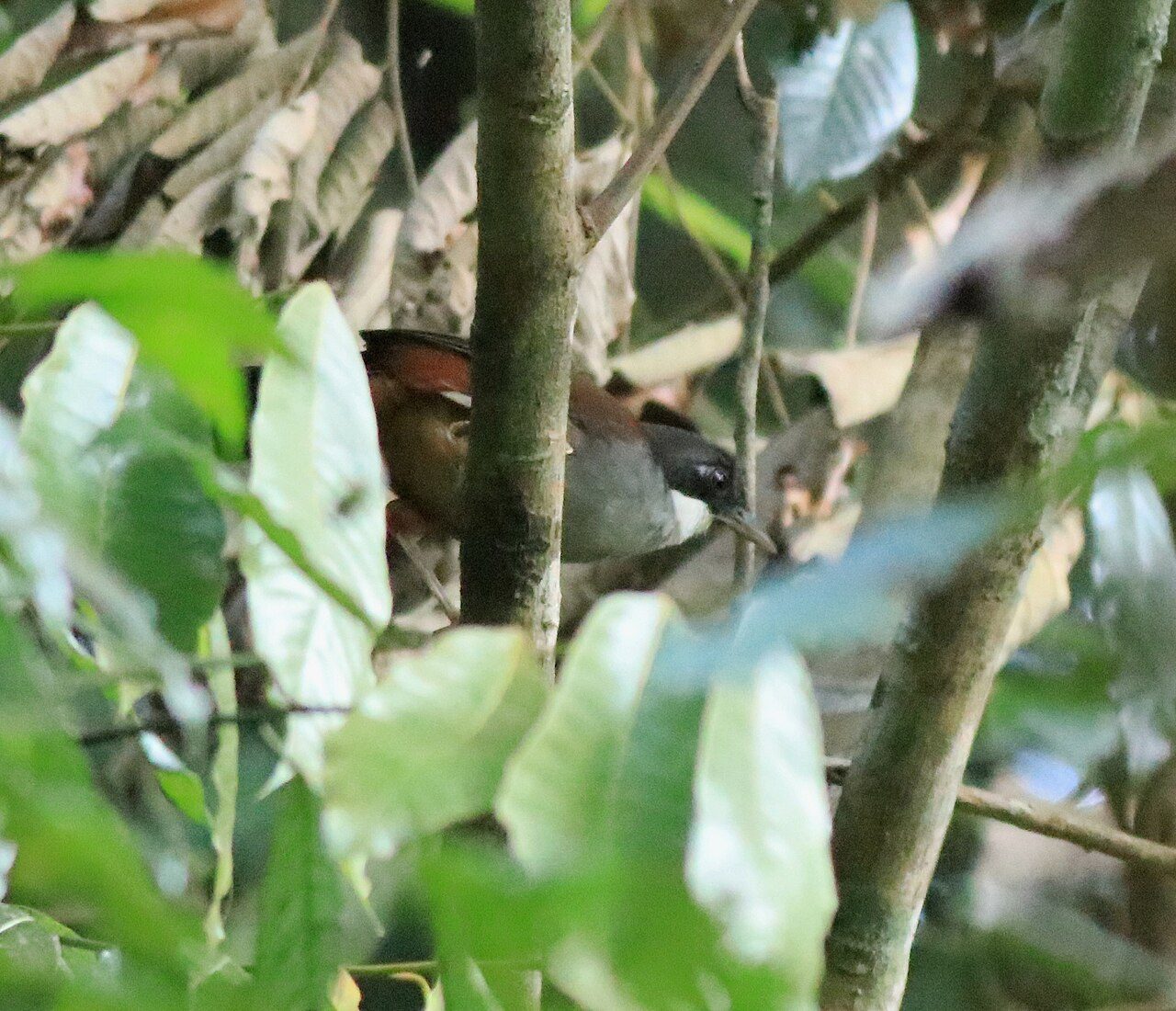
Photo: Afsarnayakkan · CC BY-SA 4.0 (May be cropped or resized)
Pterorhinus delesserti
Basic stats
Diet
Insects, fallen seed and berries, taken on the ground by turning leaves
Habitat
Dense forest; untidy domed cup nest of grasses
Range
Endemic to the Western Ghats south of Goa, from the plains to the higher hills
Clutch size
Typically 3 spherical white eggs
The Wayanad laughingthrush is endemic to the Western Ghats south of Goa. Despite the name, derived from the Wayanad region, it has a wider range than the four other south Indian laughingthrushes, which are restricted to the higher hills. It has brown upperparts, a white throat, a broad black mask through the eye and a heavy bill with pale yellow on the lower mandible, and some resemblance to the rufous-vented laughingthrush of north-east India, which has a yellow throat (Wikipedia, general species account).
The birds move in groups in dense forest, producing loud calls, including shrill chattering and cackling, though they are hard to spot in the undergrowth; some calls resemble the rufous babbler's. They feed mainly on the ground, turning over leaves to find insects, fallen seed and berries. Breeding has been recorded from the plains to the higher hills, in an untidy cup of grasses with a dome above, and the typical clutch is three very spherical, white rather than blue, eggs. SoIB 2023 treats it as a Western Ghats endemic and rates it a Moderate conservation priority, with a Restricted range of about 31,400 km² and insufficient data on trends (Wikipedia, general species account; SoIB 2023).
Quick answers
- What does the Wayanad Laughingthrush eat?
- Insects, fallen seed and berries, taken on the ground by turning leaves
- What habitat does the Wayanad Laughingthrush live in?
- Dense forest; untidy domed cup nest of grasses
- Where is the Wayanad Laughingthrush found?
- Endemic to the Western Ghats south of Goa, from the plains to the higher hills
- How many eggs does the Wayanad Laughingthrush lay?
- Typically 3 spherical white eggs