
 Wildlife
of India
Arctic Tern
Gulls, Terns & Skuas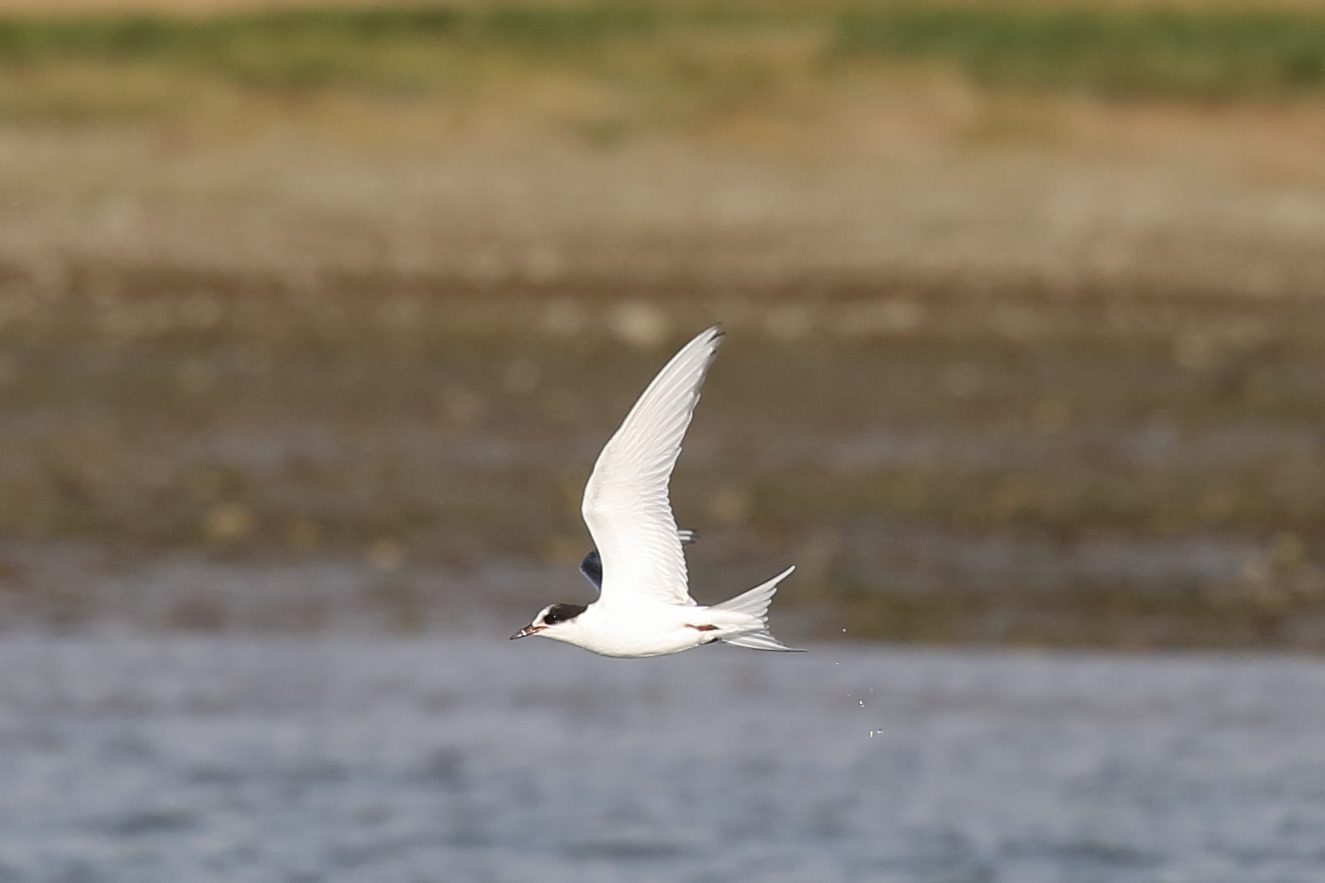
Photo: (c) patrickc, some rights reserved (CC BY) · CC-BY (May be cropped or resized)
Sterna paradisaea
Basic stats
Diet
Vertebrates and carrion
Habitat
Wetland
Range
Circumpolar breeder in the Arctic and subarctic; winters in the Antarctic
Clutch size
1–3 eggs, most often 2
Size
33–36cm; wingspan 76–85cm
Weight
About 100g
The Arctic tern is a medium-sized tern 33–36 cm long with a wingspan of 76–85 cm, weighing about 100 g. In the breeding season it is mainly grey and white, with a blood-red beak and feet, a black crown and nape and white cheeks, a grey mantle and a completely white collar and rump. Its migrations are by far the longest known in the animal kingdom, from northern breeding grounds to the Antarctic coast and back about six months later, with the shortest distance between the two areas about 19,000 km (Wikipedia, general species account).
It has a circumpolar breeding distribution across the Arctic and subarctic of Europe, Asia and North America, and is strongly migratory, seeing two summers each year. Arctic terns are long-lived, many reaching 15–30 years with a record of 31, and lay one to three eggs, most often two. The cached account gives no detail specific to India. SoIB 2023 lists it as a bird of uncertain migratory status in wetland that eats vertebrates, and does not assign a priority category (Wikipedia, general species account; SoIB 2023).
Quick answers
- What does the Arctic Tern eat?
- Vertebrates and carrion
- What habitat does the Arctic Tern live in?
- Wetland
- Where is the Arctic Tern found?
- Circumpolar breeder in the Arctic and subarctic; winters in the Antarctic
- How many eggs does the Arctic Tern lay?
- 1–3 eggs, most often 2
- How big is the Arctic Tern?
- 33–36cm; wingspan 76–85cm
- How much does the Arctic Tern weigh?
- About 100g