
 Wildlife
of India
Beautiful Nuthatch
Tits, Nuthatches & Treecreepers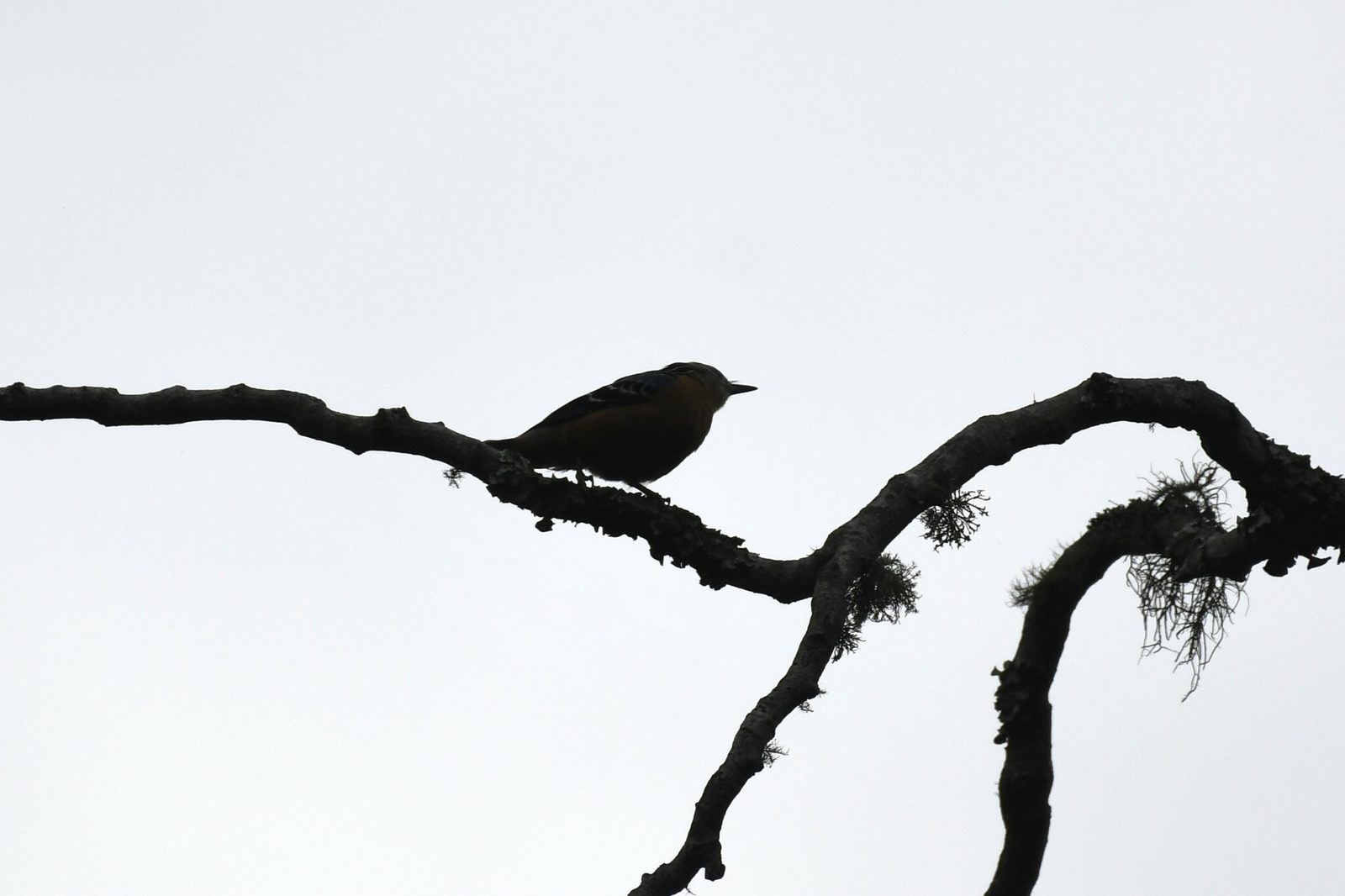
Photo: (c) Tristan Jobin, some rights reserved (CC BY) · CC-BY (May be cropped or resized)
Sitta formosa
Basic stats
Diet
Small insects and larvae from trunks and epiphyte-covered branches
Habitat
Forest; nests in a hole of an oak, rhododendron or other large tree
Range
Eastern Himalaya, north-east India
Clutch size
Typically 4–6 eggs
Size
16.5cm
The beautiful nuthatch is large for a nuthatch at 16.5 cm and not sexually dimorphic. Its upperparts are black and azure, streaked with white and pale blue on the head and lined with the same colours on the wing feathers, with an orange underside and an ochre eyebrow and throat. The crown and upper mantle are black, streaked with pale blue and white (Wikipedia, general species account).
It often takes part in mixed-species foraging flocks, and has been observed feeding with the Himalayan cutia and the velvet-fronted nuthatch. In north-east India the breeding season is April to May, in a nest of plant material and fur placed in a hole in an oak, rhododendron or other large tree, with typically four to six eggs. Its ecology is not fully described and its song is described as low and sweet in tone. SoIB 2023 rates it a High conservation priority, with a Restricted range of about 16,400 km² and insufficient data on trends (Wikipedia, general species account; SoIB 2023).
Quick answers
- What does the Beautiful Nuthatch eat?
- Small insects and larvae from trunks and epiphyte-covered branches
- What habitat does the Beautiful Nuthatch live in?
- Forest; nests in a hole of an oak, rhododendron or other large tree
- Where is the Beautiful Nuthatch found?
- Eastern Himalaya, north-east India
- How many eggs does the Beautiful Nuthatch lay?
- Typically 4–6 eggs
- How big is the Beautiful Nuthatch?
- 16.5cm