
 Wildlife
of India
Common Reed Bunting
Finches, Sparrows & Buntings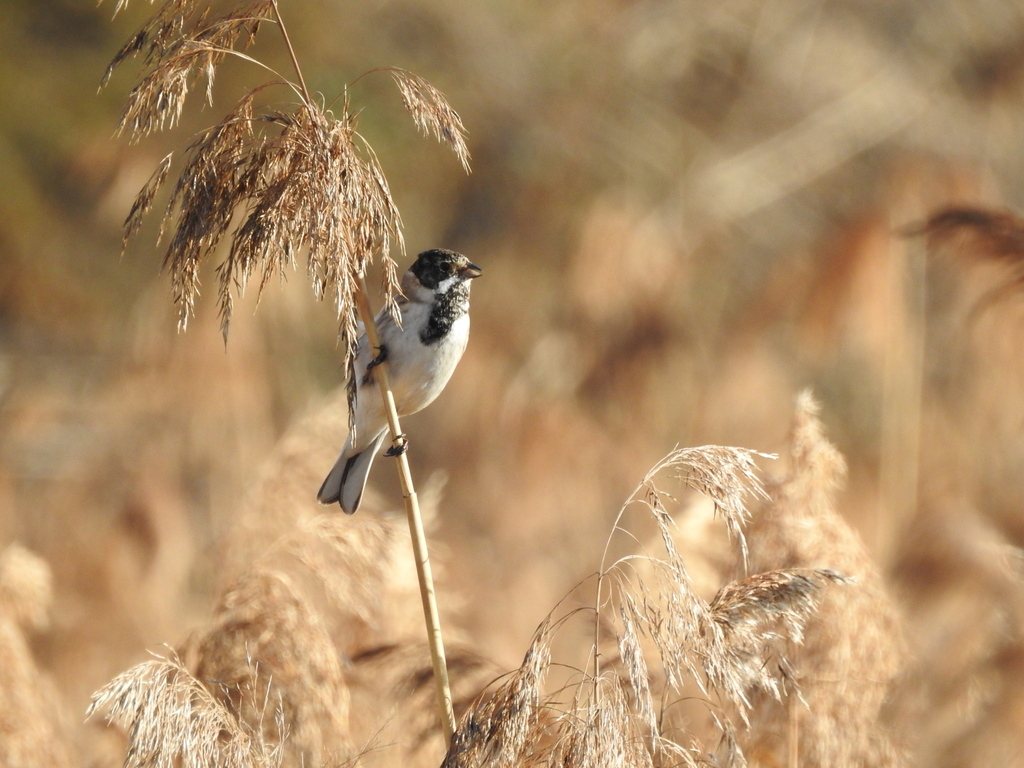
Photo: (c) Ксения Волянская, some rights reserved (CC BY) · CC BY 4.0 (May be cropped or resized)
Schoeniclus schoeniclus
Also known as: Emberiza schoeniclus
Basic stats
Diet
Insects when feeding young; seeds otherwise
Habitat
Reedbeds, and also drier open areas such as moorland and arable land
Range
Breeds throughout Europe and much of the Palearctic; most individuals migrate south in winter
Clutch size
4–5 olive-grey eggs with hair-like markings
Incubation period
12–15 days
Size
13.5–15.5cm
Weight
10–28g
The common reed bunting is a medium-sized bunting, 13.5–15.5 cm long and 10–28 g, with a small but powerful seed-eating bill. The male has a black head and throat, a white neck collar and underparts and a heavily barred brown back, while the female is much duller, with a streaked brown head and more barring underneath. It breeds throughout Europe and much of the Palearctic (Wikipedia, general species account).
While most individuals migrate south in winter, those in the milder south and west of the range are resident. It is a common sight in reedbeds but also breeds in drier open areas such as moorland and arable land, and breeding usually begins in early April and ends in late August depending on location and altitude. Four or five olive-grey eggs are laid with the distinctive hair-like markings of buntings, and both parents feed the chicks during the incubation period of 12–15 days. The male's song is a repetitive srip. The cached account does not describe its Indian range. SoIB 2023 lists it as a winter migrant of non-specialised habitat that eats plants and seeds, without a priority category (Wikipedia, general species account; SoIB 2023).
Quick answers
- What does the Common Reed Bunting eat?
- Insects when feeding young; seeds otherwise
- What habitat does the Common Reed Bunting live in?
- Reedbeds, and also drier open areas such as moorland and arable land
- Where is the Common Reed Bunting found?
- Breeds throughout Europe and much of the Palearctic; most individuals migrate south in winter
- How many eggs does the Common Reed Bunting lay?
- 4–5 olive-grey eggs with hair-like markings
- How long are the eggs of the Common Reed Bunting incubated?
- 12–15 days
- How big is the Common Reed Bunting?
- 13.5–15.5cm
- How much does the Common Reed Bunting weigh?
- 10–28g