
 Wildlife
of India
Eurasian Pygmy Shrew
Pangolins, Hares, Pikas & Shrews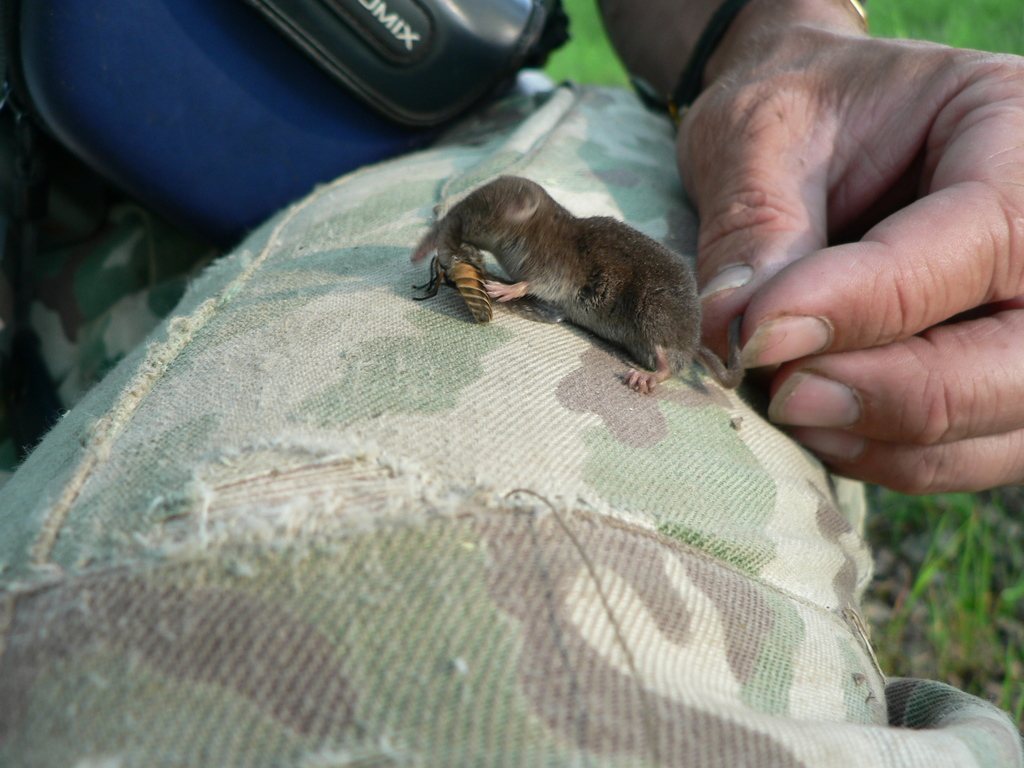
Photo: (c) Nadezhda Kiseleva, some rights reserved (CC BY) · CC-BY (May be cropped or resized)
Sorex minutus
Basic stats
Diet
Small invertebrates; eats up to 125% of its body weight daily
Habitat
Dense vegetation across a broad elevation range; uses other rodents' burrows
Range
Widespread in the northern Palearctic
Litter size
2–8 young; up to 5 litters a year
Gestation period
Just over three weeks
Size
About 5cm; tail 3.5cm
Weight
About 4g
The Eurasian pygmy shrew is a widespread shrew of the northern Palearctic, about 5 cm long with a 3.5 cm tail and an average weight of about 4 g. The dense, shiny fur on the back is blackish with reddish to purplish shades, contrasting with a whitish belly, throat, jaw and lower tail. The muzzle and legs have sparse white hair, and the small ears are half hidden in fur (Wikipedia, general species account).
It is solitary and active day and night, in areas of dense vegetation across a broad range of elevation, using burrows or tunnels of other rodents under tree stumps. It has one of the highest metabolic rates of any animal and must eat about every two hours, up to 125% of its body weight a day. The breeding season runs from April to August, gestation is just over three weeks, and up to five litters of two to eight young are possible in a year. The cached account gives no detail specific to India (Wikipedia, general species account).
Quick answers
- What does the Eurasian Pygmy Shrew eat?
- Small invertebrates; eats up to 125% of its body weight daily
- What habitat does the Eurasian Pygmy Shrew live in?
- Dense vegetation across a broad elevation range; uses other rodents' burrows
- Where is the Eurasian Pygmy Shrew found?
- Widespread in the northern Palearctic
- What is the litter size of the Eurasian Pygmy Shrew?
- 2–8 young; up to 5 litters a year
- How long is the gestation period of the Eurasian Pygmy Shrew?
- Just over three weeks
- How big is the Eurasian Pygmy Shrew?
- About 5cm; tail 3.5cm
- How much does the Eurasian Pygmy Shrew weigh?
- About 4g