
 Wildlife
of India
Eurasian Wigeon
Ducks, Geese & Grebes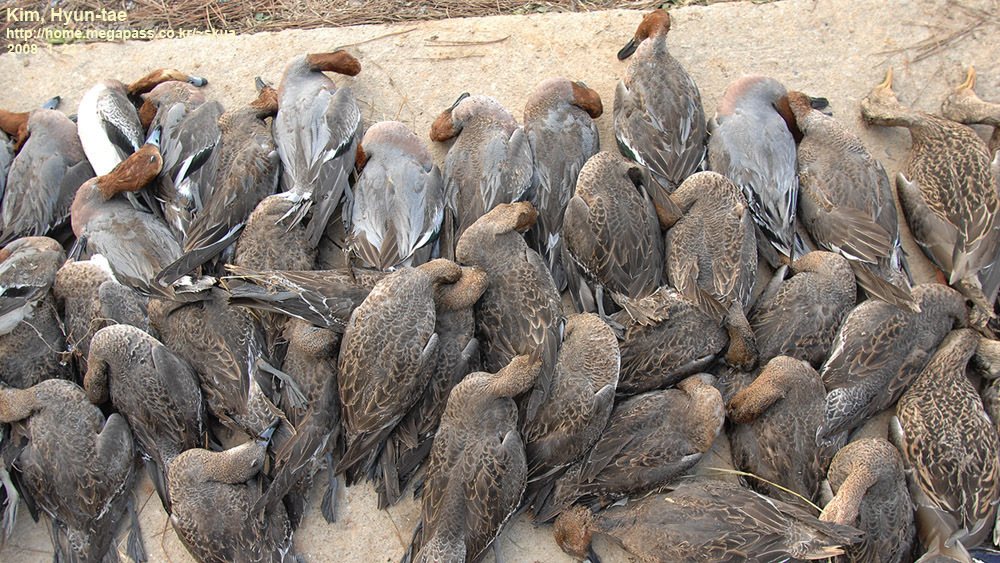
Photo: (c) Kim, Hyun-tae, some rights reserved (CC BY) · CC-BY (May be cropped or resized)
Mareca penelope
Basic stats
Diet
Plant food, taken by dabbling or grazing
Habitat
Open wetlands such as wet grassland and marshes
Range
Breeds in northern Europe and the Palearctic; winters in southern Asia and Africa
Size
42–52cm
Wingspan
71–80cm
Weight
500–1,073g
The Eurasian wigeon is a dabbling duck of 42–52cm, with a wingspan of 71–80cm and a weight of 500–1,073g. The breeding male has a chestnut head with a creamy crown, a pink breast, white belly, grey back and flanks, black rear, dark green speculum and a brilliant white patch on the upper wing that shows at rest and in flight. Females are light brown and come in a redder and a greyer form, and eclipse males look similar. Its shape separates it from most ducks except the American wigeon (Wikipedia, general species account).
It breeds in the far north of Europe and the Palearctic and is strongly migratory, wintering in southern Asia and Africa. It uses open wetlands such as wet grassland and marshes, feeds by dabbling for plant food or grazing, and nests on the ground near water under cover. Outside the breeding season it gathers in large flocks. The male's call is a distinctive whistled pjiew, the female's a low growl. In India it is a winter migrant. SoIB 2023 estimates a long-term decline of about 60% and a current fall of about 4.5% a year, and rates it a Moderate conservation priority (Wikipedia, general species account; SoIB 2023).
Quick answers
- What does the Eurasian Wigeon eat?
- Plant food, taken by dabbling or grazing
- What habitat does the Eurasian Wigeon live in?
- Open wetlands such as wet grassland and marshes
- Where is the Eurasian Wigeon found?
- Breeds in northern Europe and the Palearctic; winters in southern Asia and Africa
- How big is the Eurasian Wigeon?
- 42–52cm
- What is the wingspan of the Eurasian Wigeon?
- 71–80cm
- How much does the Eurasian Wigeon weigh?
- 500–1,073g