
 Wildlife
of India
Ferruginous Duck
Ducks, Geese & Grebes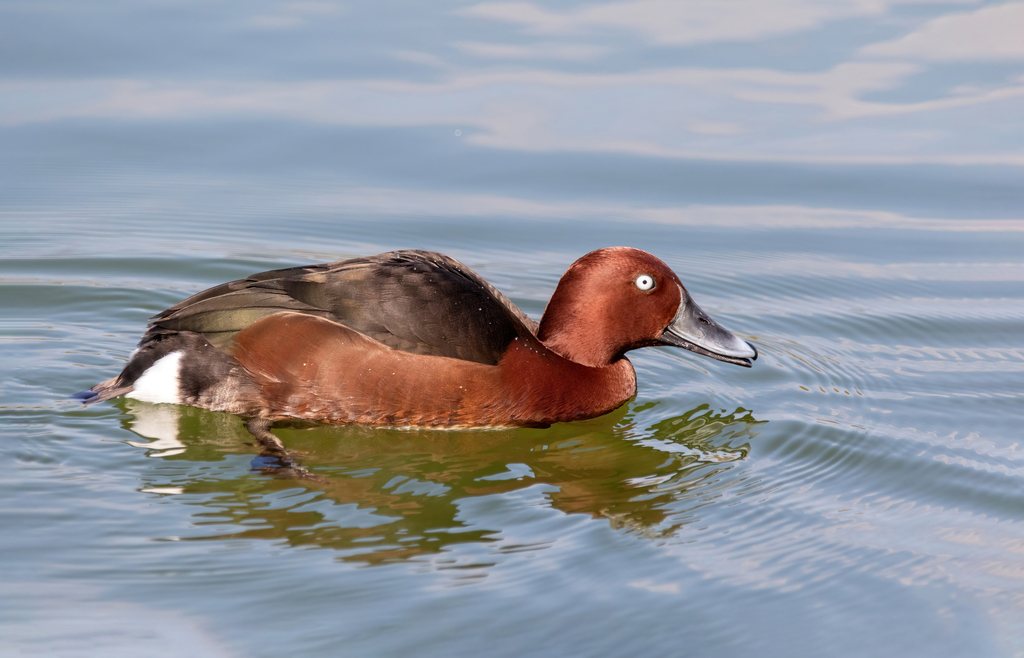
Photo: (c) Alexis Lours, some rights reserved (CC BY) · CC-BY (May be cropped or resized)
Aythya nyroca
Basic stats
Habitat
Wetland; nests on the ground near water, or floating among emergent vegetation
Range
Breeds from Iberia and the Maghreb east to western Mongolia and south to Arabia
Incubation period
25–27 days
The ferruginous duck, also called the ferruginous pochard or white-eyed pochard, is a medium-sized diving duck of the Palearctic. The breeding male is rich dark chestnut on the head, breast and flanks with contrasting pure white undertail coverts, and in flight shows a white belly and underwing patch. Females are duller and browner, and the male has a yellow eye while the female's is dark (Wikipedia, general species account).
Its breeding range runs from Iberia and the Maghreb east to western Mongolia and south to Arabia, though in the west it is now scarce and localised. It winters around the Mediterranean and Black Sea. Eggs are laid from the end of April or early May in a nest on the ground close to water or sometimes floating among emergent vegetation, and are incubated for 25–27 days, with fledging at 55–60 days. SoIB 2023 treats it as a winter migrant of wetlands, rates it a Moderate conservation priority, and gives a Large range and an inconclusive long-term trend of about −40% (Wikipedia, general species account; SoIB 2023).
Quick answers
- What habitat does the Ferruginous Duck live in?
- Wetland; nests on the ground near water, or floating among emergent vegetation
- Where is the Ferruginous Duck found?
- Breeds from Iberia and the Maghreb east to western Mongolia and south to Arabia
- How long are the eggs of the Ferruginous Duck incubated?
- 25–27 days