
 Wildlife
of India
Himalayan Marmot
Squirrels & Flying Squirrels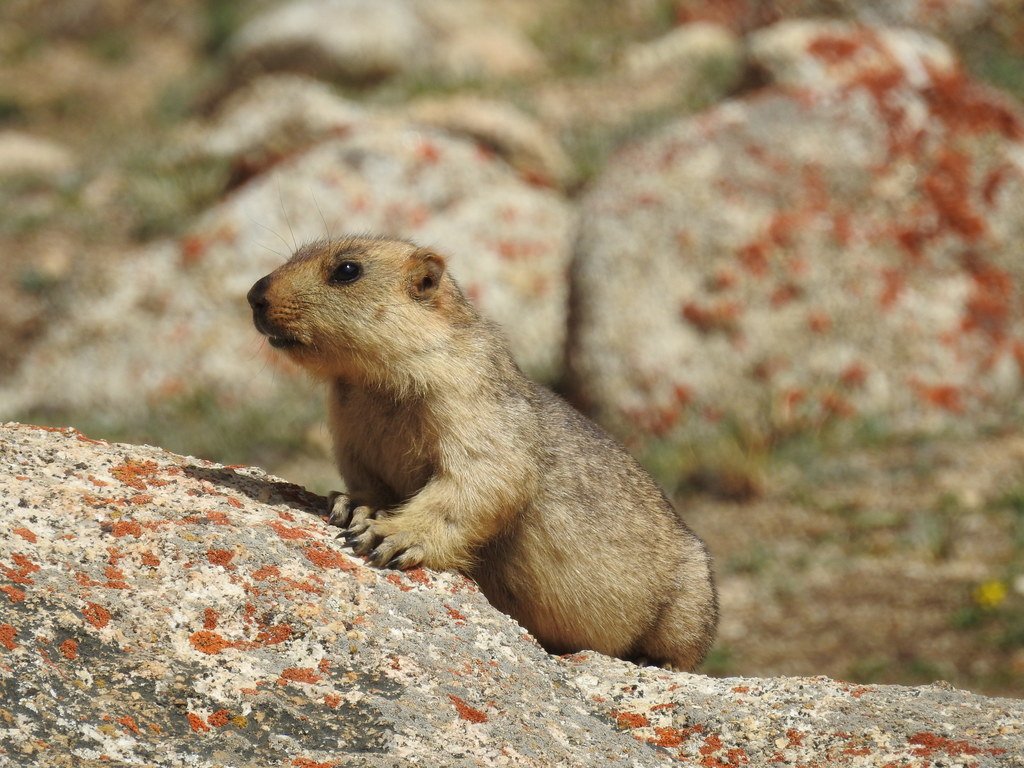
Photo: Ashwin Viswanathan · CC-BY (May be cropped or resized)
Marmota himalayana
Basic stats
Diet
Pasture plants, including sedges, grasses and flowering herbs
Habitat
Alpine grasslands; deep colony burrows
Range
Himalaya and the Tibetan Plateau
Litter size
2–11 young
Gestation period
About one month
Size
Total length 45–67cm; tail 12–15cm
Weight
4–9.2kg
The Himalayan marmot is one of the largest marmots, about the size of a large house cat, weighing 4–9.2 kg and 45–67 cm long with a 12–15 cm tail. The fur is dense and woolly, rufous grey on the back and rufous yellowish on the ears, belly and limbs, with a dark brown nose bridge and tail tip. Weight is lowest after hibernation in spring and highest before it in autumn, at more than 7 kg on average (Wikipedia, general species account).
It inhabits alpine grasslands throughout the Himalaya and on the Tibetan Plateau. It lives in colonies and digs deep burrows, 2–10 m deep, that colony members share during hibernation, which lasts from late autumn to early spring, about 7½ months on average. It eats plants growing on pastures, especially the soft parts of sedges and grasses and flowering herbs. After a month's gestation a female bears two to 11 young (Wikipedia, general species account).
Quick answers
- What does the Himalayan Marmot eat?
- Pasture plants, including sedges, grasses and flowering herbs
- What habitat does the Himalayan Marmot live in?
- Alpine grasslands; deep colony burrows
- Where is the Himalayan Marmot found?
- Himalaya and the Tibetan Plateau
- What is the litter size of the Himalayan Marmot?
- 2–11 young
- How long is the gestation period of the Himalayan Marmot?
- About one month
- How big is the Himalayan Marmot?
- Total length 45–67cm; tail 12–15cm
- How much does the Himalayan Marmot weigh?
- 4–9.2kg