
 Wildlife
of India
Ibisbill
Shorebirds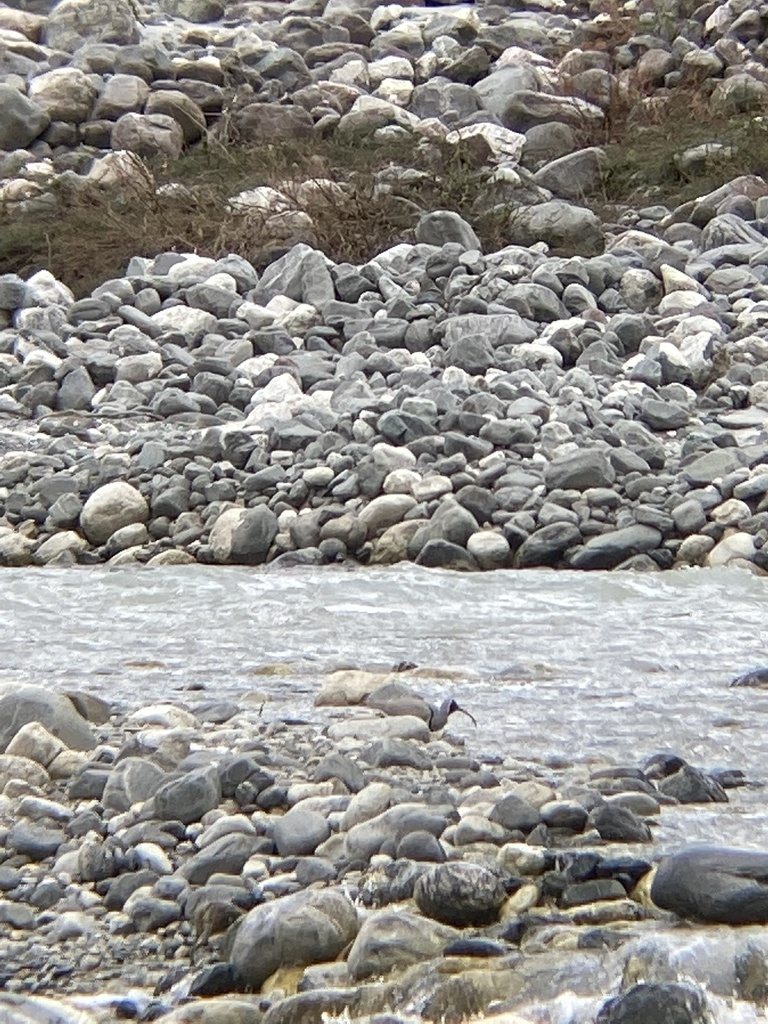
Photo: no rights reserved · CC0
Ibidorhyncha struthersii
Basic stats
Diet
Invertebrates
Habitat
Shingle riverbanks of high plateaus; slow-flowing water
Range
Central Asia and the Himalaya, from Lake Issyk-Kul to the southern border of Manchuria
Size
38–41cm
Weight
270–320g
The ibisbill is related to the waders but distinctive enough to have its own family. It is unmistakable, 38–41 cm long and 270–320 g: grey with a white belly, red legs, a black face and black breast band, and a long, crimson, down-curved bill 6.8–8.2 cm long, slightly longer in females, like that of the unrelated ibis. Young birds lack the black on the face and breast and have a duller bill (Wikipedia, general species account).
It occurs on the shingle riverbanks of the high plateaus of Central Asia and the Himalaya, from Lake Issyk-Kul to the southern border of Manchuria, and outside the breeding season may descend as low as 100 m. It must live near slow-flowing water to feed, which limits its habitat despite a large range. The call is a ringing klew-klew like a greenshank's. SoIB 2023 rates it a Moderate conservation priority, a local migrant of wetland with a Restricted range of about 19,400 km² (Wikipedia, general species account; SoIB 2023).
Quick answers
- What does the Ibisbill eat?
- Invertebrates
- What habitat does the Ibisbill live in?
- Shingle riverbanks of high plateaus; slow-flowing water
- Where is the Ibisbill found?
- Central Asia and the Himalaya, from Lake Issyk-Kul to the southern border of Manchuria
- How big is the Ibisbill?
- 38–41cm
- How much does the Ibisbill weigh?
- 270–320g