
 Wildlife
of India
Indian Flapshell Turtle
Tortoises & Freshwater Turtles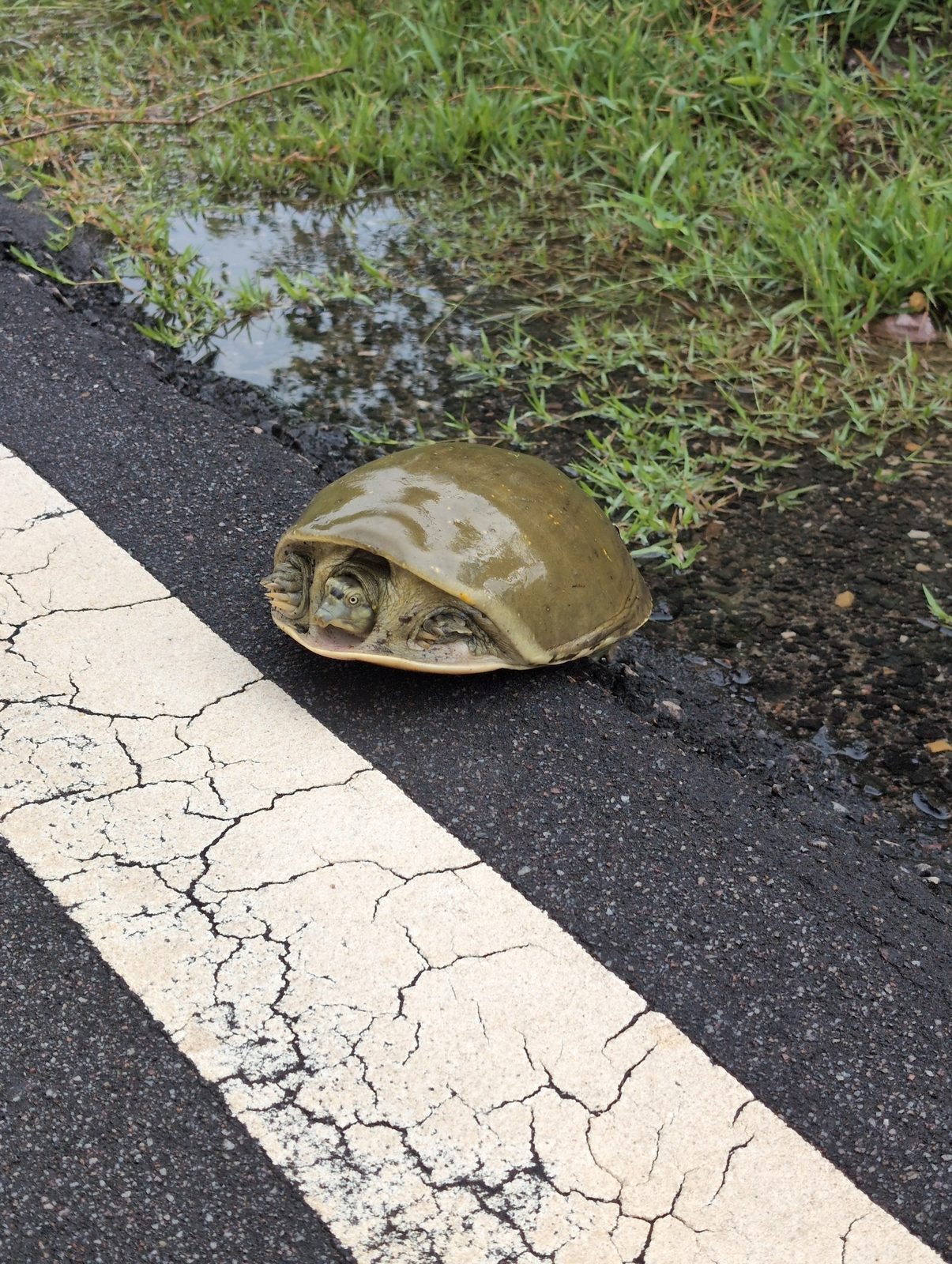
Photo: (c) Rahul Gupta, some rights reserved (CC BY) · CC-BY (May be cropped or resized)
Lissemys punctata
Basic stats
Diet
Omnivorous: frogs, shrimp, snails, aquatic plants, fruits and seeds
Habitat
Lakes, rivers and desert ponds, preferring sand or mud bottoms
Range
Pakistan, India, Sri Lanka, Nepal, Bangladesh and Myanmar; introduced to the Andaman and Nicobar Islands
Clutch size
2–16 eggs, laid two or three times a year
Size
Carapace 24–37cm
The Indian flapshell turtle is a freshwater turtle of South Asia, common and widespread across much of its range. The name comes from the femoral flaps on the plastron, a pair of large flaps that can be closed over the hind limbs with a smaller flap over the tail; they cover the limbs when the turtle retracts into its shell. The head is large and the claws are heavy. The carapace is broadly oval in adults and more circular in the young (Wikipedia, general species account).
It is omnivorous, taking frogs, shrimp, snails, aquatic vegetation, leaves, flowers, fruits and seeds, and it prefers sand or mud bottoms because it burrows. Eggs are buried in soil, usually two or three times a year in clutches of two to 16. In the desert ponds of Rajasthan many are reported to die in dry summers, though some turtles have been reported to survive up to 160 days of drought. The Reptile Database lists it from India in states from Tamil Nadu and Kerala to Sikkim, Gujarat, Assam and Jammu and Kashmir.
Quick answers
- What does the Indian Flapshell Turtle eat?
- Omnivorous: frogs, shrimp, snails, aquatic plants, fruits and seeds
- What habitat does the Indian Flapshell Turtle live in?
- Lakes, rivers and desert ponds, preferring sand or mud bottoms
- Where is the Indian Flapshell Turtle found?
- Pakistan, India, Sri Lanka, Nepal, Bangladesh and Myanmar; introduced to the Andaman and Nicobar Islands
- How many eggs does the Indian Flapshell Turtle lay?
- 2–16 eggs, laid two or three times a year
- How big is the Indian Flapshell Turtle?
- Carapace 24–37cm