
 Wildlife
of India
Indian Roundleaf Bat
Bats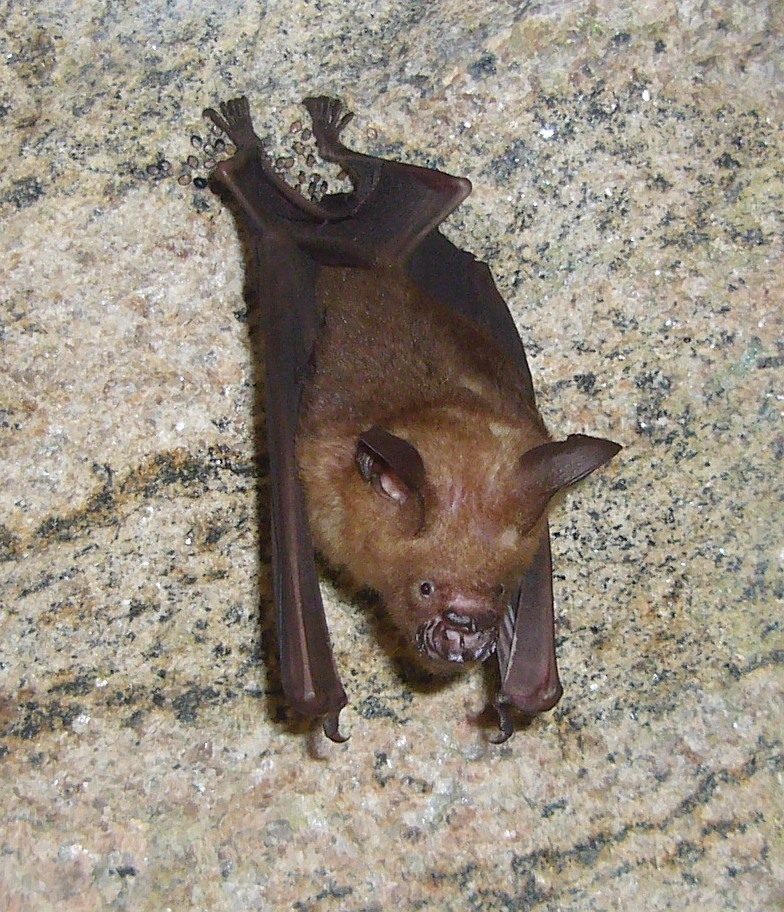
Photo: Pieter Prins · CC BY-SA 4.0 (May be cropped or resized)
Hipposideros lankadiva
Basic stats
Diet
Beetles, especially scarabs, and other large, slow-flying insects
Habitat
Caves, abandoned tunnels, temples, old forts and chambers under dams and buildings
Range
Indian subcontinent, with marginal populations in Myanmar
Litter size
1 young
Gestation period
About 260 days
Size
Forearm 75–99mm, average 83.5mm
Weight
About 59g
The Indian roundleaf bat, also known as the large Ceylon leaf-nosed bat, is a large leaf-nosed bat with yellowish-brown fur, darker on the head and shoulders. The forearm averages 83.5 mm, with a range of 75–99 mm, and the average weight is about 59 g. It is endemic to the Indian subcontinent, with marginal populations in Southeast Asia, and three subspecies occur in India, Sri Lanka and Myanmar; the Indian subspecies is the smallest (Wikipedia, general species account).
It is gregarious, roosting in groups of 50 to several thousand in caves, abandoned tunnels, temples, old forts and chambers under dams and buildings. It is an insectivore, feeding mainly on beetles, especially scarabs, and other large, slow-flying insects. Gestation is about 260 days, with a single young. Disturbance of roosts and collection for food are named threats (Wikipedia, general species account).
Quick answers
- What does the Indian Roundleaf Bat eat?
- Beetles, especially scarabs, and other large, slow-flying insects
- What habitat does the Indian Roundleaf Bat live in?
- Caves, abandoned tunnels, temples, old forts and chambers under dams and buildings
- Where is the Indian Roundleaf Bat found?
- Indian subcontinent, with marginal populations in Myanmar
- What is the litter size of the Indian Roundleaf Bat?
- 1 young
- How long is the gestation period of the Indian Roundleaf Bat?
- About 260 days
- How big is the Indian Roundleaf Bat?
- Forearm 75–99mm, average 83.5mm
- How much does the Indian Roundleaf Bat weigh?
- About 59g