
 Wildlife
of India
Jungle Babbler
Babblers, Laughingthrushes & White-eyes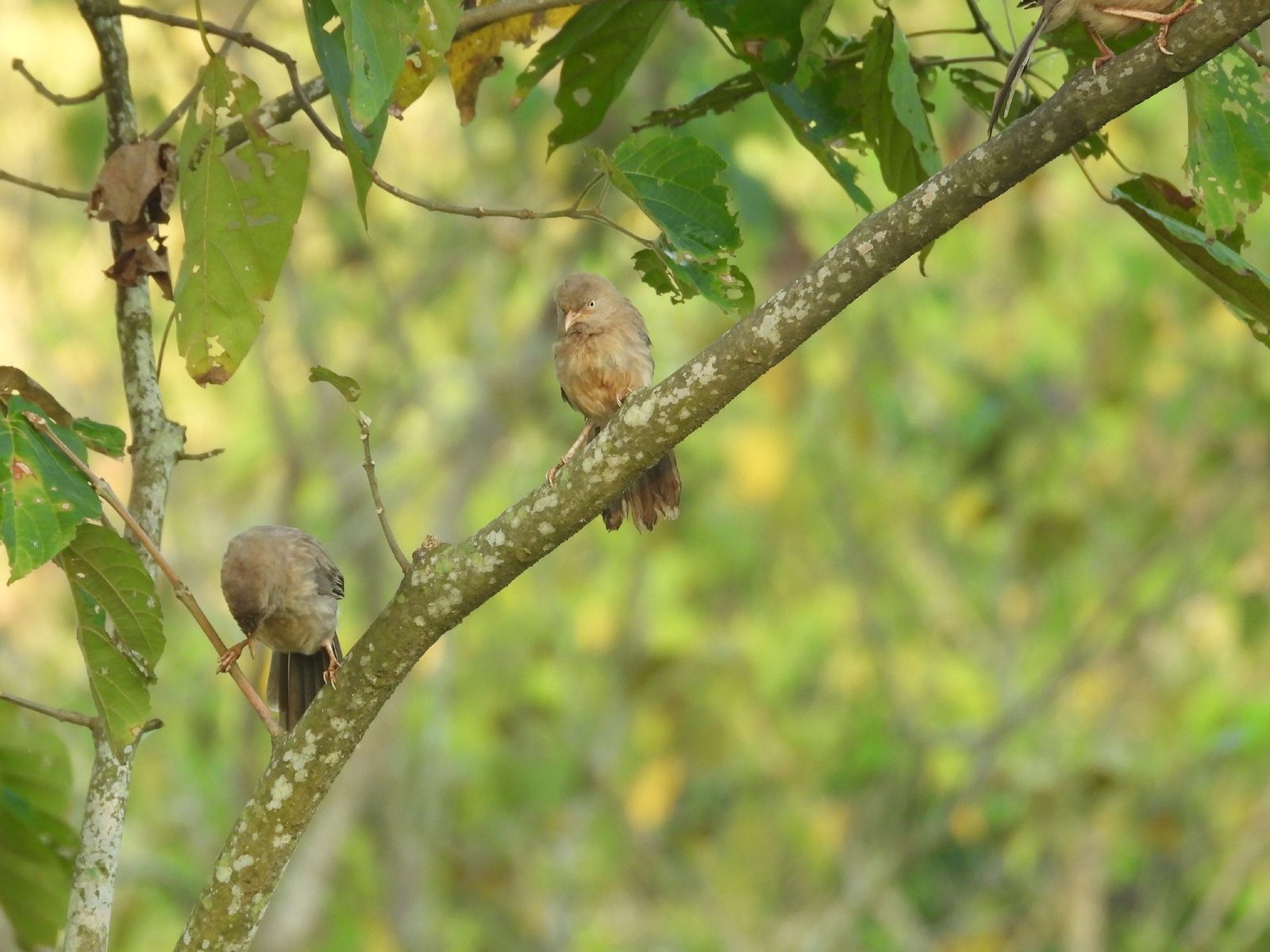
Photo: (c) Subir B. Shakya, some rights reserved (CC BY) · CC-BY (May be cropped or resized)
Argya striata
Basic stats
Diet
Mainly insects; also grains, nectar and berries
Habitat
Gardens within large cities and forested areas; forages in small groups of six to ten
Range
Indian subcontinent
Clutch size
Normally 3–4 deep greenish-blue eggs, up to 7
The jungle babbler is a common resident breeding bird in most parts of the Indian subcontinent, often seen in gardens in large cities as well as in forested areas. The sexes are identical, drably coloured in brownish grey with a yellow bill, so it is confusable only with the yellow-billed babblers of peninsular India and Sri Lanka. The orange-billed babbler of Sri Lanka, once considered a subspecies, is now a species (Wikipedia, general species account).
Jungle babblers are gregarious, foraging in small groups of six to ten birds, a habit that gave them the name seven sisters in urban northern India and seven brothers in Bengali. Like most babblers they are non-migratory, with short rounded wings and weak flight, and have harsh nasal calls. They sometimes form the core of a mixed-species flock, and feed mainly on insects but also grains, nectar and berries. For their size they are long lived, up to 16.5 years in captivity. SoIB 2023 treats it as endemic to the Indian subcontinent and rates it a Low conservation priority, with a Very Large range of about 1.78 million km² and stable current trend (Wikipedia, general species account; SoIB 2023).
Quick answers
- What does the Jungle Babbler eat?
- Mainly insects; also grains, nectar and berries
- What habitat does the Jungle Babbler live in?
- Gardens within large cities and forested areas; forages in small groups of six to ten
- Where is the Jungle Babbler found?
- Indian subcontinent
- How many eggs does the Jungle Babbler lay?
- Normally 3–4 deep greenish-blue eggs, up to 7