
 Wildlife
of India
Lesser Bandicoot Rat
Rats, Mice, Voles & Porcupines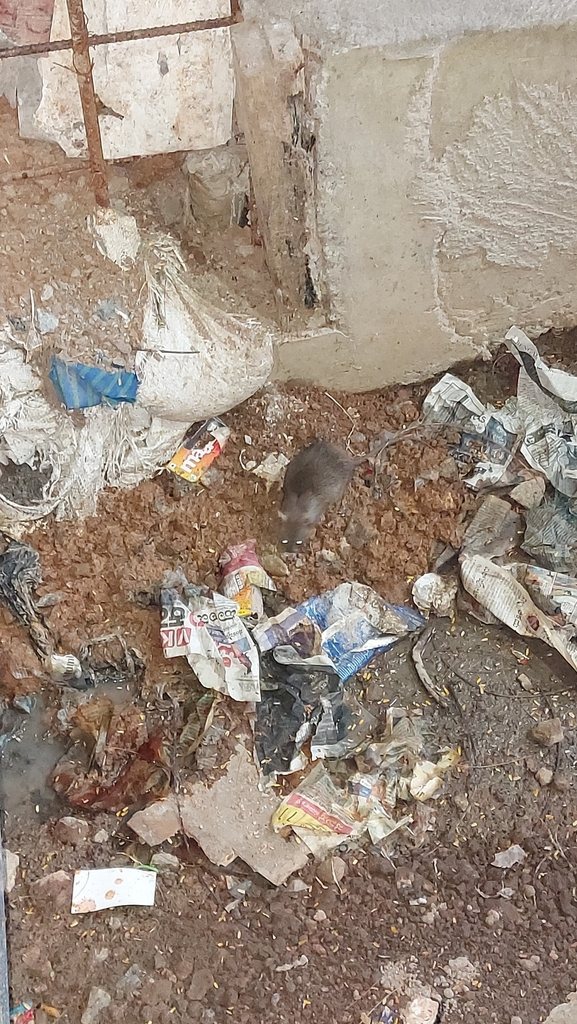
Photo: (c) Ronith Urs, some rights reserved (CC BY) · CC-BY (May be cropped or resized)
Bandicota bengalensis
Basic stats
Diet
Grains, fruit and invertebrates
Habitat
Burrows in cereal crops and gardens; can tunnel in concrete
Range
Bangladesh, India and Sri Lanka
Litter size
10–12 young per litter
Size
Head and body about 25cm; up to 40cm including tail
The lesser bandicoot rat, also called the Bengal rat or Indian mole-rat, is a giant rat of southern Asia, unrelated to the true bandicoots, which are marsupials. It is up to about 40 cm long including the tail, with a head and body of about 25 cm and a uniformly dark tail shorter than the body. The fur is dark or, rarely, pale brown above, occasionally blackish, and light to dark grey below. It grunts like a pig when attacking (Wikipedia, general species account).
It is regarded as a pest in the cereal crops and gardens of Bangladesh, India and Sri Lanka. It digs extensive burrows with a characteristic pile of earth at the entrance, made of numerous chambers and bolt-holes, and is an especially aggressive burrower, reported to tunnel into concrete cellars. Usually one animal occupies a burrow except when a mother has young. It is nocturnal or most active at twilight and eats mainly grains, fruit and invertebrates. Females can have up to ten litters, and adults live about 8–9 months (Wikipedia, general species account).
Quick answers
- What does the Lesser Bandicoot Rat eat?
- Grains, fruit and invertebrates
- What habitat does the Lesser Bandicoot Rat live in?
- Burrows in cereal crops and gardens; can tunnel in concrete
- Where is the Lesser Bandicoot Rat found?
- Bangladesh, India and Sri Lanka
- What is the litter size of the Lesser Bandicoot Rat?
- 10–12 young per litter
- How big is the Lesser Bandicoot Rat?
- Head and body about 25cm; up to 40cm including tail