
 Wildlife
of India
Little Bunting
Finches, Sparrows & Buntings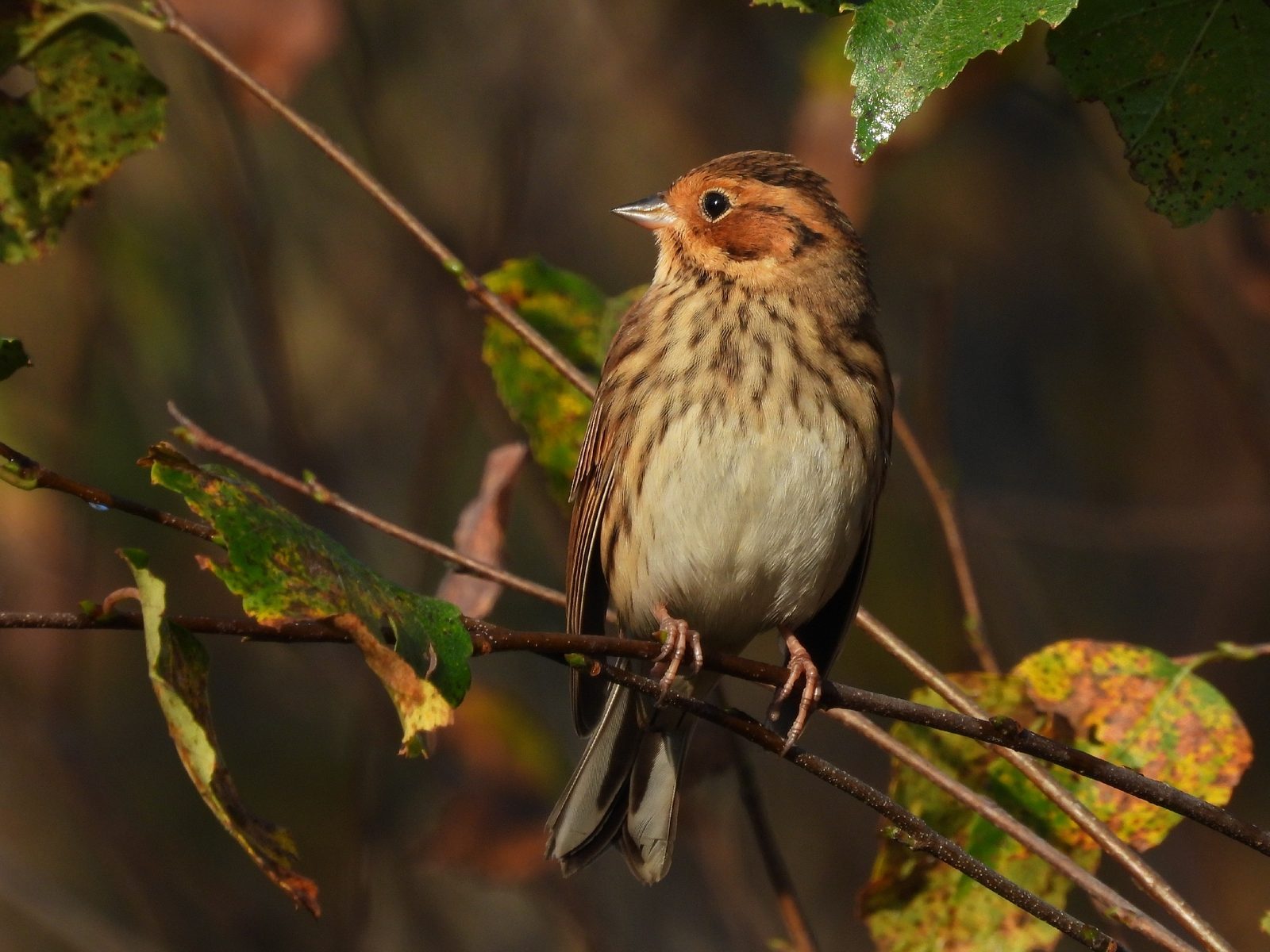
Photo: (c) Евгений Маринкин, some rights reserved (CC BY) · CC-BY (May be cropped or resized)
Schoeniclus pusillus
Also known as: Emberiza pusilla
Basic stats
Diet
Seeds; insects when feeding young
Habitat
Open coniferous woodland, often with some birch or willow; nest in a tree
Range
Breeds across the taiga of the far north-east of Europe and northern Eurosiberia to the Russian Far East; winters in northern India, southern China and northern parts of south-east Asia
Clutch size
4–6 eggs
Size
12–14cm
The little bunting is a small bunting, only 12–14 cm long, with white underparts with dark streaking on the breast and sides. With its chestnut face and white malar stripe it resembles a small female reed bunting, but has black crown stripes, a white eye ring and a fine dark border to the rear of its chestnut cheeks. It breeds across the taiga of the far north-east of Europe and northern Eurosiberia to the Russian Far East, in open coniferous woodland, often with some birch or willow (Wikipedia, general species account).
It is migratory, wintering in the subtropics in northern India, southern China and the northern parts of south-east Asia. Four to six eggs are laid in a tree nest. The call is a distinctive zik and the song a rolling siroo-sir-sir-siroo. Its natural food is seeds, or insects when feeding young. SoIB 2023 rates it a Low conservation priority, a winter migrant of open habitat that eats plants and seeds, with a Moderate range of about 55,700 km² and insufficient data on trends (Wikipedia, general species account; SoIB 2023).
Quick answers
- What does the Little Bunting eat?
- Seeds; insects when feeding young
- What habitat does the Little Bunting live in?
- Open coniferous woodland, often with some birch or willow; nest in a tree
- Where is the Little Bunting found?
- Breeds across the taiga of the far north-east of Europe and northern Eurosiberia to the Russian Far East; winters in northern India, southern China and northern parts of south-east Asia
- How many eggs does the Little Bunting lay?
- 4–6 eggs
- How big is the Little Bunting?
- 12–14cm