
 Wildlife
of India
Monilesaurus rouxii
Agamids & Forest Lizards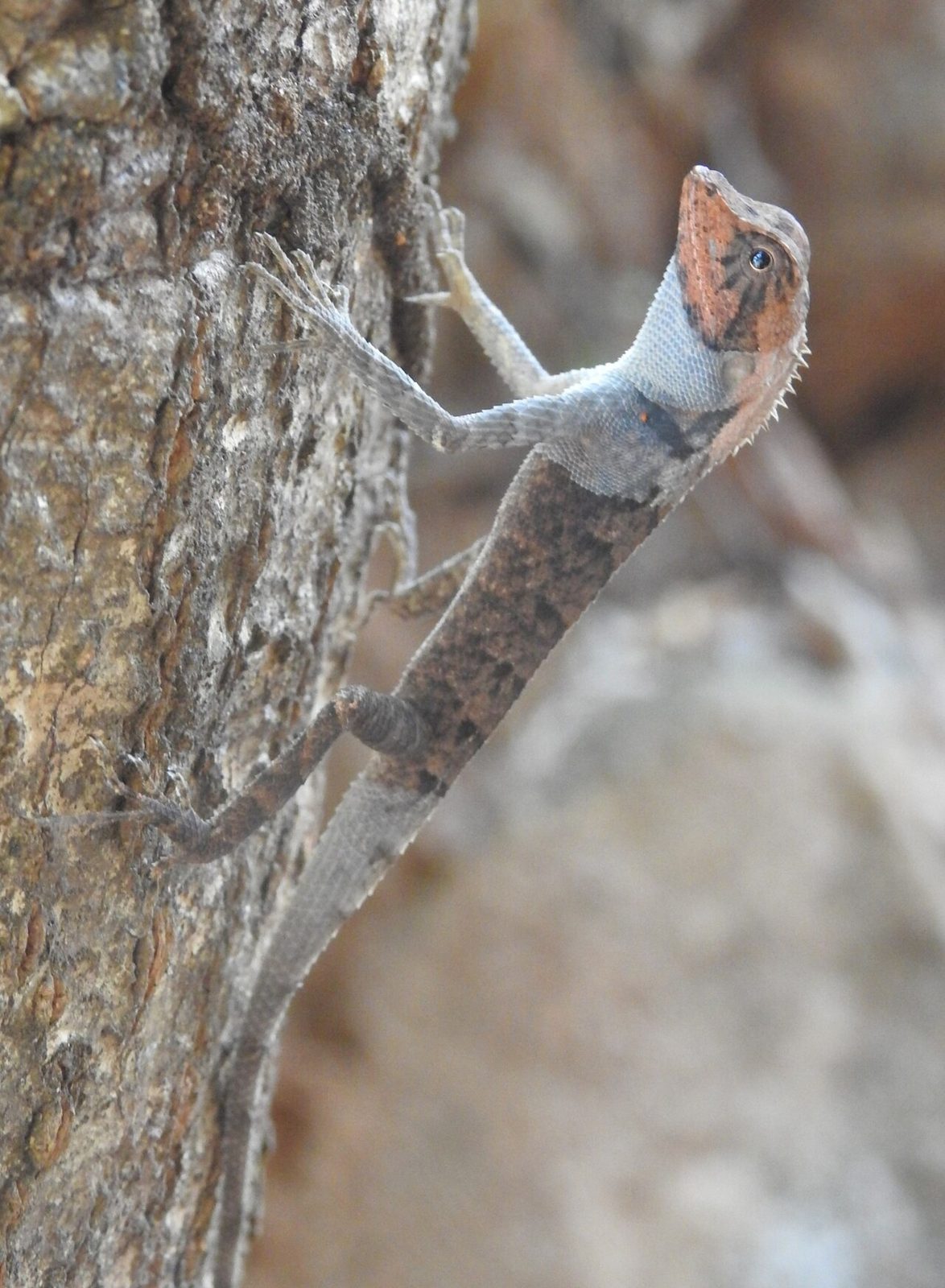
Photo: Manoj Karingamadathil · CC BY-SA 4.0 (May be cropped or resized)
Monilesaurus rouxii
Basic stats
Diet
Insects
Habitat
Moist evergreen to secondary deciduous forest, 100–900m
Range
Hills of peninsular India, except the far south
Size
Up to 30cm in total; 25cm more common
Roux's forest lizard, also called the forest bloodsucker, is an arboreal, diurnal agamid lizard endemic to the hills of peninsular India. It has an olive-brown body with a lighter belly, a dark band along the side of the head onto the neck, and dark lines radiating from the eye. In males the upper head, nape and throat pouch turn brick-red in the breeding season, and two small groups of spines sit on each side of the neck (Wikipedia, general species account).
It is reported largely from wet hill forest, except in the far south, at 100–900 m elevation, in habitats from moist evergreen to secondary deciduous forest. It is an insect-eater that hunts by day both on the ground and in trees. It lays eggs, breeding between April and September. Total length reaches up to 30 cm, though 25 cm is more common.
Quick answers
- What does the Monilesaurus rouxii eat?
- Insects
- What habitat does the Monilesaurus rouxii live in?
- Moist evergreen to secondary deciduous forest, 100–900m
- Where is the Monilesaurus rouxii found?
- Hills of peninsular India, except the far south
- How big is the Monilesaurus rouxii?
- Up to 30cm in total; 25cm more common