
 Wildlife
of India
Nicobar Megapode
Pheasants, Partridges & Quails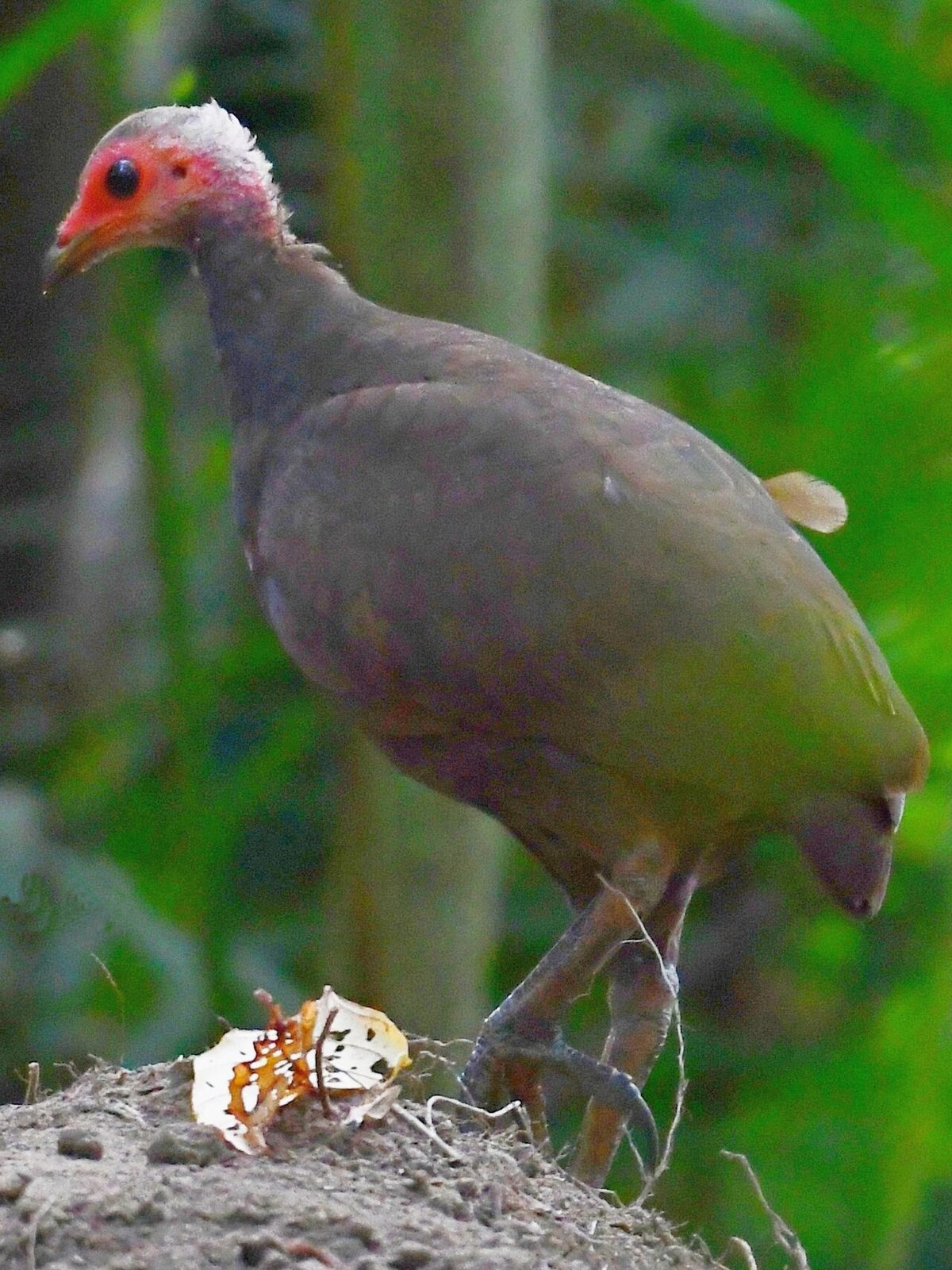
Photo: Dr jishnu · CC BY-SA 4.0 (May be cropped or resized)
Megapodius nicobariensis
Basic stats
Diet
Invertebrates (SoIB 2023 diet guild)
Habitat
Dense coastal forest beside the shore
Range
Endemic to the Nicobar Islands
The Nicobar megapode, or Nicobar scrubfowl, is a chicken-like bird with dark brown plumage, a short tail and, as its name suggests, large, strong feet and claws. The head is greyer, with a rufous crest. Unlike other game birds, its hind toe sits at the same level as the front toes, giving it a better grip. Like all megapodes it does not sit on its eggs: pairs build a large mound of soil and vegetation, and the heat of rotting plant matter incubates the eggs. The chicks dig themselves out fully feathered and able to fly (Wikipedia, general species account).
Megapodes are secretive, moving through thick jungle beside the shore by day and coming out onto the beach after dark. They travel in pairs or small family groups that keep in touch with cackling calls, and pairs sing duets and hold territories. When disturbed they prefer to run and fly only when pressed. The Nicobar Islands lie at the western edge of the megapode family's range, far from any other species. Islanders have long collected the eggs and birds for food (Wikipedia, general species account).
The December 2004 tsunami hit the species hard. A survey of 15 Nicobar islands in 2006 estimated 395–790 breeding pairs, against 2,318–4,056 in 1994, a decline of about 70%; megapodes were wiped out on Megapode and Trax islands, and over 90% of the remaining mounds were within 30 m of the shore and smaller than before (Sivakumar 2009). The State of India's Birds 2023 rates it a High conservation priority, with a restricted range of about 1,500 km² (SoIB 2023).
Quick answers
- What does the Nicobar Megapode eat?
- Invertebrates (SoIB 2023 diet guild)
- What habitat does the Nicobar Megapode live in?
- Dense coastal forest beside the shore
- Where is the Nicobar Megapode found?
- Endemic to the Nicobar Islands