
 Wildlife
of India
Pied Wheatear
Thrushes, Chats & Flycatchers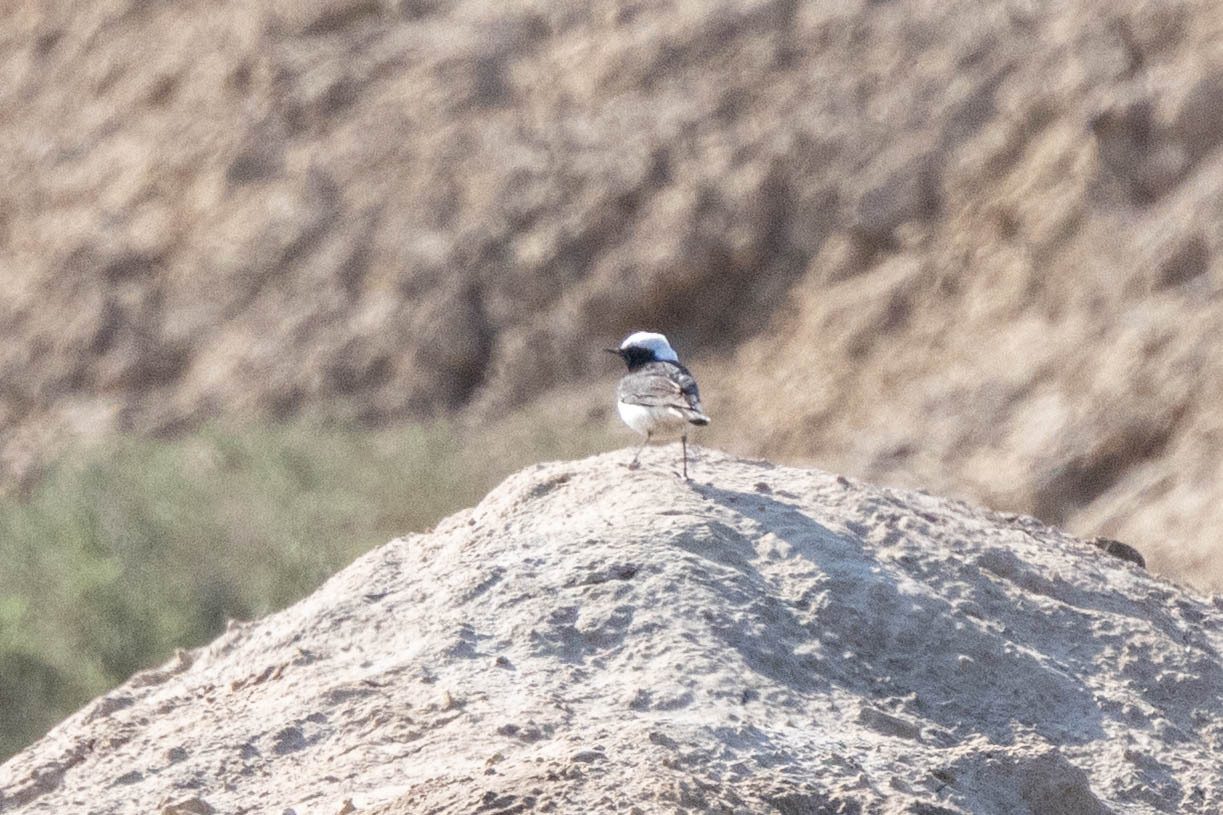
Photo: (c) Антон Лабачоў, some rights reserved (CC BY) · CC-BY (May be cropped or resized)
Oenanthe pleschanka
Basic stats
Diet
Mainly insects, also seeds
Habitat
Open, stony, sparsely vegetated regions; nests in a hole, under a stone or in a rock crevice
Range
Breeds from Romania and Bulgaria to Siberia, Altai and Mongolia and south to the Caucasus, Transcaspia, Turkestan, Iran and Afghanistan; winters in India and north-east Africa
Clutch size
4–6 greenish-blue eggs with rust-coloured spots at the larger end, from early May
Size
About 14cm
The pied wheatear is a migratory central Asian wheatear, about 14 cm long, occurring from the extreme south-east of Europe to China and found wintering in India and north-eastern Africa. The male is a boldly marked white-and-black bird, with a white crown tinged brown contrasting with the black face and throat and a white rump. The female is browner with a sandy-buff wash on the head, darker than female northern wheatears, smaller-looking and with less white on the rump. The tail feathers are white with characteristic black markings forming an inverted black T, resembling the tail of the western black-eared wheatear (Wikipedia, general species account).
It nests in open, stony, sparsely vegetated regions, laying four to six eggs in a hole, under a stone or in a rock crevice. It eats mainly insects but takes seeds too. The song is low-pitched and musical, performed by the male in early summer and again in August. It migrates to north-east Africa, passing through south-west Asia on the way, and is a very rare vagrant to western Europe. SoIB 2023 lists it as a summer migrant of alpine and cold desert that eats invertebrates, without a priority category (Wikipedia, general species account; SoIB 2023).
Quick answers
- What does the Pied Wheatear eat?
- Mainly insects, also seeds
- What habitat does the Pied Wheatear live in?
- Open, stony, sparsely vegetated regions; nests in a hole, under a stone or in a rock crevice
- Where is the Pied Wheatear found?
- Breeds from Romania and Bulgaria to Siberia, Altai and Mongolia and south to the Caucasus, Transcaspia, Turkestan, Iran and Afghanistan; winters in India and north-east Africa
- How many eggs does the Pied Wheatear lay?
- 4–6 greenish-blue eggs with rust-coloured spots at the larger end, from early May
- How big is the Pied Wheatear?
- About 14cm