
 Wildlife
of India
Pine Bunting
Finches, Sparrows & Buntings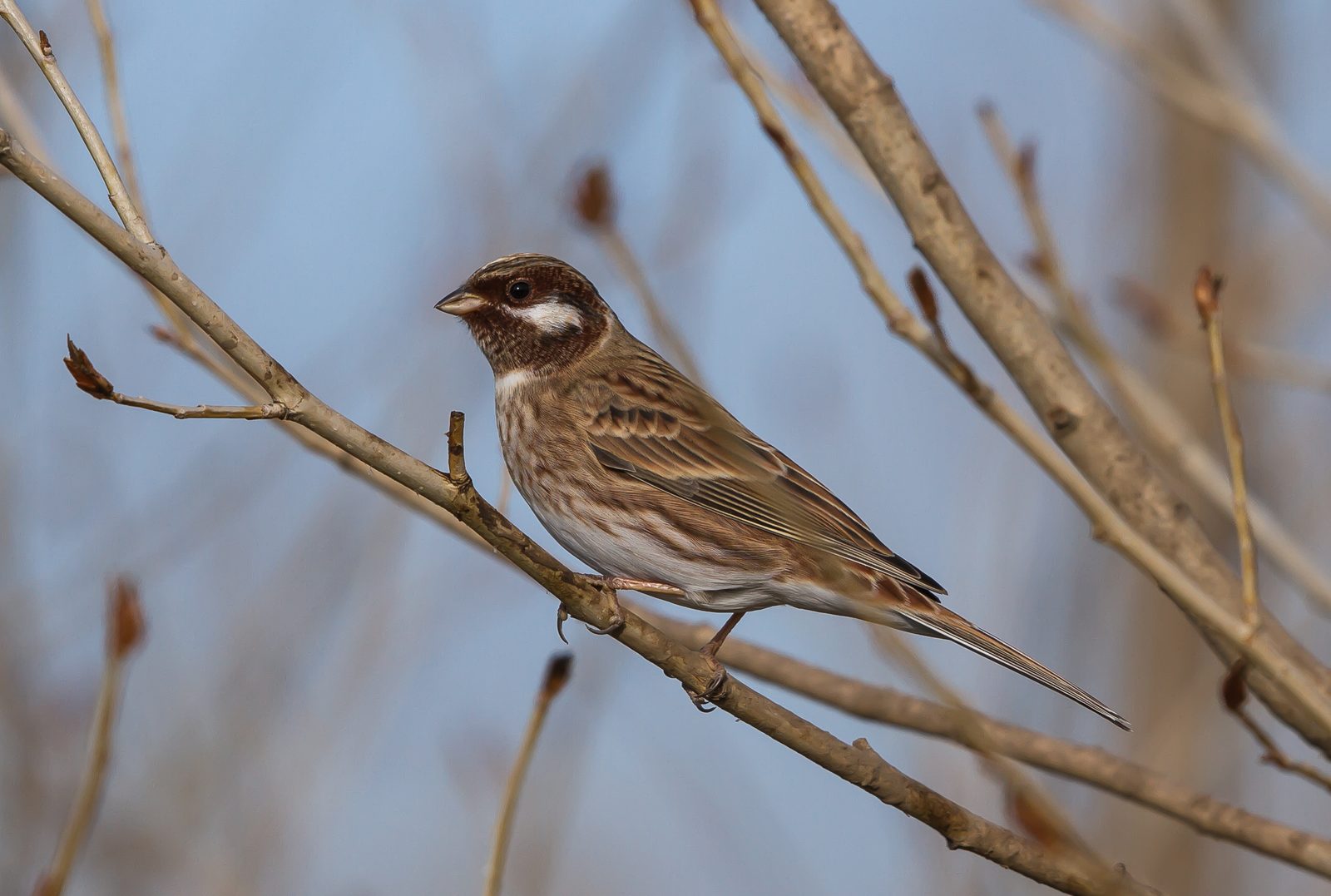
Photo: Jargal Lamjav from Ulaanbaatar, Mongolia · CC BY 2.0 (May be cropped or resized)
Emberiza leucocephalos
Basic stats
Diet
Seeds; insects when feeding young
Habitat
Nest on the ground
Range
Breeds across much of temperate Asia; winters in central Asia, north India and southern China
Clutch size
4–6 eggs with hair-like markings
Size
16–17.5cm
The pine bunting is a robust bunting 16–17.5 cm long, with a thick seed-eater's bill. The male has a white crown and cheeks, a chestnut forehead and throat and a heavily streaked brown back; the non-breeding plumage is like a yellowhammer's but with all the yellow replaced by white, and its song and calls are like the yellowhammer's. It breeds across much of temperate Asia, migrating south to central Asia, north India and southern China in winter (Wikipedia, general species account).
Its natural food is seeds, and insects when feeding its young. The nest is on the ground, with four to six eggs showing the hair-like markings characteristic of buntings. SoIB 2023 lists it as a winter migrant of non-specialised habitat that eats plants and seeds, without a priority category (Wikipedia, general species account; SoIB 2023).
Quick answers
- What does the Pine Bunting eat?
- Seeds; insects when feeding young
- What habitat does the Pine Bunting live in?
- Nest on the ground
- Where is the Pine Bunting found?
- Breeds across much of temperate Asia; winters in central Asia, north India and southern China
- How many eggs does the Pine Bunting lay?
- 4–6 eggs with hair-like markings
- How big is the Pine Bunting?
- 16–17.5cm