
 Wildlife
of India
Siberian Sand Plover
Shorebirds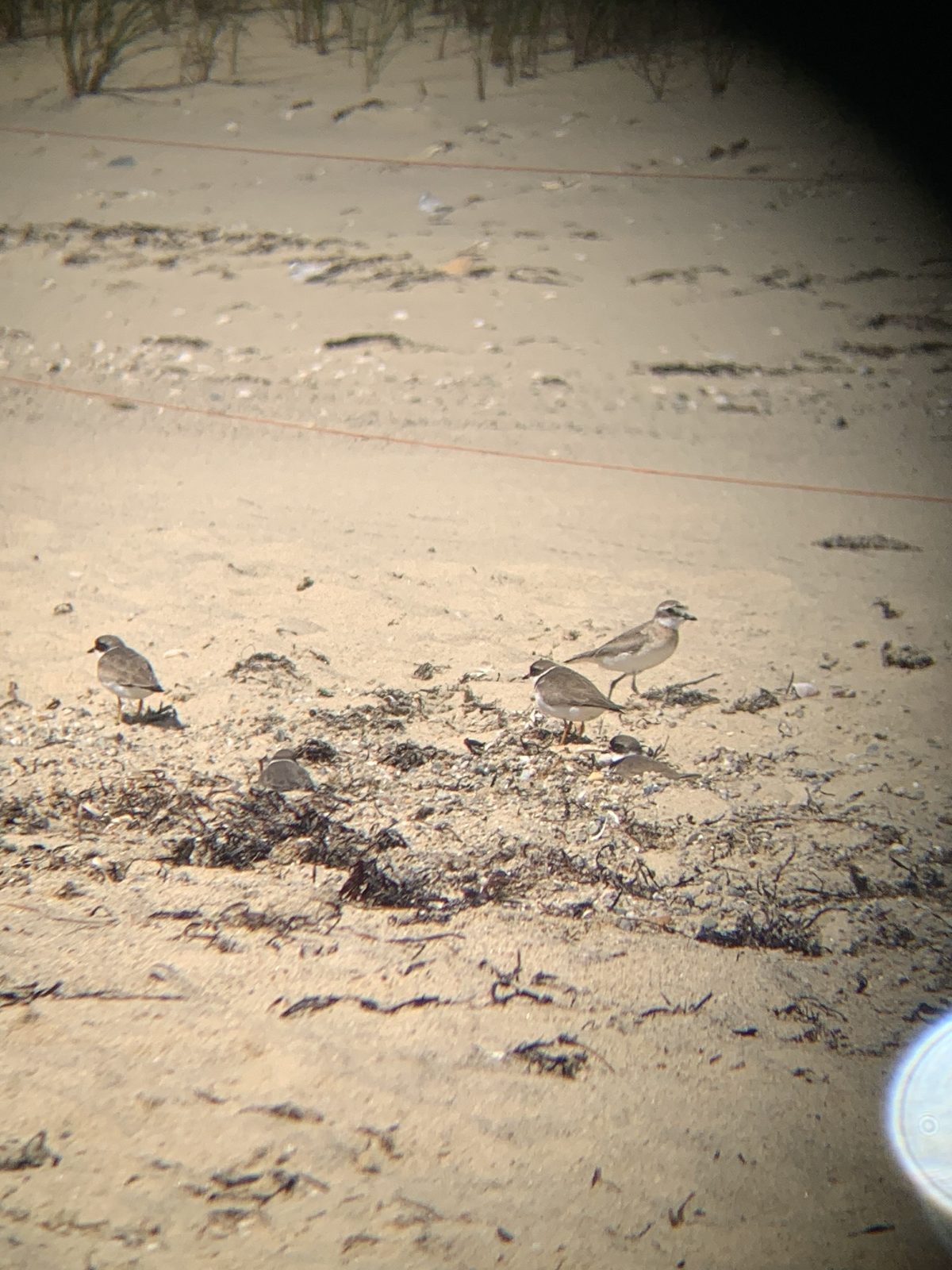
Photo: (c) Elizabeth Axley, some rights reserved (CC BY) · CC-BY (May be cropped or resized)
Anarhynchus mongolus
Basic stats
Habitat
Bare coastal plains when breeding; sandy beaches in winter
Range
Breeds in north-eastern Siberia; winters on sandy beaches in east and south-east Asia and Australia
Clutch size
3 eggs
The Siberian sand plover, or Mongolian plover, is a small, chunky, long-legged and long-billed plover. Breeding males have grey backs and white underparts, with a chestnut breast, forehead and nape and a black eye mask, dark legs and a black bill. In all plumages it is very similar to the greater sand plover, and separating the two can be straightforward in mixed wintering flocks on an Indian beach, where the difference in size and structure is obvious (Wikipedia, general species account).
It breeds discontinuously across bare coastal plains in north-eastern Siberia and has also bred in Alaska, nesting in a bare ground scrape with three eggs. It is strongly migratory, wintering on sandy beaches in east and south-east Asia and Australia. It takes fewer steps and shorter pauses than the greater sand plover when feeding, and its flight call is a hard trill. The species is not in SoIB 2023 (Wikipedia, general species account).
Quick answers
- What habitat does the Siberian Sand Plover live in?
- Bare coastal plains when breeding; sandy beaches in winter
- Where is the Siberian Sand Plover found?
- Breeds in north-eastern Siberia; winters on sandy beaches in east and south-east Asia and Australia
- How many eggs does the Siberian Sand Plover lay?
- 3 eggs