
 Wildlife
of India
Siberian Weasel
Bears, Dogs, Otters & Red Panda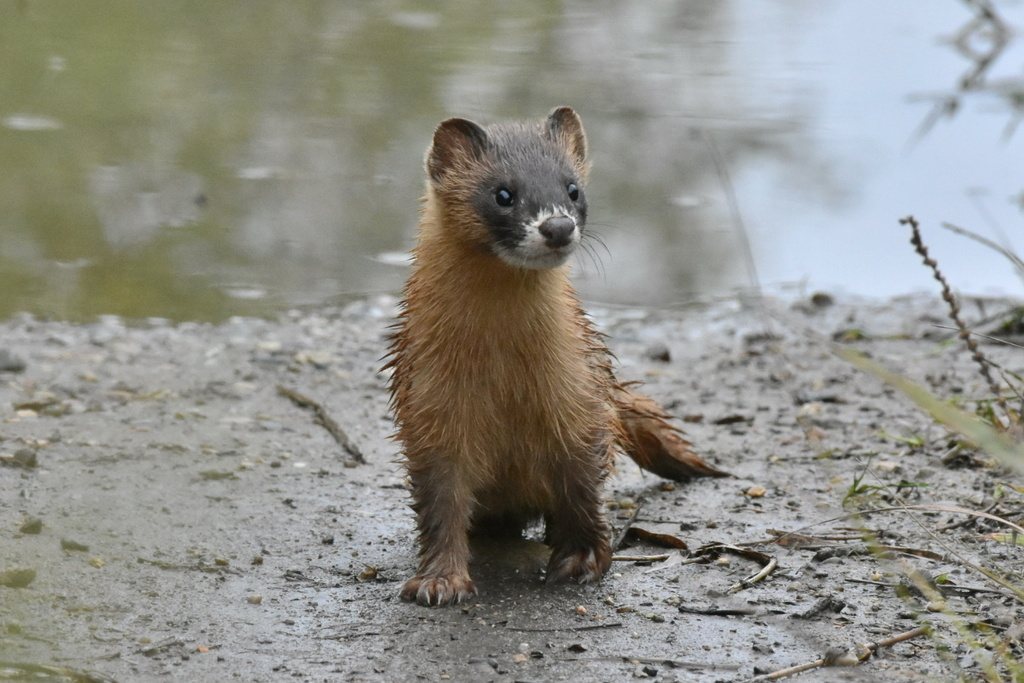
Photo: no rights reserved · CC0
Mustela sibirica
Basic stats
Diet
Small to moderate-sized rodents such as voles and mice; also pikas, small birds and fish
Habitat
Forest and open ground
Litter size
4–10 kits
Gestation period
38–41 days
Size
Body 28–39cm (males), 25–30.5cm (females); tail 13–21cm
Weight
Males 650–820g; females 360–430g
The Siberian weasel, or kolonok, is a medium-sized weasel with a long, stretched body, short legs and a narrow, small head. Its coat is a plain bright reddish ochre or straw-red, paler on the flanks and belly, with a dark coffee-brown mask on the face and white lips and chin. The tail is about half the length of the body, brighter than the back and fluffier than in other weasels. Males are 28–39 cm long and females 25–30.5 cm (Wikipedia, general species account).
Its range runs from the Himalayas in Pakistan, India, Nepal and Bhutan to northern Myanmar, Thailand, Laos, Taiwan, China and Korea. It is an active hunter that chases prey through snow, logs, water and buildings, and eats about 100–120 g of food a day, caching any extra. Rodents are its main prey. After a gestation of 38–41 days a female bears 4–10 kits, which open their eyes after a month and are weaned at about two months (Wikipedia, general species account).
Quick answers
- What does the Siberian Weasel eat?
- Small to moderate-sized rodents such as voles and mice; also pikas, small birds and fish
- What habitat does the Siberian Weasel live in?
- Forest and open ground
- What is the litter size of the Siberian Weasel?
- 4–10 kits
- How long is the gestation period of the Siberian Weasel?
- 38–41 days
- How big is the Siberian Weasel?
- Body 28–39cm (males), 25–30.5cm (females); tail 13–21cm
- How much does the Siberian Weasel weigh?
- Males 650–820g; females 360–430g