
 Wildlife
of India
Ultramarine Flycatcher
Thrushes, Chats & Flycatchers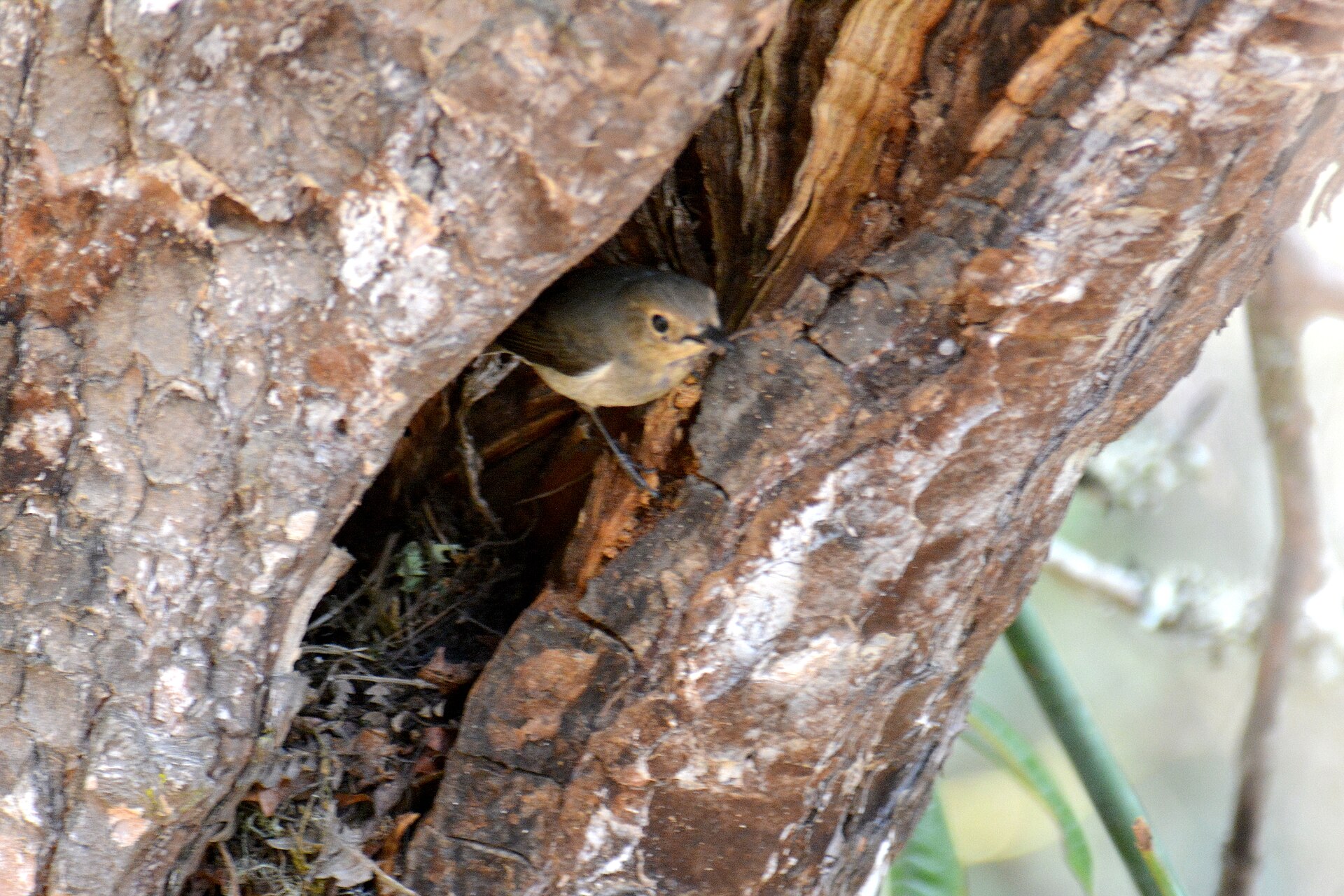
Photo: Dr. Raju Kasambe · CC BY-SA 4.0 (May be cropped or resized)
Ficedula superciliaris
Basic stats
Diet
Mainly insects; keeps to low trees and bushes, feeding among foliage
Habitat
Breeds at 2,000–2,700m, occasionally 1,800–3,200m; readily uses nest boxes in hill-station gardens
Range
Breeds from eastern Afghanistan to the Hengduan Mountains; winters in India and north-western Indochina
Clutch size
3–5 eggs, usually 4, olive-green to dull stone-buff, freckled reddish-brown
Size
About 10cm
The ultramarine, or white-browed blue, flycatcher is a small arboreal flycatcher, somewhat smaller than a sparrow at about 10 cm, stocky in build. The male is deep blue above, with the sides of the head and neck deep blue and a prominent white patch running from the centre of the throat through the breast to the belly. The eastern subspecies aestigma from the eastern Himalaya lacks distinct white patches, and the population from the south Assam hills, sometimes designated cleta, completely lacks an eyebrow (Wikipedia, general species account).
It breeds from eastern Afghanistan to the Hengduan Mountains, mostly at 2,000–2,700 m, and winters in India and north-western Indochina. It constantly jerks up its tail, often fluffing its head feathers and giving a trrr note near the nest, and is found singly, sometimes in mixed hunting parties in winter, feeding among the foliage canopy without venturing much into the open. Three to five, usually four, eggs are laid. SoIB 2023 rates it a Low conservation priority, a within-India migrant of forest and plantation with a Moderate range of about 220,000 km² and stable current trend (Wikipedia, general species account; SoIB 2023).
Quick answers
- What does the Ultramarine Flycatcher eat?
- Mainly insects; keeps to low trees and bushes, feeding among foliage
- What habitat does the Ultramarine Flycatcher live in?
- Breeds at 2,000–2,700m, occasionally 1,800–3,200m; readily uses nest boxes in hill-station gardens
- Where is the Ultramarine Flycatcher found?
- Breeds from eastern Afghanistan to the Hengduan Mountains; winters in India and north-western Indochina
- How many eggs does the Ultramarine Flycatcher lay?
- 3–5 eggs, usually 4, olive-green to dull stone-buff, freckled reddish-brown
- How big is the Ultramarine Flycatcher?
- About 10cm