
 Wildlife
of India
White-bellied Minivet
Crows, Drongos, Orioles & Shrikes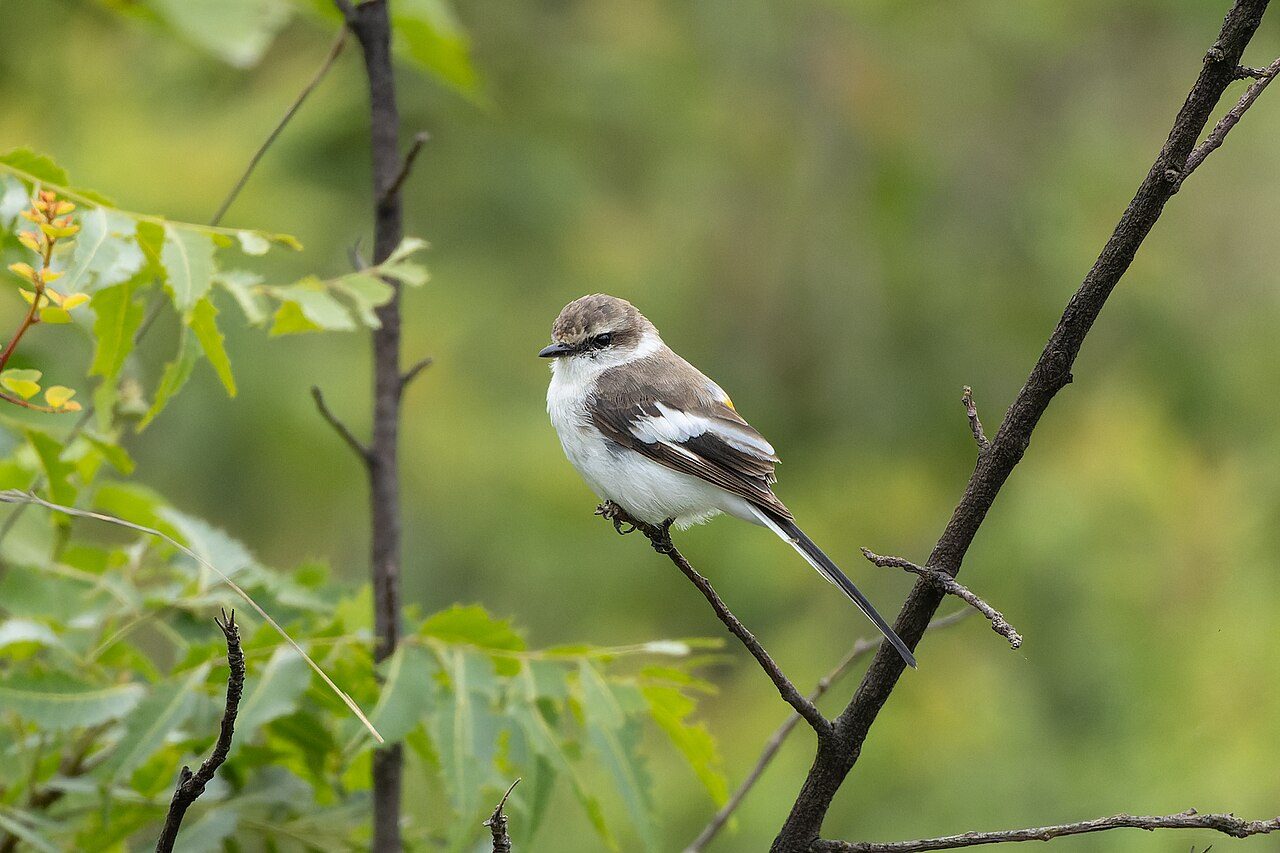
Photo: Tisha Mukherjee · CC BY-SA 4.0 (May be cropped or resized)
Pericrocotus erythropygius
Basic stats
Diet
Insects caught in flight or from perches in the tree canopy
Habitat
Dry deciduous forest, open savanna with sparse acacia, dry grassland and agricultural land; nests high in tree tops
Range
Nepal and India, mainly in dry deciduous forest; endemic to mainland India in SoIB
Clutch size
Usually 4 eggs
Incubation period
17–18 days, mainly by the female
Size
18.5–20cm
The white-bellied minivet is 18.5–20 cm long. The male has a shiny black head, neck, tail and mantle, with a white collar, an orange throat, white underparts and an orange rump, and white markings on the wings. It is native to Nepal and India, mostly in dry deciduous forest, but also inhabits open savanna with sparse acacia, dry grasslands and agricultural land (Wikipedia, general species account).
It usually moves in small groups, sometimes joining other species, and feeds mainly on insects caught in flight or from perches in the canopy. It nests high in the tree tops, usually laying four eggs incubated for 17 to 18 days, mainly by the female, though both birds help raise the young. SoIB 2023 treats it as endemic to mainland India and rates it a Moderate conservation priority, with a Moderate range of about 217,500 km² and insufficient data on trends (Wikipedia, general species account; SoIB 2023).
Quick answers
- What does the White-bellied Minivet eat?
- Insects caught in flight or from perches in the tree canopy
- What habitat does the White-bellied Minivet live in?
- Dry deciduous forest, open savanna with sparse acacia, dry grassland and agricultural land; nests high in tree tops
- Where is the White-bellied Minivet found?
- Nepal and India, mainly in dry deciduous forest; endemic to mainland India in SoIB
- How many eggs does the White-bellied Minivet lay?
- Usually 4 eggs
- How long are the eggs of the White-bellied Minivet incubated?
- 17–18 days, mainly by the female
- How big is the White-bellied Minivet?
- 18.5–20cm