
 Wildlife
of India
White-cheeked Barbet
Barbets & Woodpeckers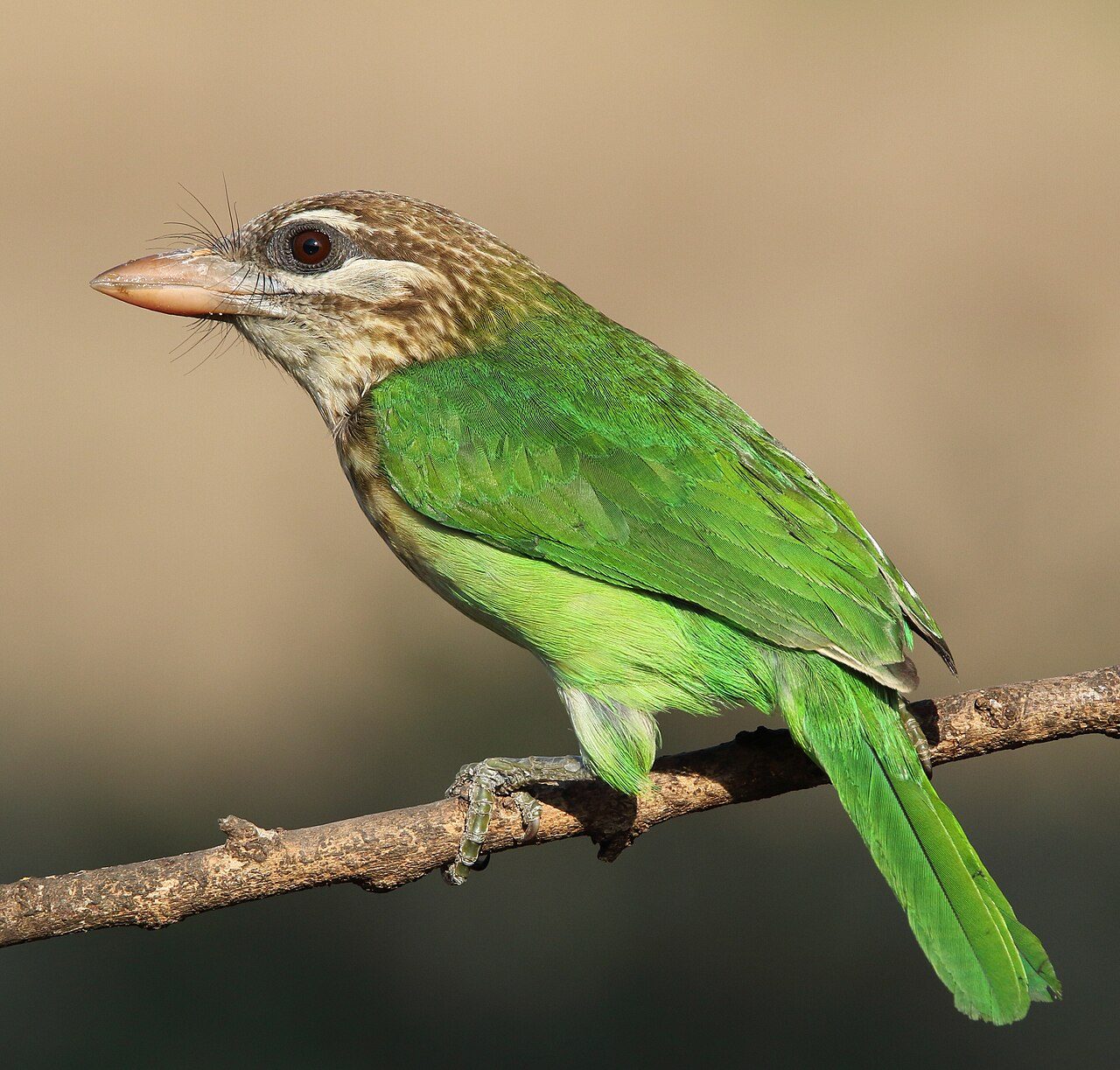
Photo: Vimal Rajyaguru · CC BY-SA 4.0 (May be cropped or resized)
Psilopogon viridis
Basic stats
Diet
Mainly fruit; sometimes insects
Habitat
Forest of the Western Ghats, parts of the Eastern Ghats and adjoining hills; nests in excavated tree holes
Range
Endemic to India; southern India
Clutch size
About 3 eggs
Incubation period
14–15 days
Size
16.5–18.5cm
The white-cheeked barbet, or small green barbet, is a barbet of southern India, 16.5–18.5 cm long. It is very like the more widespread brown-headed barbet but has a distinctive eyebrow and a broad white cheek stripe below the eye, and a pale pink bill. The two occur together in some of the drier forests east of the Western Ghats, and their calls are very similar (Wikipedia, general species account).
It is found in the forests of the Western Ghats, parts of the Eastern Ghats and adjoining hills. Like other Asian barbets it is mainly frugivorous, occasionally taking insects, and both sexes excavate the nest hole in a tree, which can take about 20 days; eggs are laid three to five days later, about three, and incubated for 14–15 days. The call, a monotonous kot-roo, starting with an explosive trrr, becomes loud and constant in the breeding season from early summer, especially in the mornings. SoIB 2023 treats it as endemic to mainland India and rates it a Low conservation priority, with an inconclusive long-term trend (Wikipedia, general species account; SoIB 2023).
Quick answers
- What does the White-cheeked Barbet eat?
- Mainly fruit; sometimes insects
- What habitat does the White-cheeked Barbet live in?
- Forest of the Western Ghats, parts of the Eastern Ghats and adjoining hills; nests in excavated tree holes
- Where is the White-cheeked Barbet found?
- Endemic to India; southern India
- How many eggs does the White-cheeked Barbet lay?
- About 3 eggs
- How long are the eggs of the White-cheeked Barbet incubated?
- 14–15 days
- How big is the White-cheeked Barbet?
- 16.5–18.5cm