
 Wildlife
of India
Yellow-throated Sparrow
Finches, Sparrows & Buntings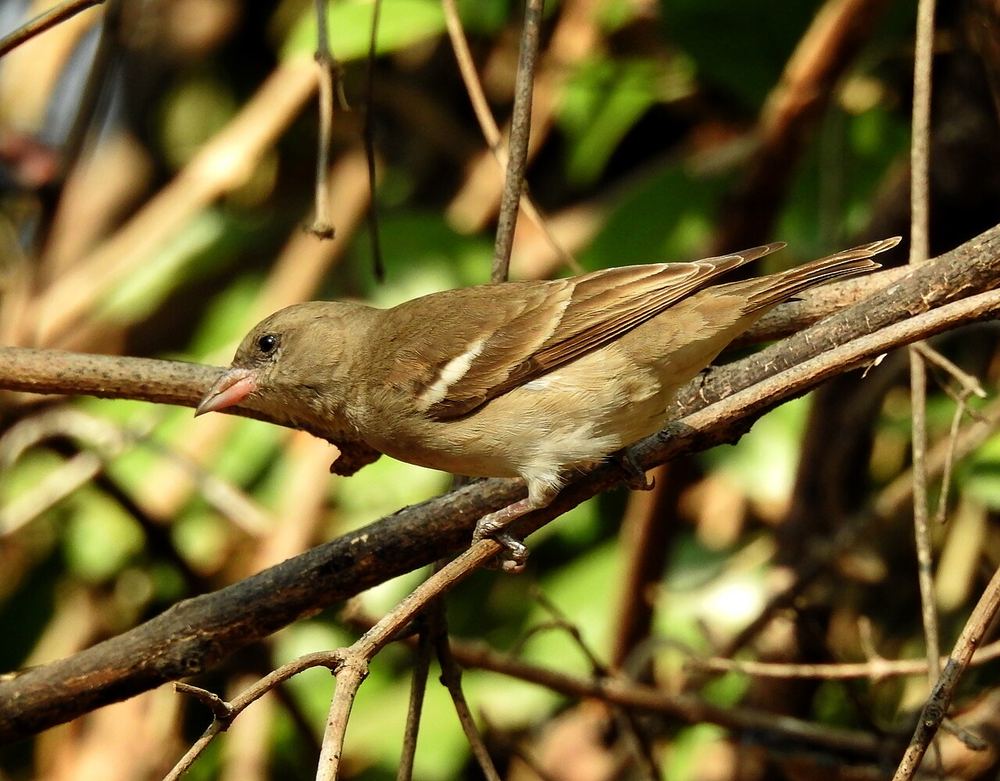
Photo: Dr. Raju Kasambe · CC BY-SA 4.0 (May be cropped or resized)
Gymnoris xanthocollis
Basic stats
Diet
Grain and berries, foraged on the ground and in bushes
Habitat
Mostly dry savannah; breeds in tree hollows, often holes made by barbets and woodpeckers; roosts communally in low bushes
Range
Southern Asia, from Turkey into Iran, Afghanistan, Pakistan, India and Bangladesh; a vagrant in Sri Lanka
Incubation period
About 12–14 days, by the female alone
The yellow-throated sparrow, or chestnut-shouldered petronia, is a species of sparrow found in southern Asia, mostly of dry savannah, from Turkey into Iran, Afghanistan, Pakistan, India and Bangladesh, and as a vagrant in Sri Lanka and possibly parts of Myanmar. It has a finer bill than typical sparrows of the genus Passer and, unlike them, no streaks on the plumage; the white double wing bar on the shoulder is diagnostic on the otherwise dull grey-brown bird, and there is a pale yellow spot on the throat in fresh plumage, much reduced or lacking in females (Wikipedia, general species account).
They forage on the ground for grain and for berries in bushes and are often seen perched on bare branches while calling. The usual call is a chirrup, and the song a distinctive, repetitive chilp chalp cholp. The species breeds in tree hollows from April to July, often using holes made by primary hole-nesters such as barbets and woodpeckers, and roosts communally in low bushes. The female alone incubates the eggs, sometimes leaving the nest in the hotter parts of the day, and they hatch after about 12 to 14 days. SoIB 2023 rates it a Low conservation priority, a resident forest and plantation bird and omnivore with a Very Large range of about 1.4 million km² (Wikipedia, general species account; SoIB 2023).
Quick answers
- What does the Yellow-throated Sparrow eat?
- Grain and berries, foraged on the ground and in bushes
- What habitat does the Yellow-throated Sparrow live in?
- Mostly dry savannah; breeds in tree hollows, often holes made by barbets and woodpeckers; roosts communally in low bushes
- Where is the Yellow-throated Sparrow found?
- Southern Asia, from Turkey into Iran, Afghanistan, Pakistan, India and Bangladesh; a vagrant in Sri Lanka
- How long are the eggs of the Yellow-throated Sparrow incubated?
- About 12–14 days, by the female alone