
 Wildlife
of India
Broad-tailed Grassbird
Warblers & Cisticolas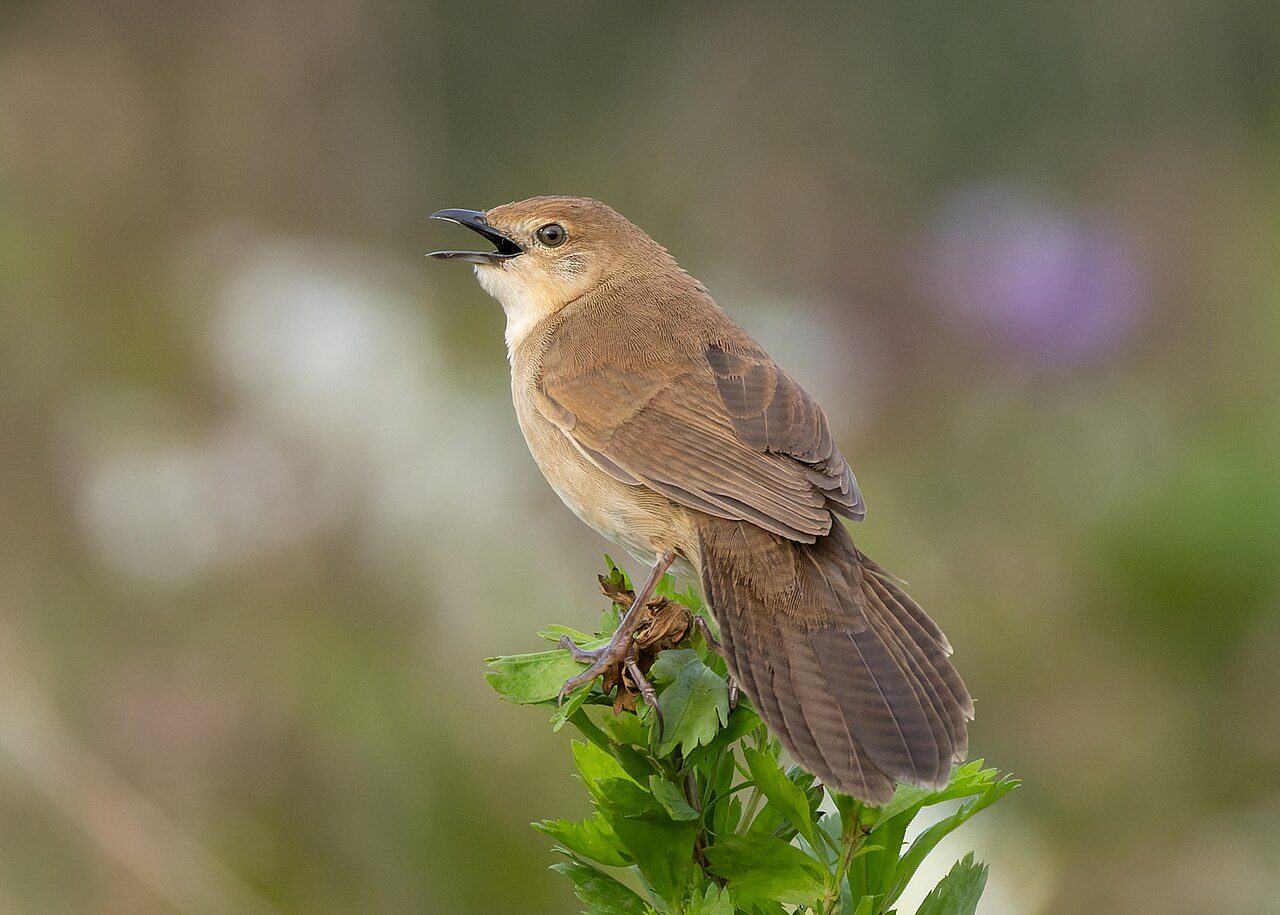
Photo: Tisha Mukherjee · CC BY-SA 4.0 (May be cropped or resized)
Schoenicola platyurus
Basic stats
Diet
Invertebrates (SoIB guild)
Habitat
Grassy moist highlands; skulks except when males display in the breeding season
Range
Endemic to the Western Ghats, mainly south of Karnataka with some records from Pune, Lonavala and Nashik; possible occurrence in Sri Lanka
Clutch size
Usually 2–3 eggs, white with brownish-red spots and blotches
The broad-tailed grassbird is a small, mostly brown Old World warbler of the family Locustellidae, with uniform brown upperparts and a broad, round-tipped, long graduated tail with thin dark bars, the underside very dark with white-tipped feathers. It has a buff eyebrow, and males and females are indistinguishable. It is endemic to the Western Ghats, restricted to grassy moist highlands, principally south of Karnataka but with some records from Pune, Lonavala and Nashik (Wikipedia, general species account).
It is found only on the higher-altitude grassy hills, where it usually skulks except in the breeding season, when males fly up to sing in display, with a repeated lark-like trill accompanied by a fanned tail and fluttering flight; other calls include a chack and a zink. The usual clutch is two or three eggs. SoIB 2023 treats it as a Western Ghats endemic and rates it a High conservation priority, a resident and local migrant with a Restricted range of about 11,200 km² and insufficient data on trends (Wikipedia, general species account; SoIB 2023).
Quick answers
- What does the Broad-tailed Grassbird eat?
- Invertebrates (SoIB guild)
- What habitat does the Broad-tailed Grassbird live in?
- Grassy moist highlands; skulks except when males display in the breeding season
- Where is the Broad-tailed Grassbird found?
- Endemic to the Western Ghats, mainly south of Karnataka with some records from Pune, Lonavala and Nashik; possible occurrence in Sri Lanka
- How many eggs does the Broad-tailed Grassbird lay?
- Usually 2–3 eggs, white with brownish-red spots and blotches