
 Wildlife
of India
Brown Bear
Bears, Dogs, Otters & Red Panda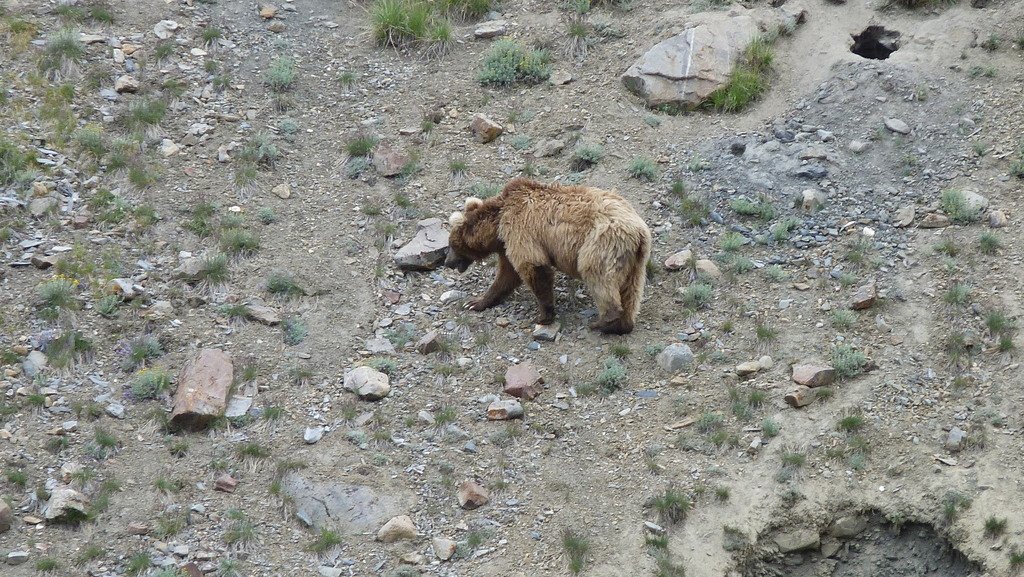
Photo: Antoine MARNAT · CC-BY (May be cropped or resized)
Ursus arctos
Basic stats
Diet
Omnivorous; about 90% plant matter, plus insects, rodents and carrion
Habitat
Wide; in the Himalayas from sea level to about 5,000m
Litter size
1–3 cubs
Weight
Generally 80–600kg
The brown bear is a large bear, and one of the two biggest land carnivorans. Individuals vary in weight through the year, lightest in spring and heaviest in late autumn after a period of heavy feeding. The Himalayan brown bear is one of the smaller forms, and in India brown bears can be reddish with silver-tipped hairs. The Wikipedia account describes it as critically endangered, occupying only about 2% of its former range and threatened by uncontrolled poaching for body parts (Wikipedia, general species account).
Across its range it is mostly solitary, gathering only at rich food sources, and although it is a carnivoran it gets about 90% of its diet from plants. Bears put on up to 180 kg of fat over summer and autumn to carry them through winter, when they den in a cave, crevice or hollow log and become lethargic. Females have one to three cubs, which stay with them for 1.5 to 4.5 years. In Himalayan Nepal farmers may kill brown bears in revenge for livestock losses (Wikipedia, general species account).
Quick answers
- What does the Brown Bear eat?
- Omnivorous; about 90% plant matter, plus insects, rodents and carrion
- What habitat does the Brown Bear live in?
- Wide; in the Himalayas from sea level to about 5,000m
- What is the litter size of the Brown Bear?
- 1–3 cubs
- How much does the Brown Bear weigh?
- Generally 80–600kg