
 Wildlife
of India
Caspian Cobra
Cobras, Kraits & Sea Snakes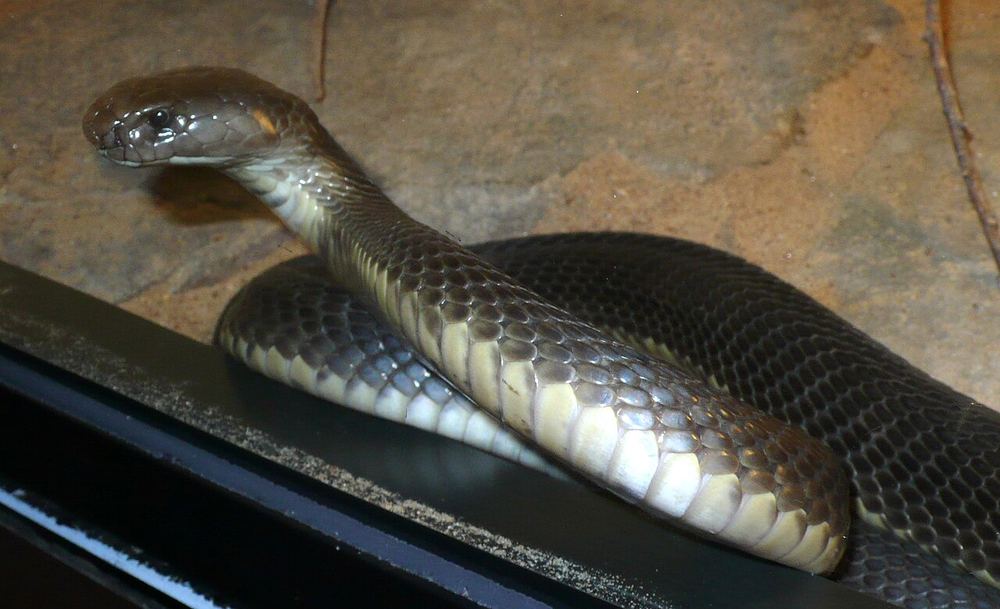
Photo: TimVickers · Public domain
Naja oxiana
Basic stats
Diet
Small mammals, amphibians; occasionally fish, birds, eggs and other snakes
Habitat
Terrestrial; mainly active by day
Range
Central and South-west Asia; in India, far north-west (Jammu and Kashmir and Himachal Pradesh)
Size
1–1.4m on average; rarely over 1.7m
The Caspian cobra, also called the Persian or Russian cobra, is a highly venomous snake of the family Elapidae. It averages about 1 to 1.4 m in total length and rarely exceeds 1.7 m. The head is elliptical and slightly distinct from the neck, with a short rounded snout, and the back scales are smooth and strongly oblique. It has no hood marks and no throat spots on the sides (Wikipedia, general species account).
It has been observed in the far north-west of India, in Jammu and Kashmir and Himachal Pradesh, and specimens without a hood mark are often confused with the Indian cobra, which coexists with it in Pakistan and northern India. It is mainly active by day, though it may be active at dusk and at night in the hottest month, and it feeds mostly on small mammals and amphibians, sometimes fish, birds and eggs, and reportedly other snakes.
Quick answers
- What does the Caspian Cobra eat?
- Small mammals, amphibians; occasionally fish, birds, eggs and other snakes
- What habitat does the Caspian Cobra live in?
- Terrestrial; mainly active by day
- Where is the Caspian Cobra found?
- Central and South-west Asia; in India, far north-west (Jammu and Kashmir and Himachal Pradesh)
- How big is the Caspian Cobra?
- 1–1.4m on average; rarely over 1.7m