
 Wildlife
of India
Greater Hoopoe-Lark
Larks, Pipits & Wagtails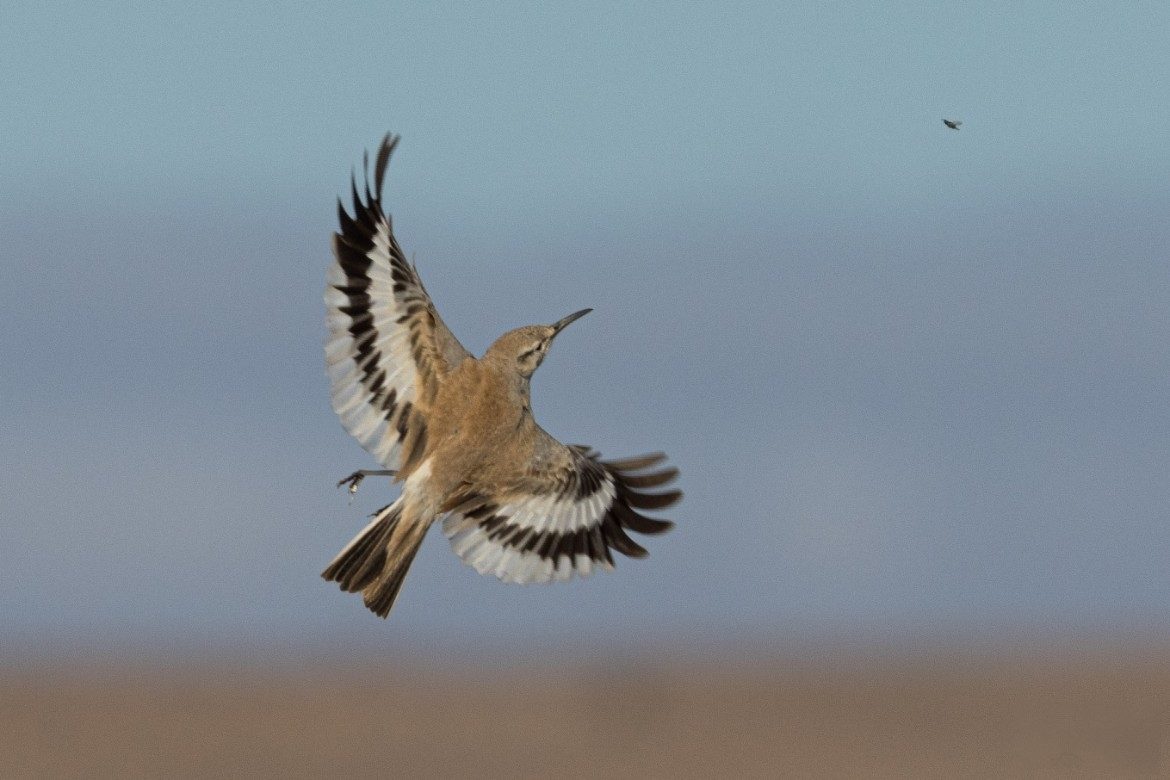
Photo: (c) Barry Stewart, some rights reserved (CC BY) · CC-BY (May be cropped or resized)
Alaemon alaudipes
Basic stats
Diet
Invertebrates; also fruiting bodies of certain fungi
Habitat
Arid desert and semi-desert; nest often on an isolated bush
Range
Cape Verde Islands across much of northern Africa, the Arabian Peninsula, Syria, Afghanistan, Pakistan and India
Clutch size
2–3 eggs
The greater hoopoe-lark, formerly known as the bifasciated lark or large desert lark, is a large, long-legged, slender-bodied lark with a distinctive down-curved bill. The face has dark markings, including a line through the eye and whisker-like lines from the base of the bill running under the eye; the breast is spotted, the underside buffy white and the upperparts sandy grey. It is a breeding resident of arid desert and semi-desert regions from the Cape Verde Islands across much of northern Africa through Arabia, Syria, Afghanistan, Pakistan and India (Wikipedia, general species account).
Birds are seen singly or in pairs, foraging by running or walking in spurts, probing and digging the ground. The slow, flappy start to the song flight recalls a hoopoe, for which it is named, and the typical call is a rolling zreee or too. The breeding season is mainly after the first rains, with most Indian records from March to July; two or three eggs are laid and both sexes take turns incubating, in a prominent nest often on an isolated bush. SoIB 2023 lists it as a resident of grassland that eats invertebrates, without a priority category (Wikipedia, general species account; SoIB 2023).
Quick answers
- What does the Greater Hoopoe-Lark eat?
- Invertebrates; also fruiting bodies of certain fungi
- What habitat does the Greater Hoopoe-Lark live in?
- Arid desert and semi-desert; nest often on an isolated bush
- Where is the Greater Hoopoe-Lark found?
- Cape Verde Islands across much of northern Africa, the Arabian Peninsula, Syria, Afghanistan, Pakistan and India
- How many eggs does the Greater Hoopoe-Lark lay?
- 2–3 eggs