
 Wildlife
of India
Himalayan Tahr
Wild Cattle, Antelopes, Goats & Sheep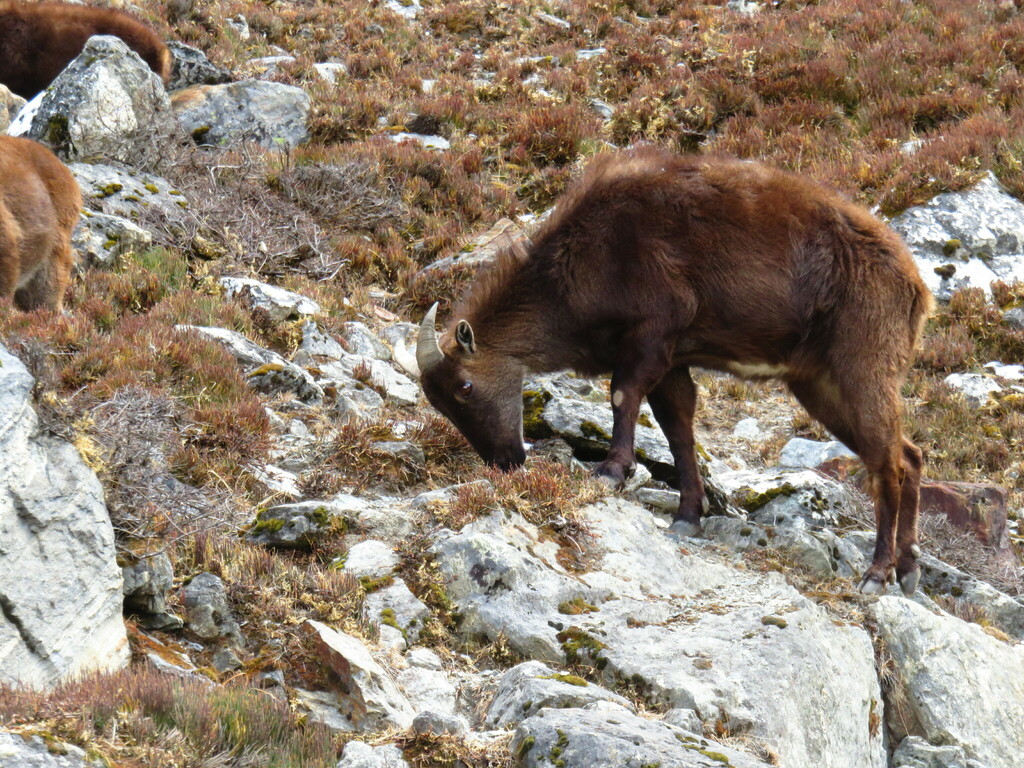
Photo: no rights reserved · CC0
Hemitragus jemlahicus
Basic stats
Diet
A wide variety of plants; grasses make up as much as 75%
Habitat
Slopes at about 2,500–5,000m
Range
Himalaya in southern Tibet, northern India, western Bhutan and Nepal
Weight
Males about 73kg; females about 36kg
The Himalayan tahr is a large even-toed ungulate with a small head, small pointed ears, large eyes and thick reddish wool coats over dense undercoats, thinning and lightening at the end of winter. Males and females differ, the females being smaller with smaller horns; the backward-curved horns reach at most 46 cm. Males average about 73 kg and females about 36 kg. Coat colour affects rank, with lighter-coated males mating more often (Wikipedia, general species account).
It is native to the Himalaya in southern Tibet, northern India, western Bhutan and Nepal, mainly on slopes at 2,500–5,000 m. It eats a wide variety of plants, up to 75% grasses. The young are precocious and can stand soon after birth, and head-butting is a common mating ritual among males, which lose much of their fat reserves during the mating season. Snow leopards prey on tahr. Typical lifespan is 14–15 years (Wikipedia, general species account).
Quick answers
- What does the Himalayan Tahr eat?
- A wide variety of plants; grasses make up as much as 75%
- What habitat does the Himalayan Tahr live in?
- Slopes at about 2,500–5,000m
- Where is the Himalayan Tahr found?
- Himalaya in southern Tibet, northern India, western Bhutan and Nepal
- How much does the Himalayan Tahr weigh?
- Males about 73kg; females about 36kg