
 Wildlife
of India
Himalayan Takin
Wild Cattle, Antelopes, Goats & Sheep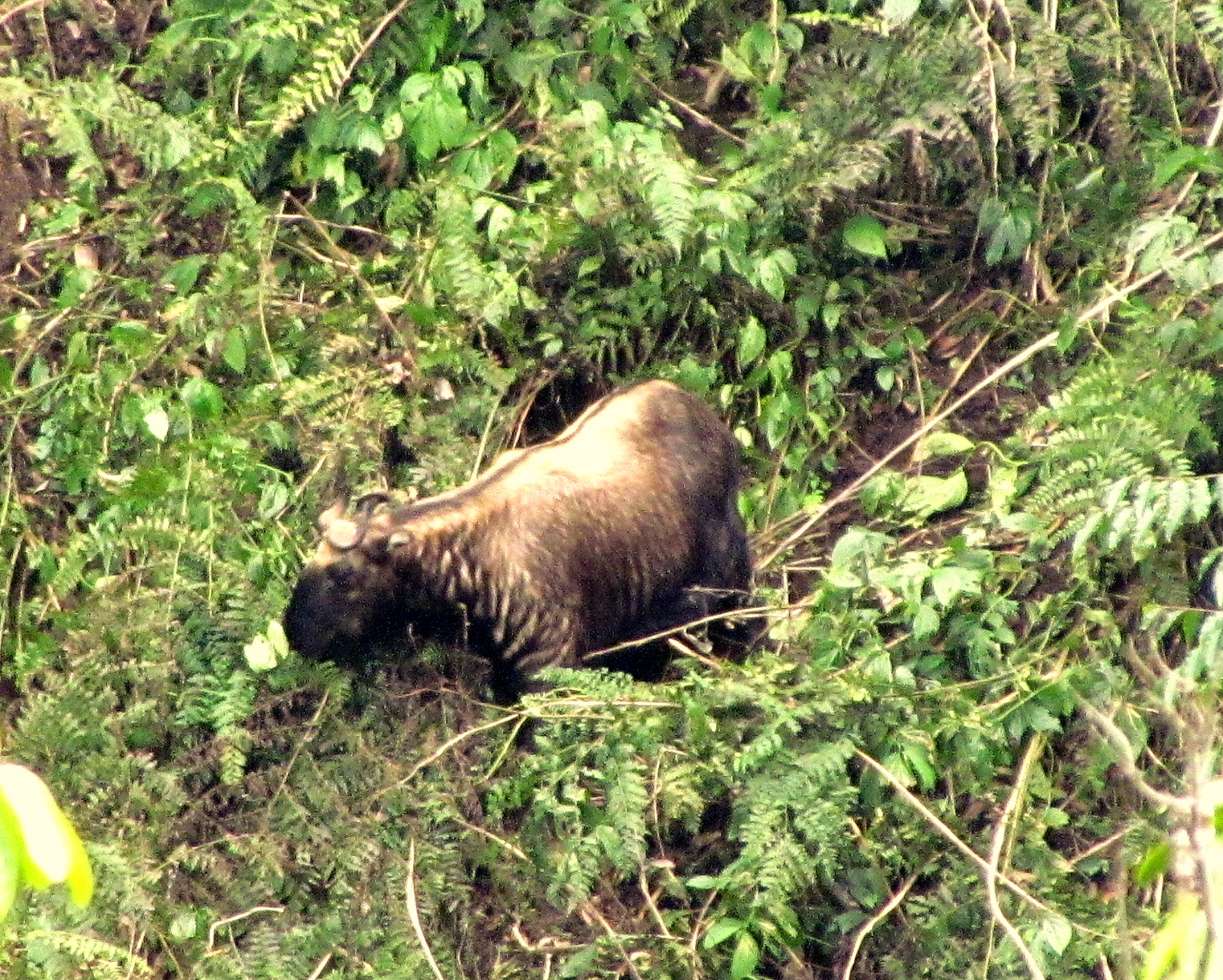
Photo: Benjissimo · CC BY 3.0 (May be cropped or resized)
Budorcas taxicolor
Basic stats
Diet
Leaves, grasses, bamboo shoots and flowers
Range
Eastern Himalaya; in India, Arunachal Pradesh
Litter size
1 young
Gestation period
About 8 months
Weight
Bulls 300–350kg; cows 250–300kg
The takin is a large, muskox-like ungulate of the eastern Himalaya; the resemblance is an example of convergent evolution, and mitochondrial studies place it closer to sheep. The long shaggy coat is light with a dark stripe along the back, and bulls also have dark faces. Both sexes have horns, about 30 cm long and up to 64 cm, that run parallel to the skull before turning up to a short point. Bulls weigh 300–350 kg and cows 250–300 kg. It is the national animal of Bhutan (Wikipedia, general species account).
In India the Mishmi takin occurs in eastern Arunachal Pradesh and the Bhutan takin in western Arunachal Pradesh, and Dihang-Dibang Biosphere Reserve is a stronghold. Takin live in small family groups of around 20, with older males more solitary, gathering at good feeding sites, salt licks and hot springs. They feed in the early morning and late afternoon, on leaves, grasses, bamboo shoots and flowers, and move to lower forested ground in winter. Mating is in July and August, with a single young after about eight months (Wikipedia, general species account).
Quick answers
- What does the Himalayan Takin eat?
- Leaves, grasses, bamboo shoots and flowers
- Where is the Himalayan Takin found?
- Eastern Himalaya; in India, Arunachal Pradesh
- What is the litter size of the Himalayan Takin?
- 1 young
- How long is the gestation period of the Himalayan Takin?
- About 8 months
- How much does the Himalayan Takin weigh?
- Bulls 300–350kg; cows 250–300kg