
 Wildlife
of India
Indian Cobra
Cobras, Kraits & Sea Snakes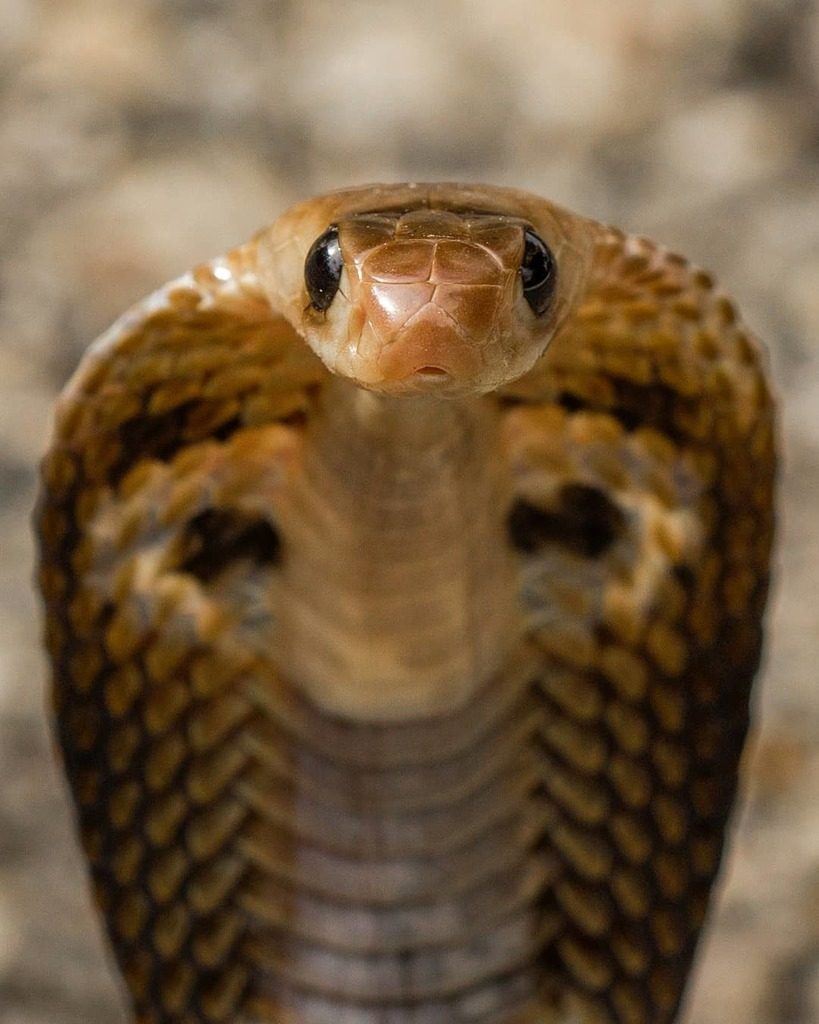
Photo: Chayant Gonsalves · CC BY 4.0 (May be cropped or resized)
Naja naja
Basic stats
Diet
Rodents, plovers, grebes, lizards and frogs
Range
Indian subcontinent: India, Sri Lanka, Bangladesh, Nepal and Pakistan
Clutch size
10–30 eggs, laid April to July
Incubation period
48–69 days
The Indian cobra, also called the spectacled cobra, Asian cobra or binocellate cobra, is a venomous snake of the family Elapidae native to the Indian subcontinent and one of the 'Big Four' species responsible for the most snakebite cases in India and Sri Lanka. The snout is short and rounded with large nostrils, and the back scales are smooth and strongly oblique. Colour and pattern vary tremendously across its range, and the belly can be grey, yellow, tan, brown, reddish or black (Wikipedia, general species account).
It feeds on rodents, plovers, grebes, lizards and frogs, biting quickly and then waiting while the venom acts, and swallows prey whole. It sometimes enters buildings in search of rodents. It lays eggs between April and July, usually 10 to 30 in rat holes or termite mounds, which hatch 48 to 69 days later, and hatchlings are 20–30 cm long. It is revered in Hindu mythology and culture and is often seen with snake charmers.
Quick answers
- What does the Indian Cobra eat?
- Rodents, plovers, grebes, lizards and frogs
- Where is the Indian Cobra found?
- Indian subcontinent: India, Sri Lanka, Bangladesh, Nepal and Pakistan
- How many eggs does the Indian Cobra lay?
- 10–30 eggs, laid April to July
- How long are the eggs of the Indian Cobra incubated?
- 48–69 days