
 Wildlife
of India
Mrs. Hume's Pheasant
Pheasants, Partridges & Quails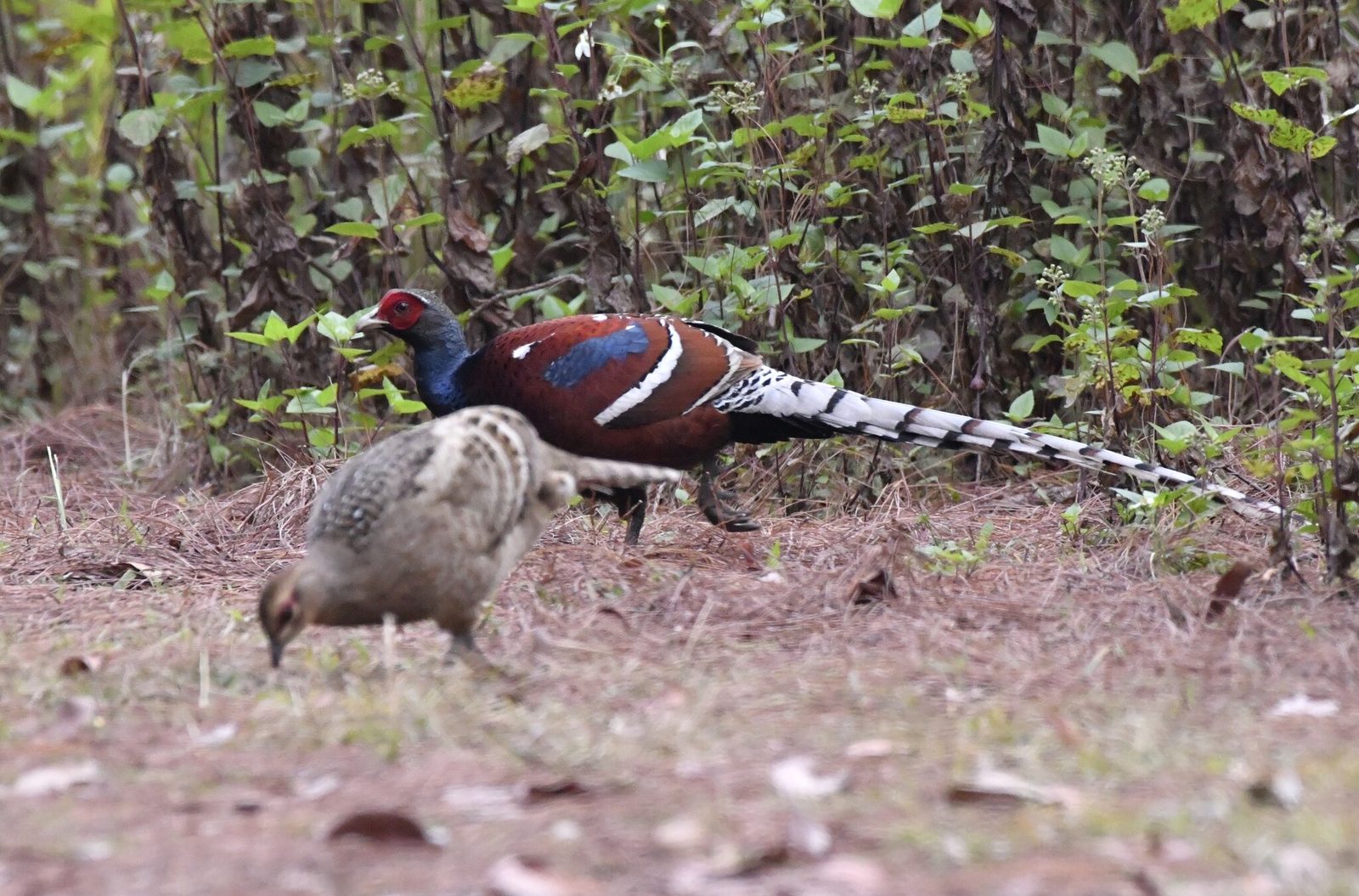
Photo: (c) Zac Peterson, some rights reserved (CC BY) · CC-BY (May be cropped or resized)
Syrmaticus humiae
Basic stats
Diet
Mostly vegetation
Habitat
Forest
Range
North-east India, Myanmar, and adjoining China and Thailand
Clutch size
3–12 creamy white eggs
Size
Up to 90cm
Mrs. Hume's pheasant, also known as Hume's pheasant or the bar-tailed pheasant, is a large forest pheasant up to 90 cm long. The male has a greyish-brown head, bare red facial skin, chestnut-brown plumage, a yellowish bill, a brownish-orange iris, white wing bars, metallic blue neck feathers and a long greyish-white tail barred black and brown. The female is chestnut brown with a whitish throat, buff belly and a white-tipped tail. It is named for Mary Ann Grindall Hume, wife of the naturalist Allan Octavian Hume (Wikipedia, general species account).
Its diet is mainly vegetable matter, and the female lays three to twelve creamy white eggs in a nest of leaves, twigs and feathers. Its local names include Nongin in Meitei and Vavu in Mizo. Habitat loss, a fragmented population and hunting for food are ongoing threats. SoIB 2023 lists it as a resident forest bird that eats plants and seeds but assigns no priority category (Wikipedia, general species account; SoIB 2023).
Quick answers
- What does the Mrs. Hume's Pheasant eat?
- Mostly vegetation
- What habitat does the Mrs. Hume's Pheasant live in?
- Forest
- Where is the Mrs. Hume's Pheasant found?
- North-east India, Myanmar, and adjoining China and Thailand
- How many eggs does the Mrs. Hume's Pheasant lay?
- 3–12 creamy white eggs
- How big is the Mrs. Hume's Pheasant?
- Up to 90cm