
 Wildlife
of India
Plain Mountain Finch
Finches, Sparrows & Buntings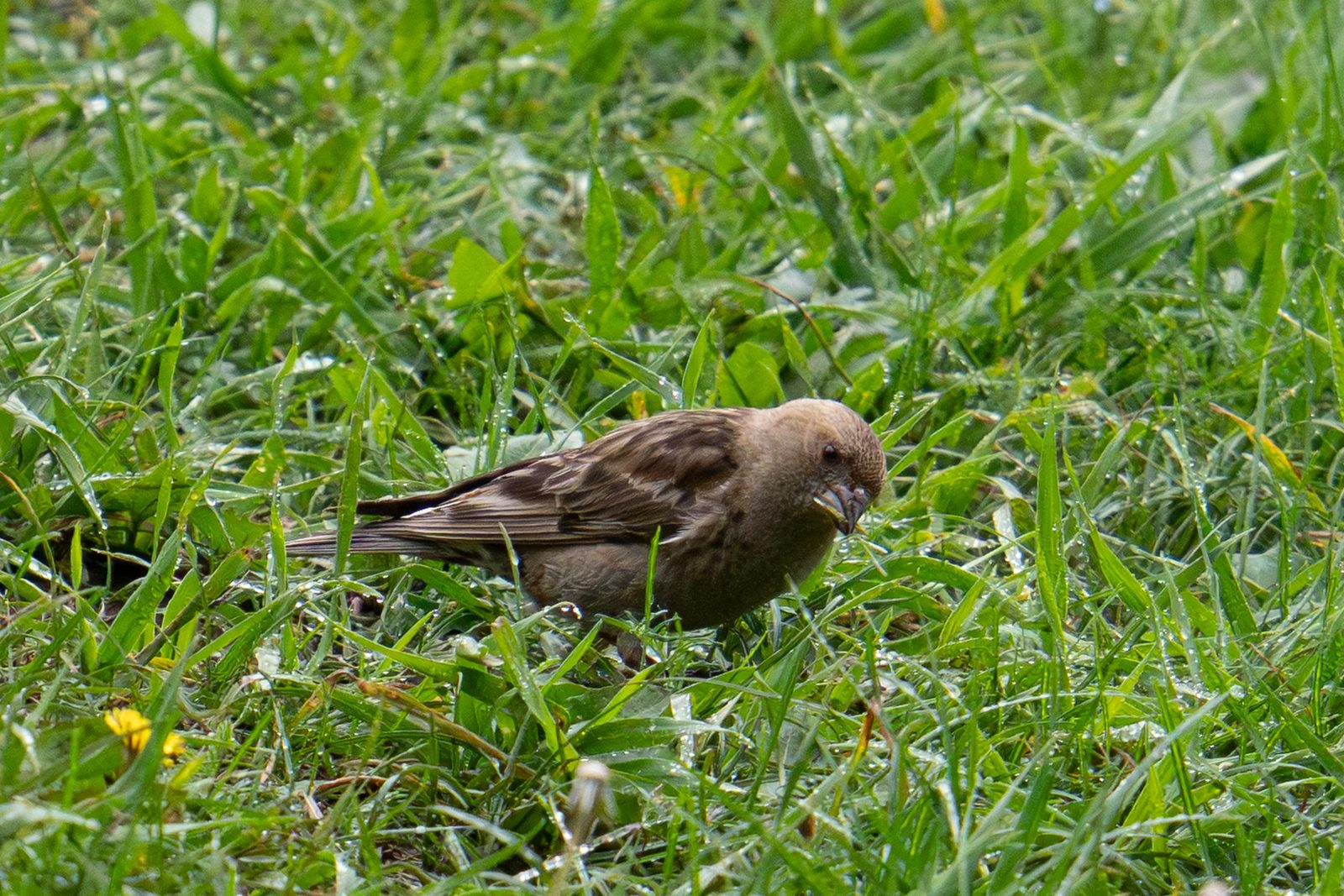
Photo: (c) condorr, some rights reserved (CC BY) · CC-BY (May be cropped or resized)
Leucosticte nemoricola
Basic stats
Diet
Seeds of grasses and alpine herbs, and small invertebrates
Habitat
Temperate grassland, upland forest and rocky cliffs; in the non-breeding season high valleys, mountain forests, cliffs, fields and towns; nests in rocky holes and crevices about 2m above ground
Range
Resident breeder across the Himalaya: Afghanistan, Bhutan, China, India, Kazakhstan, Myanmar, Nepal, Pakistan, Russia, Tajikistan, Tibet and Turkmenistan
Clutch size
3–6 pure white or pale pinkish eggs
Incubation period
13–15 days, by the female, fed on the nest by the male
Size
14–15cm
Weight
18–25g
The plain mountain finch is a finch 14–15 cm long and 18–25 g, with colours and patterns resembling a house sparrow's, a slender build with long wings, a notched tail and a short pointed bill. It has a buff-brown head with tawny streaks, a beige neck and pale brown around the eye and cheek. It is a resident breeder across the Himalaya, in Afghanistan, Bhutan, China, India, Kazakhstan, Myanmar, Nepal, Pakistan, Russia, Tajikistan, Tibet and Turkmenistan (Wikipedia, general species account).
Females usually build nests in rocky holes and crevices about 2 m above ground and occasionally below ground in rodent burrows; the clutch is three to six pure white or pale pinkish eggs, incubated for 13–15 days by the female, who is fed by the male. In the non-breeding season the birds are found in high valleys, mountain forests, rocky cliffs, fields and towns. Songs include a sharper twittering, trit-tit-tit-tit, rick-pi-vitt or dui-dip-dip-dip, mixed with sweeter warbling notes. SoIB 2023 rates it a Moderate conservation priority, a resident and altitudinal migrant of alpine and cold desert with a Moderate range of about 155,000 km² and a decline of about 51% over the long term (Wikipedia, general species account; SoIB 2023).
Quick answers
- What does the Plain Mountain Finch eat?
- Seeds of grasses and alpine herbs, and small invertebrates
- What habitat does the Plain Mountain Finch live in?
- Temperate grassland, upland forest and rocky cliffs; in the non-breeding season high valleys, mountain forests, cliffs, fields and towns; nests in rocky holes and crevices about 2m above ground
- Where is the Plain Mountain Finch found?
- Resident breeder across the Himalaya: Afghanistan, Bhutan, China, India, Kazakhstan, Myanmar, Nepal, Pakistan, Russia, Tajikistan, Tibet and Turkmenistan
- How many eggs does the Plain Mountain Finch lay?
- 3–6 pure white or pale pinkish eggs
- How long are the eggs of the Plain Mountain Finch incubated?
- 13–15 days, by the female, fed on the nest by the male
- How big is the Plain Mountain Finch?
- 14–15cm
- How much does the Plain Mountain Finch weigh?
- 18–25g