
 Wildlife
of India
Red-necked Falcon
Birds of Prey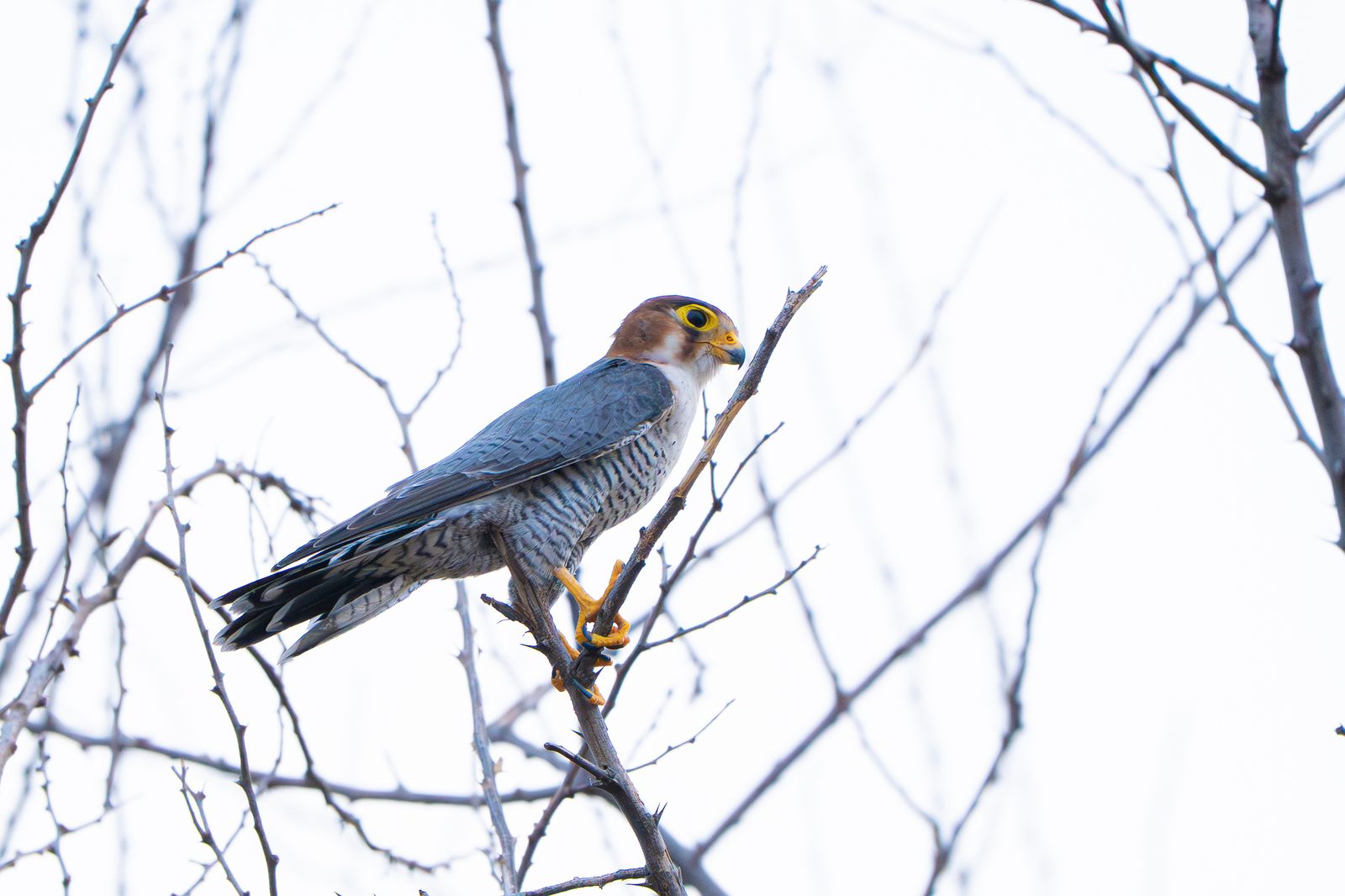
Photo: (c) Srivatsan Ramkumar, some rights reserved (CC BY) · CC-BY (May be cropped or resized)
Falco chicquera
Basic stats
Diet
Small birds, bats and squirrels
Habitat
Open plains; nests in old corvid nests, tall trees and Borassus palm crowns
Range
Open plains of the Indian subcontinent; a separate population in Africa
Clutch size
3–5 eggs
Size
30–36cm; wingspan about 85cm
The red-necked falcon is a medium-sized, long-winged falcon, 30–36 cm long with a wingspan of about 85 cm. The Indian form, also called the red-headed merlin or red-headed falcon, has bluish-grey wings and upper body, a chestnut-red cap with short chin straps passing through the eye, black primaries and a single black band at the tail tip. Females are larger, and Indian falconers called the female turumti and the male chatwa. Young birds are buff below with less extensive barring and duller upperparts (Wikipedia, general species account).
It has two disjunct populations, one in India and one in Africa; the Indian form is found mainly on the open plains of the subcontinent. Pairs hunt together mostly at dawn and dusk, taking small birds, bats and squirrels. It usually reuses old tree nests, particularly those of corvids, or builds one in the fork of a tall tree or in the crown of a palm, often a Borassus palm, and lays three to five eggs; the young fledge in about 35–37 days in Africa and up to 48 in India. SoIB 2023 rates it a Moderate conservation priority, a resident of open habitat with a Large range and a long-term decline of about 57% (Wikipedia, general species account; SoIB 2023).
Quick answers
- What does the Red-necked Falcon eat?
- Small birds, bats and squirrels
- What habitat does the Red-necked Falcon live in?
- Open plains; nests in old corvid nests, tall trees and Borassus palm crowns
- Where is the Red-necked Falcon found?
- Open plains of the Indian subcontinent; a separate population in Africa
- How many eggs does the Red-necked Falcon lay?
- 3–5 eggs
- How big is the Red-necked Falcon?
- 30–36cm; wingspan about 85cm