
 Wildlife
of India
Rook
Crows, Drongos, Orioles & Shrikes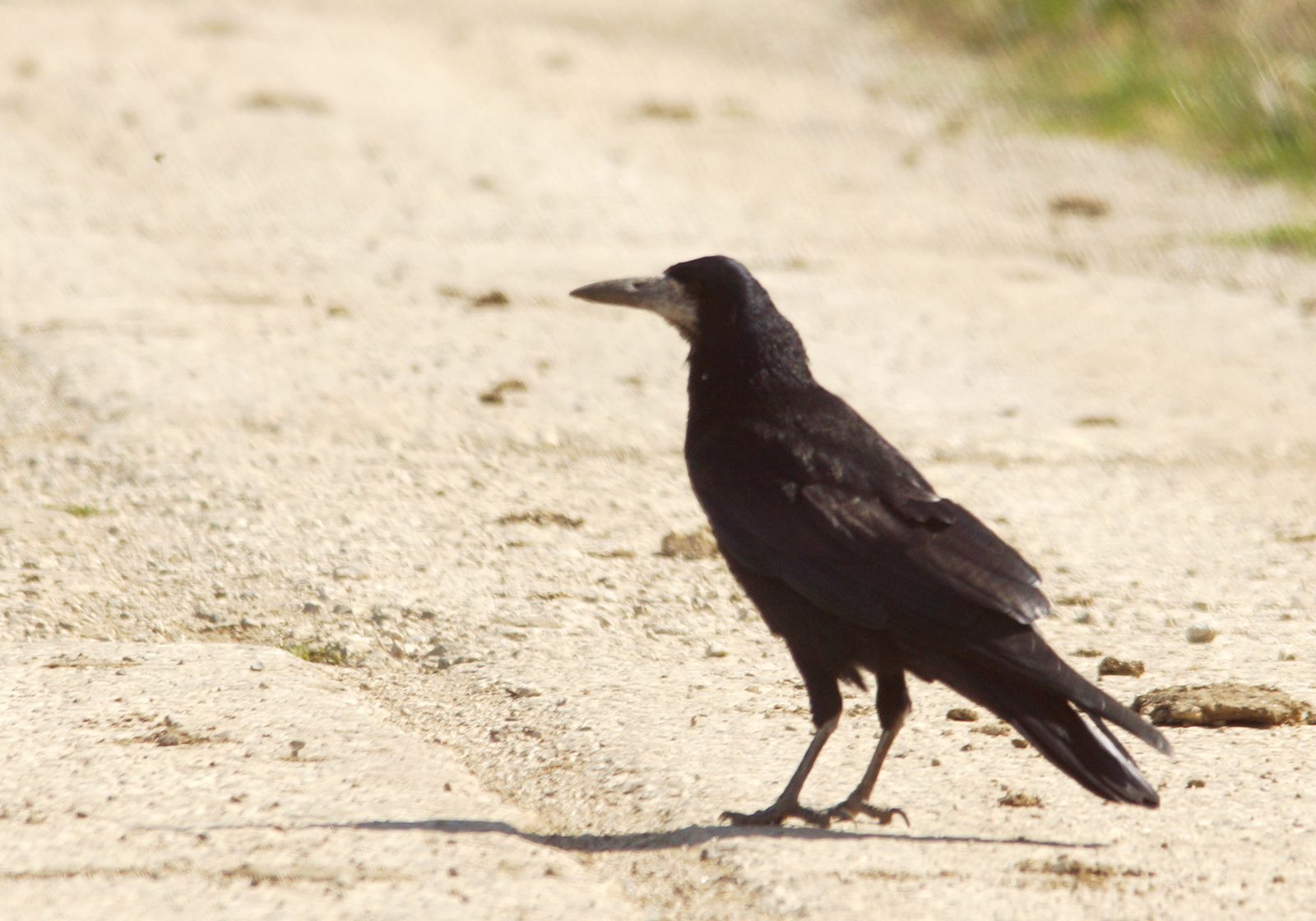
Photo: (c) SIA, some rights reserved (CC BY) · CC-BY (May be cropped or resized)
Corvus frugilegus
Basic stats
Diet
Grubs and soil invertebrates, cereals and other plant material
Habitat
Lowland arable land and pasture; rookeries mostly below 120m
Range
Palearctic, from Scandinavia and western Europe to eastern Siberia
Size
44–46cm; wingspan 81–99cm
Weight
280–340g
The rook is a fairly large, gregarious, black-feathered corvid, 44–46 cm long with a wingspan of 81–99 cm and weighing 280–340 g. It is distinguished from similar species by the whitish featherless area on the face. It forages on arable land and pasture, probing the ground with its strong bill and feeding largely on grubs and soil invertebrates, as well as cereals and other plant material. It is found in the Palearctic from Scandinavia and western Europe to eastern Siberia (Wikipedia, general species account).
Rooks nest collectively in the tops of tall trees, often close to farms or villages, in groups of nests known as rookeries, and return to their rookeries to breed in spring. They are mainly resident, though the northernmost populations may migrate south. The cached account does not describe its range in India. SoIB 2023 lists it as a winter migrant of open habitat and an omnivore, without a priority category (Wikipedia, general species account; SoIB 2023).
Quick answers
- What does the Rook eat?
- Grubs and soil invertebrates, cereals and other plant material
- What habitat does the Rook live in?
- Lowland arable land and pasture; rookeries mostly below 120m
- Where is the Rook found?
- Palearctic, from Scandinavia and western Europe to eastern Siberia
- How big is the Rook?
- 44–46cm; wingspan 81–99cm
- How much does the Rook weigh?
- 280–340g