
 Wildlife
of India
Sultan Tit
Tits, Nuthatches & Treecreepers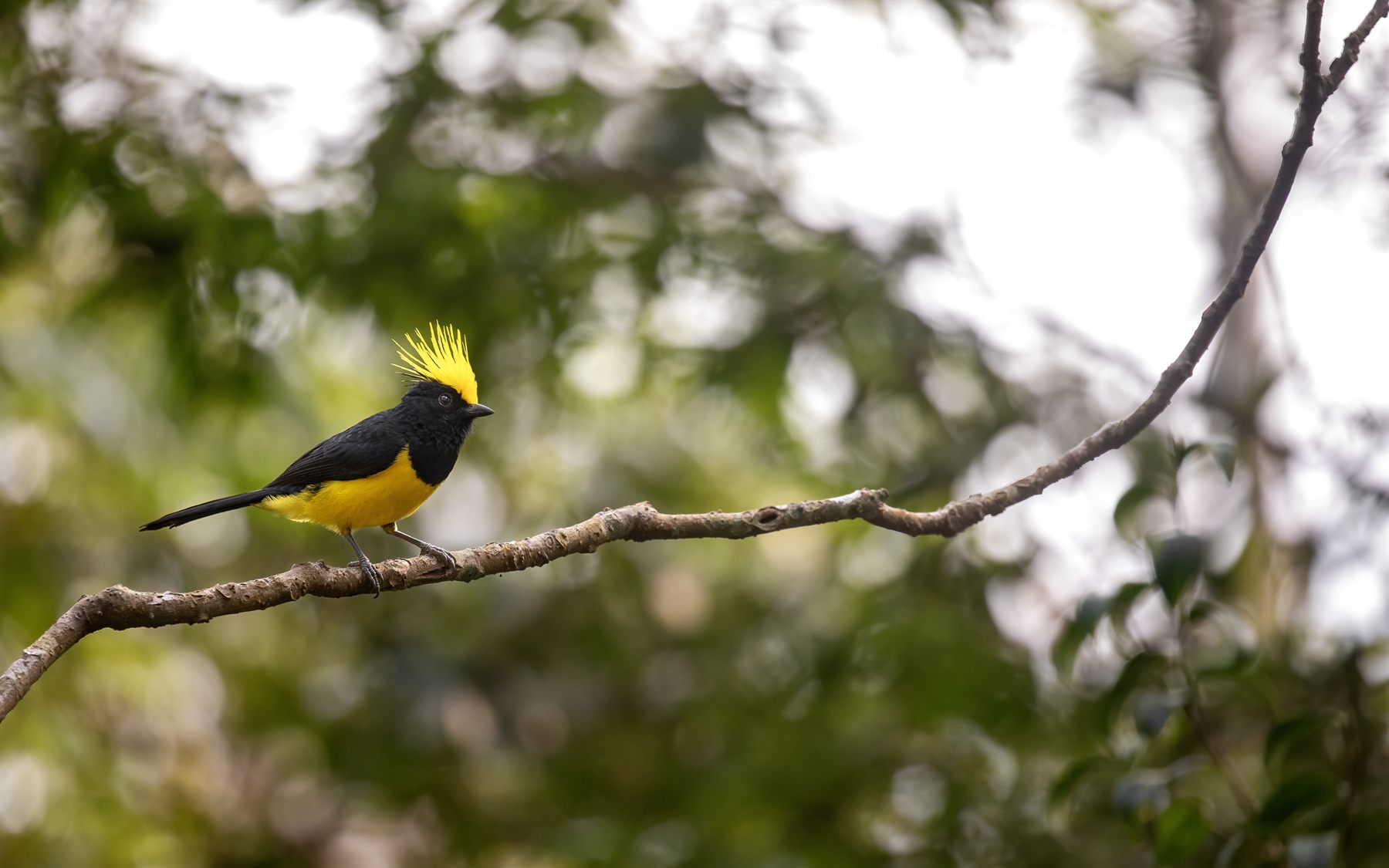
Photo: Sangyam adventurer · CC BY-SA 4.0 (May be cropped or resized)
Melanochlora sultanea
Basic stats
Diet
Invertebrates and larvae, caterpillars, sometimes figs and small berries
Habitat
Forest and plantation; forages in the mid and upper canopy; nests in a lined tree cavity
Range
Asian forests, including India
Clutch size
5–7 eggs
Size
20–20.5cm
Weight
34–49g
The sultan tit is the largest tit, 20–20.5 cm long and 34–49 g, an Asian forest bird with black upperparts, yellow underparts, a dark bill and, depending on subspecies, a yellow or black crest. The sexes are similar, though the female has slightly duller plumage with greenish-black upperparts and throat, and the young are duller with a shorter crest. The recumbent crest is raised when the bird is alert or alarmed (Wikipedia, general species account).
It forages in the mid and upper canopy, singly or in small groups, mainly for invertebrates and larvae and caterpillars, but sometimes on figs and small berries. The breeding season in India is April to July, and five to seven eggs are laid in a lined tree cavity. SoIB 2023 rates it a Low conservation priority, a resident of forest and plantation with a Moderate range of about 44,200 km² and a stable current trend (Wikipedia, general species account; SoIB 2023).
Quick answers
- What does the Sultan Tit eat?
- Invertebrates and larvae, caterpillars, sometimes figs and small berries
- What habitat does the Sultan Tit live in?
- Forest and plantation; forages in the mid and upper canopy; nests in a lined tree cavity
- Where is the Sultan Tit found?
- Asian forests, including India
- How many eggs does the Sultan Tit lay?
- 5–7 eggs
- How big is the Sultan Tit?
- 20–20.5cm
- How much does the Sultan Tit weigh?
- 34–49g